The Iran war has publicly exposed these differences. For instance, the countries supporting Pakistan’s role in mediating between Iran and the US are Saudi Arabia, Egypt and Turkey
On the night of April 7-8, the United States and Iran announced a limited two-week ceasefire, minutes before US President Donald Trump’s deadline for wiping out the “entire civilisation” of Iran. After the initial euphoria, however, some elements are proving unworkable. However, talks are starting on schedule in Islamabad on April 10. As Israel will not be present, though, a permanent ceasefire may still take longer.
Iran’s President Masoud Pezeshkian said on X that the renewed aggression against Lebanon blatantly violated the “initial ceasefire”. He added that such actions “signal deception and non-compliance, rendering negotiations meaningless”. Pakistan apparently convinced Iran to avoid any retaliation.
President Donald Trump’s initial statements indicated that the ground rules for negotiations had been mutually accepted. The 15-point US demands and the 10-point Iranian rejoinder have some overlap as well as divergences.
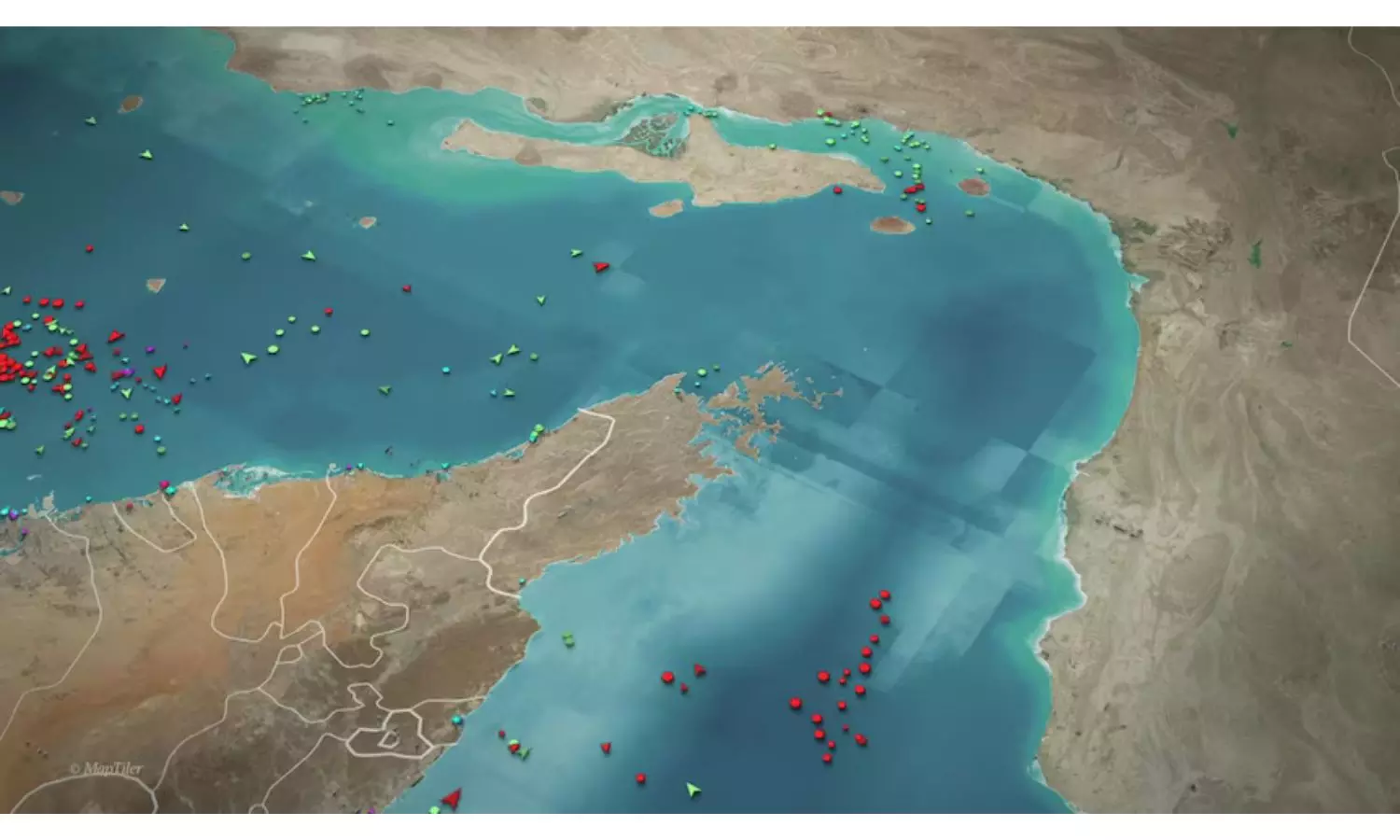
The US had demanded that the ceasefire and the opening of the Strait of Hormuz should happen simultaneously. The Iranians argue that unless Israel stops attacking Lebanon, the ceasefire is non-existent.
The New York Times explains how the decision to attack Iran was taken. On February 10, Israeli Prime Minister Benjamin Netanyahu, alongside his national security team, made a presentation to the US President and select aides. Israel proposed a four-stage operation, beginning with Iran supreme leader Ayatollah Ali Khamenei’s assassination. Next came the neutralisation of Iranian missiles and drones, thus torching their defensive and offensive assets. This was expected to generate a mass uprising, fuelled by Mossad inducting armed Kurdish fighters across the Iran-Iraq border. Finally, a secular government would replace the Islamic regime, which has been in power since 1979.
President Donald Trump’s team was divided over the Israeli thesis. Vice-president J.D. Vance alone openly opposed it, because he had campaigned in 2024 against US military interventions abroad. He also realised the war’s unpopularity domestically would harm his presidential ambitions. On seeing that the US President favoured the Israeli arguments, everyone fell in line.
But the US and Israel failed to foresee that after their attacks on the Iranian nuclear facilities in June 2025, the Iranians had prepared for exactly the upcoming eventuality. They had shifted their drones and missiles to secure locations, embedded in the mountains, and thus immune to air attacks. Iran demonstrated over the past six weeks that it could both tolerate the damage inflicted on their infrastructure and the loss of lives, and retain the retaliatory capacity to fire drones and missiles. It cleverly flooded the Israeli airspace with its drones and smaller missiles, depleting the Israeli arsenal of interceptors and anti-missile projectiles. It thus created gaps in Israel’s vaunted air-defence system called the Iron Dome. Iran also retaliated across the Gulf region, hitting US military facilities, hotels where US military personnel were supposedly sheltering, suspected Israeli assets and any facility perceived as launching an attack on Iran.
But most significantly, they seized the Strait of Hormuz by threatening oil tankers with drone or missile hits. This immediately ramped up insurance premiums, rendering it hazardous for oil tankers to transit the Hormuz Strait. The New York Times also observed that the danger of Iran closing the Hormuz Strait was underplayed in the Israel-US discussions. Israelis reasoned that the air attacks would so severely damage Iran’s capabilities that it would be unable to interrupt maritime traffic through the strait. This was a serious miscalculation. The disruption of nearly 20 per cent of global oil supply, that daily transits the strait, pushed up oil prices globally and in the US. Iran also targeted petrochemical complexes and other oil exporting facilities created to bypass the Hormuz Strait.
They attacked Fujairah in the UAE, which being on the Indian Ocean exported Emirati oil flowing to it via a pipeline. Similarly, Saudi Arabia’s East-West oil pipeline was targeted. It runs from the Gulf to the Red Sea port of Yanbu and can carry seven million barrels of oil per day.
While the US interest in the Gulf region dates since the exit of the British in 1971, the containment of Iran has been ongoing since the 1979 Islamic revolution. The latest operation can be traced to President Donald Trump’s first term. In 2020, he launched the Abraham Accords, meant to create an anti-Iran coalition of Israel and Arab countries, willing to normalise relations with it, ignoring the pending Palestinian issue. While the UAE and Bahrain promptly joined it, the Saudis held back. Their reluctance proved sensible as once the October 7, 2023 attack on Israel led to the Gaza war, causing almost 75,000 civilian deaths, no Arab country with a large population could sign on. The Iran war has exacerbated the intra-GCC differences and rivalries, existing since long. In 2017, Saudi Arabia and the UAE had confronted and boycotted Qatar. In the past year, the UAE and Saudi differences have worsened. Saudi Arabia resented the UAE’s pro-active role in regional conflicts in Yemen, Sudan, Somalia, etc. The banishment of UAE military personnel from South Yemen, after a Saudi threat, was intended to also contain indirect Israeli influence, under UAE cover. The Iran war has publicly exposed these differences. For instance, the countries supporting Pakistan’s role in mediating between Iran and the US are Saudi Arabia, Egypt and Turkey. While the UAE suffered perhaps the maximum damage besides Bahrain, its absence in Islamabad shows its isolation. Sensibly, India’s external affairs minister S. Jaishankar quickly went there to begin consolidating India’s Gulf presence.
The Iran war’s impact will extend far beyond the Gulf region. Pakistan’s mutual defence pact with Saudi Arabia and its ongoing mediation gives it a fresh hold on some Islamic countries. Over the past decade New Delhi has wooed the Gulf ruling families, partly to isolate Pakistan. It is possible Pakistan may start internationalising the Kashmir issue again. Similarly, Pakistan’s Army chief Field Marshal Asim Munir’s special relationship with President Trump may give Pakistan fresh leverage in Washington to push India.
The outcome of the Iran-US talks would largely depend on the willingness by both sides to compromise. The United States will need to tolerate Iranian nationalism and Shia pride. Iran must accept the gradual reduction of military assistance to its regional allies, like the Houthis, Hezbollah and Hamas, and containment of its nuclear and defence ambitions. It can work, if both can claim a win.
