Anita Anand | Wars And Conflicts Defined 2025... Can We Make The World A Bit Better In 2026?

In Indonesia, Nepal, Madagascar, Morocco, Kenya, Togo and Peru, among other countries, youth mobilised against political instability, corruption, and record levels of insecurity
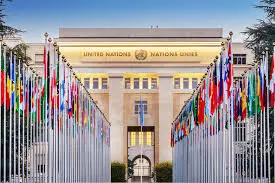
It’s a new year, an invitation to reflect on the year gone by and to contemplate the one ahead. What is significant about the year gone by? Wars, coups, failed states, poor leadership, internal and external conflicts, deaths, diseases, anxiety, pain, sadness and joy.
Wars and conflicts stand out. The Ukraine-Russia war entered its fourth year, the United States conducted strikes against Iran and, most recently, against Venezuela, capturing the country’s President and his wife. While peace has been brokered between Israel and Hamas, no immediate settlement is in sight. There are coups, occupations, and internal strife on almost every continent.
Globally, except in some Western European states and Scandinavia, there is a breakdown of law and order, with heads of state, religious groups, and nations taking the law into their own hands. There is also a rise in fundamentalism.
In an era where multilateralism is the key, the hard work of institutions such as the United Nations has been undermined and undone by leaders such as Donald Trump and others. The US, once seen as a powerful global leader, isn’t seen as one any longer.
In 2025, Donald Trump, President for a second term, initiated policies and actions that showed his disdain for national and international protocols and commitments. A year into office, he set in motion processes and policies that would not only take America but also other nations back decades. A global order is being turned upside down.
The United Nations, formed in the aftermath of the Second World War in October 1945, was “a pact to save succeeding generations from the scourge of war, to reaffirm faith in human rights and to establish conditions under which justice and respect for the obligations arising from treaties and other sources of international law can be maintained. And to assist countries emerging from colonisation and becoming independent states”.
Now, the authority of the United Nations is being severely tested by rogue leaders and states.
These governance failures have led to increased protests and social movements. Young people are challenging their corrupt and ineffective regimes. Most striking is the success of the 33-year-old Zohran Mamdani, who rose to challenge the long-standing establishment-backed and corrupt mayors to become the mayor of New York City. Mr Mamdani’s victory was the result of a sustained campaign, carefully curated by going to the people of New York and working with them, not just the elite.
In 2025, across continents and cultures, young people faced very different daily realities, and one experience brought them together: protests. Generation Z — born between the late 1990s and early 2010s — is known for anxiety, shared frustration and anger at elites seen as out of touch, and a determination to be heard. Prominent issues included employment, healthcare, corruption, climate change and freedom.
In Indonesia, Nepal, Madagascar, Morocco, Kenya, Togo and Peru, among other countries, youth mobilised against political instability, corruption, and record levels of insecurity.
Michel Wieviorka, the renowned French sociologist and director of studies at the School for Advanced Studies in the Social Sciences (EHESS), says: “This is a generation that is not acting only for itself, but so that everyone has access to education, healthcare and housing, and to put an end to corruption in power. It is a protest driven by universal values.”
He goes on to say that these are countries where democracy, if it exists, remains illiberal or weakly liberal, and they are also more or less authoritarian regimes, where power responds with repression, fuelling a spiral of violence. He warns that these movements could have lasting effects or fade away entirely. While they may not have a fully formed political platform, they want profound change.
While we wait for profound change, wars and conflicts rage, and global events leave us in a pessimistic, anxious state, what can we, as citizens, do? Beyond the venting and carping we are prone to, can we, in a small way, do what we can to keep our lives peaceful, be diligent about reducing our carbon footprint on the earth, consume less and share what we have with others who do not?
For those of us who are privileged, it is useful to remember that our status comes from those who are not, and that we live in a highly unequal and yet interdependent world. The Vietnamese Zen Buddhist, monk, teacher, and father of mindfulness, Thich Nhat Hanh, coined the term “interbeing”, meaning that everything in the universe is interconnected, mutually dependent, and exists in a state of “inter-being” rather than in isolation. Simply put, he believed and preached that everything relies on everything else in the cosmos to manifest — whether it’s a star, a cloud, a flower, a tree, or you and me.
In an interconnected world, wars and conflicts know no borders. We are all affected by instability, no matter where it is. The developments of 2025 indicate that this will probably continue in the new year. But not all is lost. Social movements against corrupt and authoritarian governments suggest that more people, especially Gen Z, are aware of the need for change. And that, without the sustained, strategic campaign Zohran Mamdani ran, profound change will not be possible.
But each of us, in our own way, can ask ourselves: What can I do to make the world a better place? Can I live in peace and harmony with my family, neighbours, and community? Can I overcome my fear of the future? Thich Nhat Hanh proposed that mindfulness, as a practice, helps us live in the present moment and realise that right now we’re okay. Our eyes can see the beauty of the sky, and our ears can hear the voices of the people we love.
We can try to make 2026 better than 2025.
The writer is a development and communications consultant