Anil Tyagi | Sergio Gor: The Quiet US Envoy Behind India’s Power Games

Ambassador Sergio Gor's diplomatic reach, and geopolitical influence is measured by the regular presence of Indian Cabinet ministers such as S. Jaishankar (external affairs), Ashwini Vaishnaw (railways), and Hardeep Puri (oil and gas), apart from Delhi lieutenant governor, Taranjit Singh Sandhu, who are former civil servants, at Roosevelt House, Gor’s residence at New Delhi’s posh diplomatic hub at Chanakyapuri
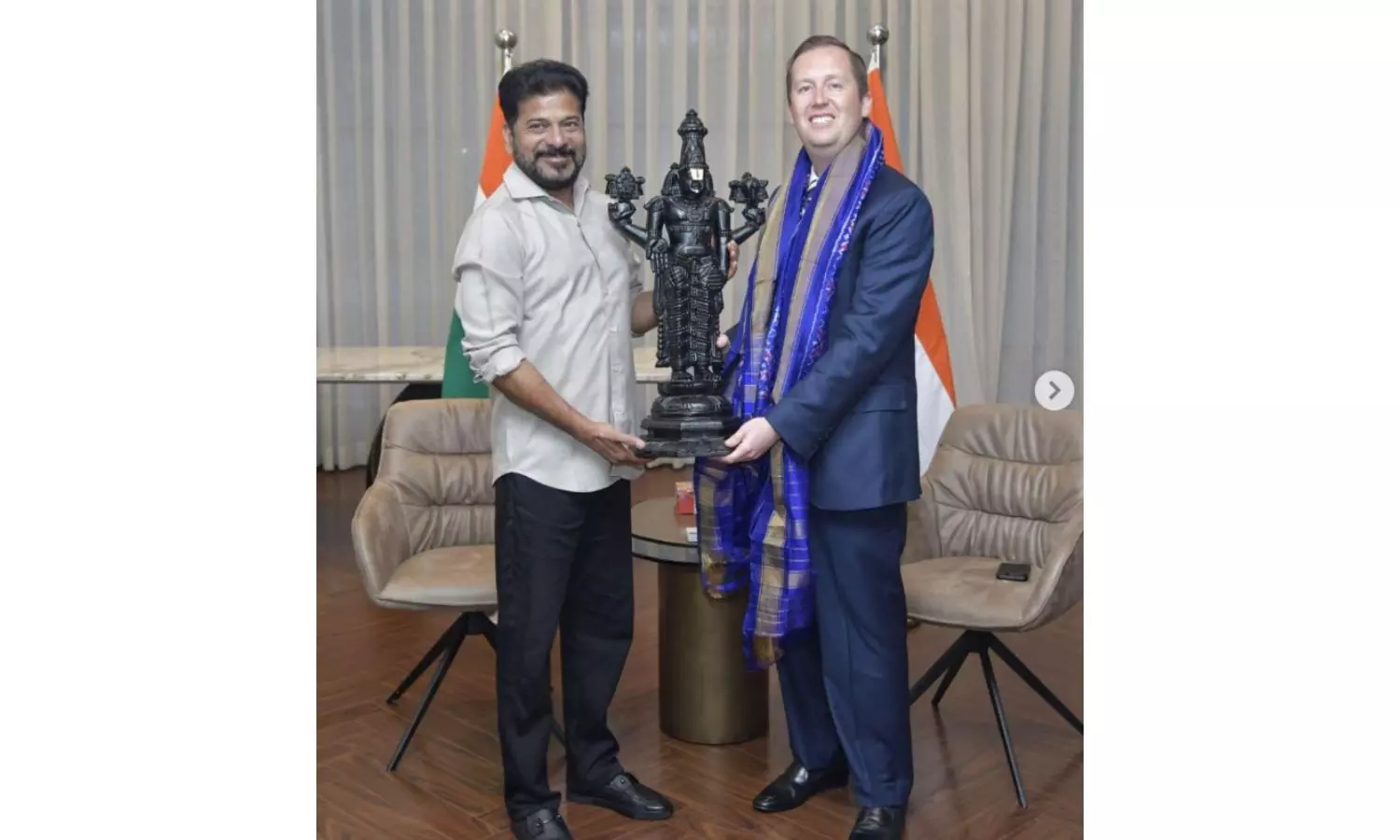
We are familiar with the powerful faces in our country’s Indian politics — Prime Minister Narendra Modi and home minister Amit Shah. Yet, there is a little-known name lurking in the diplomatic shadows, a foreigner whose fogginess hides the influence he wields. Meet the Tashkent-born Sergio Gor, the 27th American ambassador to India, and the US Special Envoy for South and Central Asian Affairs. Before you dismiss him nonchalantly, let us tell you that he reportedly has a direct hotline to President Donald Trump, and enjoys proximity to his son, Donald Trump Jr.
Here is an intimate look at the Ambassador Sergio Gor itinerary. He hobnobbed with the Telangana chief minister, A. Revanth Reddy, in New Delhi on August 5, 2026. On August 7, he was in Bengaluru, rubbing shoulders with D.K. Shivakumar, the Karnataka chief minister. A day later, he flew to Kochi, and met the Kerala chief minister, V.D. Satheesan. A few months earlier, on May 12, 2026, Gor, as he is known, was at the oath-taking ceremony of another state head, Assam’s Himanta Biswa Sarma. A bevy of chief ministers with bouquets of goodies, perhaps? Oh, and yes, before he took charge as the American envoy, he met Mr Modi in New Delhi on October 11, 2025.
Ambassador Sergio Gors diplomatic reach, and geopolitical influence is measured by the regular presence of Indian Cabinet ministers such as S. Jaishankar (external affairs), Ashwini Vaishnaw (railways), and Hardeep Puri (oil and gas), apart from Delhi lieutenant governor, Taranjit Singh Sandhu, who are former civil servants, at Roosevelt House, Gor’s residence at New Delhi’s posh diplomatic hub at Chanakyapuri. Gor’s power can be gauged by the fact that his team appointed nearly 4,000 presidential personnel at the White House in Washington. He helped to block the planet’s first dollar-trillionaire Elon Musk’s Nasa nomination of Jared Isaacman, whose past donations to the Democrats were revealed.
Forget members of the ruling administration, Gor has pathways into the Opposition. He reportedly met Rahul Gandhi, although he never tweeted about it. But some of you may still not be shocked, or convinced that Gor is special. So, let us tell you a secret. Among diplomats and civil servants in the external affairs ministry, there is a buzz about Gor’s mission — find the future face of Indian politics. Who will be the next Prime Minister? If the Opposition makes electoral inroads, what will be the reaction of the leaders in the Opposition-ruled southern states (remember Gor’s meetings with them)? What is the future of the deadly Cockroach Janta Party, the average age of whose leaders is around 30 and who need political savviness and experience? There is another factor — President Trump’s displeasure with Mr Modi after the latter’s visit to Israel in February 2026. Strange are the ways of politicians, and weirder are the ways of diplomats, especially American ones.
When Modi underestimated Yogi
Arvind Kumar Sharma, a 1988-batch IAS officer of the Gujarat cadre, enjoyed a distinguished career before he entered politics. Between 2001 and 2021, he served as an additional secretary in the Prime Minister’s Office, and was later appointed as secretary, ministry of micro, small and medium enterprises. His loyalty to Prime Minister Narendra Modi is unquestioned. Meanwhile, after Yogi Adityanath became the chief minister of Uttar Pradesh on March 19, 2017, there was an unease in the Capital. To keep a close tab on the chief minister, Anandiben Patel was appointed as the state’s governor in July 2019, and a senior RSS functionary, Sunil Bansal, enjoyed a considerable presence in Lucknow. But Delhi wanted more. In January 2021, Arvind Kumar Sharma took voluntary retirement from the civil services, and joined the BJP in UP. He was named as a candidate for the state legislative council, and his name cropped up as a candidate for the post of deputy chief minister. Instead, the astute Yogi Adityanath appointed him as a Cabinet minister on March 25, 2022.
Today, Mr Sharma’s life is uncertain. As an energy minister, his proposals for electricity distribution and private sector reforms faced opposition. Mr Sharma has alleged that there was a “supari” (assassination attempt) against him. Once a persuasive presence in the Capital, Mr Sharma is forced to keep a low profile in Lucknow. He remains aloof, and is not even active on the 1988-batch IAS WhatsApp group.
Nitish’s BPSC model puts UPSC on notice
In Bihar, the former chief minister Nitish Kumar, who is mocked by the opponents as a shape-shifter, has set up a state public service commission framework that is the envy of New Delhi. Under Parmar Ravi Manubhai, IAS (retd), the commission manages the progress of 3.5 lakh IAS aspirants across the preliminary, mains and interview stages. The interviews are designed to shut out unfairness. Candidates are stripped of visible identities and have computer-generated codes issued at the venue. Even the staff addresses them by these codes. Questions on caste, family background and income are barred. Marks are sealed.
Former board members of the UPSC contend that the contrast with the Central commission is evident, especially in the light of Gen Z protests against paper leaks. In the case of UPSC, for the first time, the application forms of the interview candidates carried the details of caste, income and landholding. A critical question — why does an interview panel need such information?