The government was seeking to deflect the blame for a vicious response to student protests while the Opposition, attempting to cash in on the questions about the sanctity of the national Neet and state recruitment examination systems raised by the protesters, was party to a standoff in the Lok Sabha that saw only 19 per cent productivity
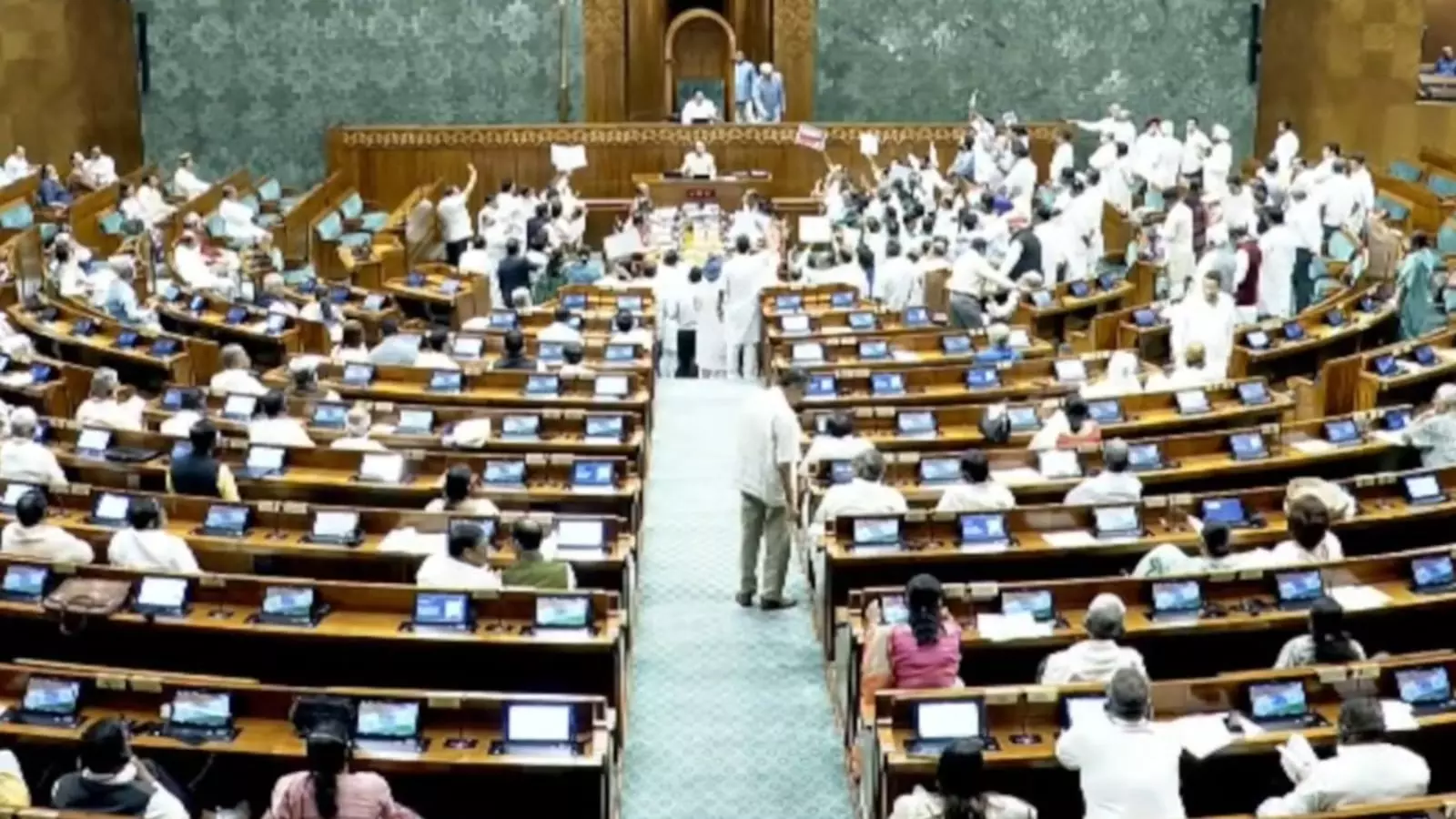
The curtains came down on the Monsoon Session abruptly after another inevitable show of confrontational politics in the era of extreme polarisation. It is no saving grace that many sessions of Parliament had fared worse in terms of productivity. The intransigence shown by both the government and the Opposition to arrive at a reasonable compromise to let both Houses function normally betrays an attitudinal problem.
A dysfunctional tango over deliberating on student protests that had taken the nation by storm ended with the government blaming the opposition for disrupting the proceedings. The government, which dragged its feet over a free and frank discussion on the subject of police brutality on Jantar Mantar protesters — and later against Jharkhand job aspirants — must also share the blame for a vacuous session in which 12 bills may have been passed but there could be meaningful discussion in both Houses on only on one of them.
It was normal functioning of Parliament, a basic requirement if the country is to continue to pride itself on being a parliamentary secular democratic republic that was held hostage by what is an ego-ridden behavioural problem. The government was seeking to deflect the blame for a vicious response to student protests while the Opposition, attempting to cash in on the questions about the sanctity of the national Neet and state recruitment examination systems raised by the protesters, was party to a standoff in the Lok Sabha that saw only 19 per cent productivity.
The public may have grown weary of three weeks of a continuous drama featuring the country’s leaders of disruptions in the face of a lack of a civil agreement to get legislative work done by elected representatives of the people about whose very raison d’etre doubts are now surfacing. It might be worth recalling that running Parliament is said to cost about Rs 9 crore a day according to estimates. But such is the price to be paid because the basic spirit of give and take appears to have exited from the Houses of Parliament.
If not for the Upper House functioning at twice the productivity of the Lok Sabha, it may not have come to light nationally that Mr Mallikarjun Kharge, the Leader of the Opposition in the Rajya Sabha who is a dalit, had been insulted when purification was carried out on a dais in Uttarakhand from where he had spoken at an event at Haldwani's Ramlila Maidan. Such shameful practice shows a fast- modernising nation in very poor light. The ruling party did condemn the incident and promised to probe into it, but it is little comfort that such practices still exist in a discriminatory caste-ridden society that we remain.
It was ironic that everyone was present, including the Prime Minister, the home minister and the Leader of the Opposition, and standing to attention at the singing of Vande Mataram. To go beyond the blame game, they must get down to the nation’s legislative business at a venue that offers plenty of scope for the display of political differences in debates and discussions. They must find a degree of commonality of purpose in allowing Parliament to function as it should — as a home of democracy that gives the Opposition equal space.