Officials blamed the rush of devotees at the privately-owned Sri Venkateswara Temple on Kartika Ekadashi festival for the stampede. The newly-built temple is believed to draw, on average, at least 5,000 devotees a day, but on Saturday, the number swelled to nearly 20,000, and railings and barricades erected to control movement collapsed like ninepins
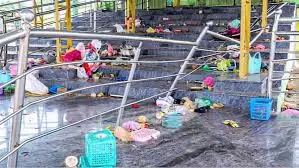
The death of nine people, including eight women and one child, in a stampede at the Venkateswara Temple in Kasibugga, Andhra Pradesh’s Srikakulam district, was an unfortunate and preventable tragedy. It is a grim reminder of poor crowd management at important places and the general indiscipline among people, be it at places of worship or at political events or even sports felicitation ceremonies, something that has claimed over 110 lives this year in major incidents and not counting those that do not make the headlines nationwide.
Officials blamed the rush of devotees at the privately-owned Sri Venkateswara Temple on Kartika Ekadashi festival for the stampede. The newly-built temple is believed to draw, on average, at least 5,000 devotees a day, but on Saturday, the number swelled to nearly 20,000, and railings and barricades erected to control movement collapsed like ninepins.
Andhra Pradesh Chief Minister N. Chandrababu Naidu accused the temple administration of negligence and faulted them for not informing the police about the high-turnout event. However, stampedes at crowded places are not new in India, yet nothing substantial is being done to prevent these unfortunate incidents.
The list of tragedies even in Andhra Pradesh is long: Heavy rush at the Sri Varaha Lakshmi Narasimha Swamy Temple at Simhachalam on the Akshaya Tritiya festival on April 30 led to the collapse of a newly-constructed, rain-soaked wall, killing seven people and injuring six. On January 8, six people were killed and several injured in a stampede at the darshan ticket counter of the Lord Venkateswara Temple. The ticket counter was managed by the Tirumala Tirupati Devasthanams (TTD), considered a pioneer in crowd management in India as it handles lakhs of pilgrims on the most auspicious dates of the Hindu calendar. To this list, add the stampede at a political rally in Tamil Nadu’s Karur and the cricket-related incident in Bengaluru earlier this year.
Every stampede, whether at a religious event or elsewhere, is followed by the government appointing a committee to examine the lack of adequate management that led to the tragedy and dutifully making certain recommendations to prevent a recurrence. The government, too, routinely discards these reports into the heaps of files lying in its cupboards.
The main cause of most stampedes is people’s aversion to following rules. Though they visit temples for spiritual purposes, or any other public event, every queue appears to be a racetrack. Every participant is in a perpetual hurry to complete the purpose of the visit and rush back. Would creating a comfortable exit experience in terms of improved transport facilities, for example, change the trend?
Another cause is the inept handling of crowd management by temple administrations mostly, as well as at other heavily crowded venues. In the Kasibugga stampede, officials believe that the temple received four times more devotees on November 1 than on a normal day. If temple authorities had noticed the larger crowd, why did they not inform the police? Why did they not stop the inflow of pilgrims when it became unmanageable?
Though state officials try to shirk their responsibility by calling it a private temple, the government is duty-bound to maintain order. If we were to accept Kasibugga temple founder Hari Mukunda Panda’s argument that it was an act of God, every action, including crime, would then be predetermined, leaving no scope for criminal jurisprudence in the country.
State governments should enact laws to regulate and fix responsibility for such tragedies in the future. It should also consider introducing academic courses on crowd management to produce trained professionals, who appear to be in great demand in India.
