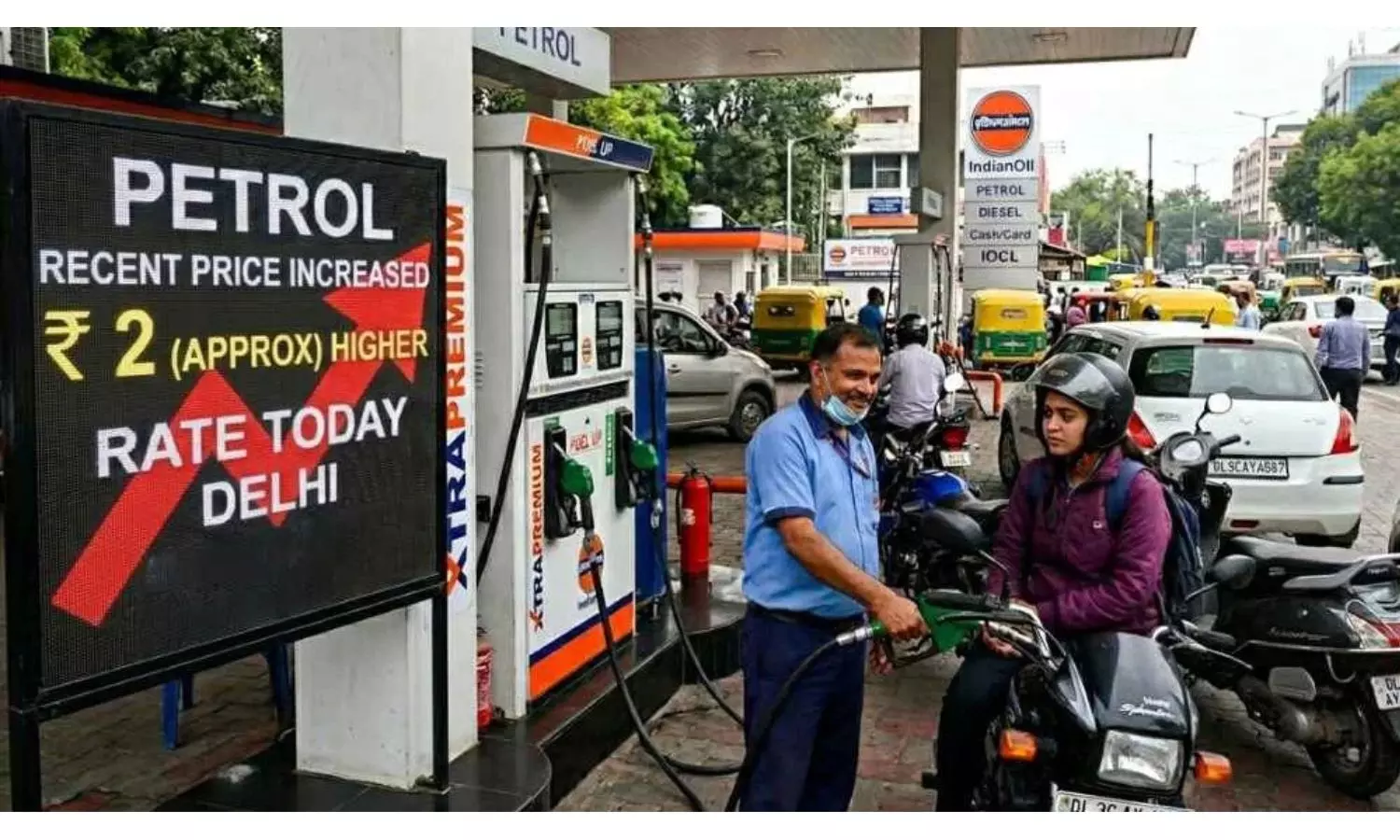
Though oil marketing companies (OMCs) did not hike prices initially, they hiked retail prices of domestic LPG cylinder, commercial LPG cylinder, compressed natural gas, petrol and diesel to partially offset the rising crude oil price, which went up to nearly $120 a barrel at the peak of hostility
Nearly four months after the United States and Israel launched unprovoked attacks on Iran, forcing the world, especially India, to scramble for oil and gas, crude oil price has crawled back to the pre-war levels of $73 a barrel. The fall in the crude oil price offers great respite to the general public and the global economy.
Though oil marketing companies (OMCs) did not hike prices initially, they hiked retail prices of domestic LPG cylinder, commercial LPG cylinder, compressed natural gas, petrol and diesel to partially offset the rising crude oil price, which went up to nearly $120 a barrel at the peak of hostility.
Now that the global prices have returned to the pre-war levels, there is a growing demand for the reduction in the prices of petroleum products. However, the OMCs are unlikely to revise prices immediately as they seek to recoup losses that they suffered due to underrecoveries for the last 120 days. Before the prices were hiked, they lost around Rs 1,000 every day, and after the hike, they lost Rs 600 crore a day — taking the aggregate underrecoveries to the tune of around Rs 80,000 crore.
Apart from underrecoveries, the government will have to take into consideration the future oil supply scenario before restoring the fuel price to the pre-war levels. Currently, the fall in crude oil appears to be partially led by a glut in the oil market caused by the opening up of the Strait of Hormuz and the oil that hundreds of ships stuck for weeks are bringing into the market.
Though the peace appears to have returned to the Persian Gulf, some oil and gas facilities could take at least over six months to resume their production. The government, therefore, must continue to be vigilant about the energy market, restore its emergency oil reserves and diversify its oil sources and make moves towards energy independence by promoting non-fossil fuel alternatives.