The warning assumes significance in the wake of indications that several countries, including India, are reviewing their strategies after the US Supreme Court verdict. The European Union has paused ratification of the US-EU trade deal — which was supposed to happen on February 24 — seeking legal clarity before proceeding
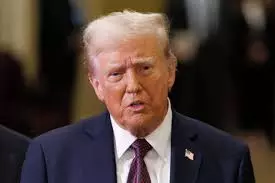
US President Donald Trump has warned countries against playing games with him on trade deals after his country’s Supreme Court declared reciprocal tariffs invalid and threatened to impose higher tariffs than those agreed to recently. This announcement is an ominous sign of the Trump administration’s aggressive posture on trade and could hint at his intent to use various provisions available under US law.
The warning assumes significance in the wake of indications that several countries, including India, are reviewing their strategies after the US Supreme Court verdict. The European Union has paused ratification of the US-EU trade deal — which was supposed to happen on February 24 — seeking legal clarity before proceeding.
India, on the other hand, has put off the scheduled visit of a trade delegation to Washington to finalise a recently announced interim deal, ostensibly to review its strategy. Finance minister Nirmala Sitharaman confirmed that the commerce ministry is reviewing the situation that has emerged after the US Supreme Court verdict.
Mr Trump’s warning also spotlights the timeline of the US-India trade deal. If the Narendra Modi government believed that Mr Trump’s actions did not have bipartisan support on Capitol Hill, it should have waited till the Congressional elections in November. If our policymakers determined that, for reasons known to them, the deal could not be delayed so long, they should stick to it.
If a country is not a superpower that can bend rules at will, its foreign policy should have two vital components — serving its supreme national interests and being predictable enough to inspire confidence among its partners.
India sought a tango with Russia and China when Mr Trump called its economy dead, but it dumped Moscow when the US President offered a trade deal. If Mr Trump, who is known to be highly unpredictable, refuses to play ball with India on renegotiation and raises tariffs against India to whip up anti-immigrant sentiment, will New Delhi go back to Moscow and Beijing? Will they trust India?
The Narendra Modi government has called the trade deal with the US one of the best. If that is true, how could its terms become bad just because the US Supreme Court ruled against tariffs? Does it mean that our policymakers compromised on India’s national interests while agreeing to the trade deal? India’s expectation of easier terms in the wake of the changed reality is valid, but it should not make it a spectacle that unnecessarily triggers an ego response from the Trump administration.
If the government is reviewing the US deal in the wake of virulent opposition from Congress or RSS frontal organisations, it is appreciable, as any democratic government must be responsive to public opinion. However, this leads to another question: Why did the government agree to such an important deal without building consensus in the country?
The government should, therefore, evolve a predictable foreign policy aligned with its supreme national interests. India is not yet a superpower and should desist from pursuing a cavalier foreign policy like Mr Trump’s, which sows distrust among partners and makes it untrustworthy.