Syed Ata Hasnain | The Age of Backlash: Why Gen Z Angry, World Uneasy

What we are witnessing today is not the wholesale rejection of globalisation, but a deep backlash against its side-effects. The benefits of integration have not evenly spread
Globalisation, in the years after the Cold War, was seen as one of humanity’s most promising experiments. It broke barriers, fostered interdependence, and opened unprecedented opportunities for trade, development and collaboration. The promise was genuine. Prosperity could spread beyond borders, countries could access new avenues of growth and talent could move more freely. The information revolution and the rise of the Internet seemed to flatten hierarchies and give individuals the tools to plug directly into the world economy. For a while, this new openness felt transformative, millions were lifted out of poverty and entire sectors — from IT services to global finance — were re-engineered to levels unimaginable before. Yet even as globalisation delivered these profound benefits, it also carried seeds of discontent. The very features that made it powerful — free flows of goods, capital and people — also created winners and losers.
A useful comparison lies with the Industrial Revolution. It, too, created vast opportunities, lifting productivity and broadening horizons, and in doing so encouraged a more liberal and tolerant culture as aspirations multiplied. Yet that surge of change also triggered fierce geopolitical competition, with the late 19th and early 20th centuries witnessing a chain of devastating wars. Globalisation has avoided such direct military conflict, but it has widened inequality between nations and generated waves of social unrest that now destabilise politics.
What we are witnessing today is not the wholesale rejection of globalisation, but a deep backlash against its side-effects. The benefits of integration have not evenly spread. Industrial workers in developed economies found their jobs outsourced or automated, while rural populations in developing countries often saw little of the promised dividends. Migration, while supplying talent and labour to countries in need, unsettled local identities and triggered fears of cultural erosion. Global supply chains, celebrated for efficiency, proved vulnerable when crises like the Covid-19 pandemic or geopolitical conflicts struck. Above all, the disproportionate distribution of wealth has left ordinary citizens disillusioned. The promise of prosperity gave way to vulnerability — exposure to distant shocks and decisions beyond local control.
This shift has bred a political and social mood that is unmistakably moving toward anti-globalisation. Across the world, governments are cautious about free trade, inclined to restrict migration, and willing to put national resilience above international openness; isolation is seemingly preferred. Borders are hardening not only against goods and people but also against flows of technology and ideas, as great power competition between the United States and China accelerates. The result is a splintering into blocs, with supply chains re-engineered to reduce dependence on rivals and bilateral security pacts proliferating at the expense of multilateral consensus.
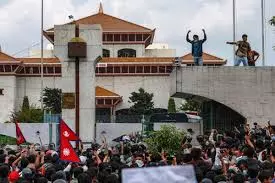
The generational dimension of this change is important. A great deal of the anger visible today, particularly from Gen Z, is born of unfulfilled expectations. This is a generation that grew up entirely within the globalized era, immersed in digital networks that connected them to global culture, markets and communities. Yet in many countries, especially in the developing world, they face joblessness, precarious employment, corruption, and a lack of upward mobility. They are more educated and more digitally empowered than previous cohorts, but also more disillusioned with institutions that appear unable to deliver fairness. Their protests in Nepal, Bangladesh, Indonesia, the Philippines and even far-off Peru are striking in their simultaneity; all locally digitally coordinated, leaderless and impatient. These movements are not anti-globalization, but shaped by the resultant discontent.
The backlash also has a darker side. As globalisation recedes, older forms of identity politics begin to reassert themselves. Ultra-nationalism and religious revivalism are resurging as people look for anchors of belonging in uncertain times. Islamism, in particular, may find new momentum in states where governance failures create vacuums of legitimacy. The Saudi decision to explore mutual security arrangements with Pakistan reflects Riyadh’s apprehensions in a world where American guarantees are no longer taken for granted. Identity-based solidarities appear the norm and multilateralism appears to be unreliable. These shifts will deepen fault lines across West and South Asia.
For India, these transformations give both opportunities and challenges. On the economic front, de-globalisation offers India the chance to position itself as a trusted alternative for global supply chains, especially as companies diversify away from China. But it also threatens export markets and reduces the dynamism of the international demand that India has relied on. On the security front, neighborhood instability driven by youth uprisings and governance crises in Nepal, Bangladesh, Myanmar and Sri Lanka will directly impact India — through refugee flows, border tensions and resource burdens. West Asia’s search for new security arrangements could complicate India’s energy security and expose Indian diaspora populations to greater risks. Domestically, India too must take heed of its own youthful population.
How should India prepare itself? First, by building resilience into its economy; diversifying supply chains, investing in strategic technologies and expanding manufacturing capacity in sectors like semiconductors and clean energy. Second, by stabilising its neighborhood through rapid, visible assistance compacts that reassure smaller states and prevent their collapse into chronic unrest; the Sri Lanka aid package being the model. Third, by strengthening intelligence and security capabilities that can anticipate cross-border radicalization and digitally mobilized unrest. Fourth, by giving its own Gen Z a genuine stake in the system — through transparent governance and employment pipelines. Finally, India must cultivate a diplomatic posture that is simultaneously pragmatic and principled; pragmatic in hedging against bloc politics and protecting national interests.
Globalisation’s legacy should not be dismissed or vilified. It was, and remains, one of the most ambitious human endeavours of the modern era. It connected billions, lifted many into prosperity, and created pathways for innovation and exchange that endure even in this period of backlash. But it also generated discontent that, left unaddressed, is now reshaping politics, societies and security strategies. The challenge is not to retreat into insularity or cling to old concepts, but to craft a new balance — preserving openness while guarding against vulnerabilities. For India, that balance will determine whether the coming decades are an era of frustration and fragility, or one of resilience and renewed leadership.
The writer, a retired lieutenant-general, is a former GOC of the Srinagar-based 15 (“Chinar”) Corps