Syed Ata Hasnain | 3 Hard Choices Ahead For India In Uncertain World

India-US ties are again going through a difficult patch. In marked contrast to his earlier tenure, when Donald Trump castigated Pakistan for duplicity and spoke warmly of India’s role in the Indo-Pacific region, he now seems determined to cause discomfort
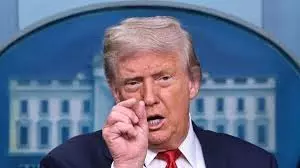
There are several hard choices lying ahead for India — it must decide whether to ride out the storm in India-US relations, to yield to Mr Trump’s pressures, or seize the opportunity to reshape its relationship with China.
India-US ties are again going through a difficult patch. In marked contrast to his earlier tenure, when Donald Trump castigated Pakistan for duplicity and spoke warmly of India’s role in the Indo-Pacific region, he now seems determined to cause discomfort. His outreach to Pakistan’s Army Chief and his disparagement of India’s positions all point to an abrasive phase. Yet just as the US imposed sanctions after Pokhran-II in 1998 only to reset ties under George W. Bush Jr with the civil nuclear agreement, this downturn too is unlikely to be permanent. India-US ties have always been cyclical, and resilient enough to recover.
What matters now is how India navigates the interim period. Should it stay the course, treat the present as temporary turbulence, and preserve both US and Russian ties? Should it bend towards Washington to protect the strategic partnership, even if that means eroding Moscow’s confidence? Or should it use the moment to test new initiatives with China, beginning with foreign minister Wang Yi’s visit to India? Each option has costs and benefits, but all must be weighed against one caveat; Mr Trump’s gestures towards Pakistan should make no difference to India, and New Delhi must studiously ignore them. Pakistan’s external equations have never determined India’s trajectory. India’s focus must remain on managing the major power triangle of the US, Russia and China, while protecting its economy.
The first option is continuity. Just hold the line, no bravado, and keep the India-US relationship alive in functional domains until the political climate improves. It means some loss in the US strategic calculus, but it would safeguard the Russia partnership, which continues to matter for energy, defence supplies, and diplomacy. This approach plays to India’s tradition of patience and strategic autonomy. It would allow India to sustain networks with Europe, Japan, Asean, and the Global South, all while waiting for the inevitable post-Trump thaw. The cost: some edging out of potential Indo-Pacific planning. Yet the benefit is stability, particularly when Moscow still values loyalty and continuity at a time of its own stress.
The second option is correction. India could move more openly into the US camp, accept Mr Trump’s transactional style, and work to restore the sheen of the India-US strategic partnership. That would reaffirm India’s centrality in the Indo-Pacific, protect its access to technology and investment, and reassure Western markets.
The risks, however, are serious. Russia would be the loser in this equation. If Washington and Moscow were to find a transactional accommodation in the future, India might suddenly be left exposed; distrusted in Moscow, taken for granted in Washington, and deprived of its cherished autonomy. Such a scenario would reduce India’s manoeuvring space, precisely the opposite of what its foreign policy has long sought to preserve.
The third option is opportunity. India could use Wang Yi’s visit to test the possibility of a cautious reset with China. Officials acknowledge that India’s growth trajectory depends heavily on access to Chinese supply chains. For China too, safe sea lines of communication through the Indian Ocean are an overriding security concern. Today, Beijing views India with suspicion as a potential disruptor working in concert with anti-China powers, and this perception has partly driven its Himalayan assertiveness. If India takes the initiative to build modest trust, even via limited economic or maritime dialogues, the long-term payoff could be significant.
In ten years, the relationship could look very different, with reduced chances of conflict and more room for cooperation in areas like climate, trade and connectivity. The risk, of course, is that China could pocket goodwill without altering its behaviour. But even limited confidence-building would signal to Washington and Moscow that India has multiple options.
None of these paths is free of complications. Pretending nothing is wrong risks inertia. Kowtowing to Washington risks alienating Russia. Reaching out to Beijing risks disappointment and domestic scepticism. But foreign policy is rarely about single-track choices. For India, a creative blend may be most effective; preserve operational ties with the US while awaiting a friendlier era; reassure Mr Putin that Russia remains valued despite sanctions; and cautiously probe the potential for reduced mistrust with China. The key is not to overcommit in any direction while ensuring the economy remains shielded from shocks.
One non-negotiable remains: economic growth must not suffer. India cannot afford sanctions, supply disruptions, or loss of investment confidence. Access to Western markets and capital, discounted Russian oil and arms, and secure manufacturing supply chains from China all matter simultaneously. A successful foreign policy must therefore be judged by whether it secures the resources needed for India’s development.
It is also essential to separate the signal from the noise. Mr Trump’s embrace of Pakistan is political theatre. India must ignore it, just as it has ignored past swings in US-Pakistan ties. Pakistan once thrived on China’s support, forcing the US periodically to return to Islamabad. But India has never defined its policy by such moves. Today too, Mr Trump’s flirtation with Pakistan should not become a distraction. India’s calculus must remain anchored in the big picture; long-term US convergence despite short-term hostility, Russian continuity despite sanctions, and Chinese importance despite mistrust.
India has always been a practitioner of multi-alignment. It has remained between powers without collapsing into dependency. This moment calls for the same dexterity. Mr Trump’s US may be difficult, Mr Putin’s Russia may be embattled, and Xi Jinping’s China may be suspicious, but India has the resilience to maintain ties with all three while protecting its core interests. That means patience with Washington, loyalty with Moscow, and initiative with Beijing.
History shows downturns can become breakthroughs. The US that sanctioned India in 1998 became its strategic partner by 2005. The China that fought India in 1962 became a critical trade partner by the 2000s. The Russia that now leans heavily on Beijing still treats India as a valued interlocutor. Nothing is permanent in global politics.
The breakdown in India-US relations under Mr Trump is real but not fatal. With steadiness and balance, India can endure this phase and emerge with more, not fewer, options when the winds shift. The task is not to choose one option forever, but to steer carefully through turbulence, confident that calmer waters will return.
The writer, a retired lieutenant-general, is a former GOC of the Srinagar-based 15 (“Chinar”) Corps