Shikha Mukerjee | Private Lives, Public Scrutiny: Keep Law And Morality Apart

The move to control, discipline and punish what one side maintains are transgressions goes against the fundamentals of democracy and the deemed sovereignty of the individual under the vague but comprehensive concept included in the Constitution that everything under fundamental rights is “subject to public order, morality and health”
The Allahabad high court’s recent observation — “Morality and law have to be kept apart. If there is no offence under the law, social opinions cannot guide the court’s actions in protecting citizens’ rights” — was based on a complaint by a woman living with a married man. The regulation and criminalisation of religious belief, private relationships, gender by ruling parties with necessary legislative majorities intent on disciplining and punishing what the ruler’s ideology deems as transgression, is an effort to normalise the intrusive expansion of State power over private and individual choices.
The move to control, discipline and punish what one side maintains are transgressions goes against the fundamentals of democracy and the deemed sovereignty of the individual under the vague but comprehensive concept included in the Constitution that everything under fundamental rights is “subject to public order, morality and health”.
The purpose of these laws is an extraordinary focus on how to regulate and criminalise choices that are fundamental freedoms guaranteed under the Constitution. Litigation is proliferating and the differences in perception of various judicial officers are evident in how they decide on what is legitimate and what is not. Unfortunately, the judiciary has been weak on deciding what ought to be the State’s business and what is outside the State’s purview.
Nor has the judiciary or for that matter the legislatures, including Parliament, been particular in pointing out that the confrontation between one set of social and cultural codes and a different set of codes is not the business of the State. If morality is a matter of adjudication, then how will a ruling party deal with the issue of “live-in” relationships between people who are not married to each other? Ruling elites, or for that matter political elites, can only do so by pretending that the norms that their political parties or affiliates or friends and associates wish to impose on some, does not include transgressions by people from within their own ranks.
Thirteen states in India have legislated on “freedom of religion”. The Maharashtra Freedom of Religion Bill 2026 was passed by both Houses of the state legislature, making it the 13th state that has decided the existing law was weak and strengthening it through specific legislation was imperative. Maharashtra was obviously in a hurry.
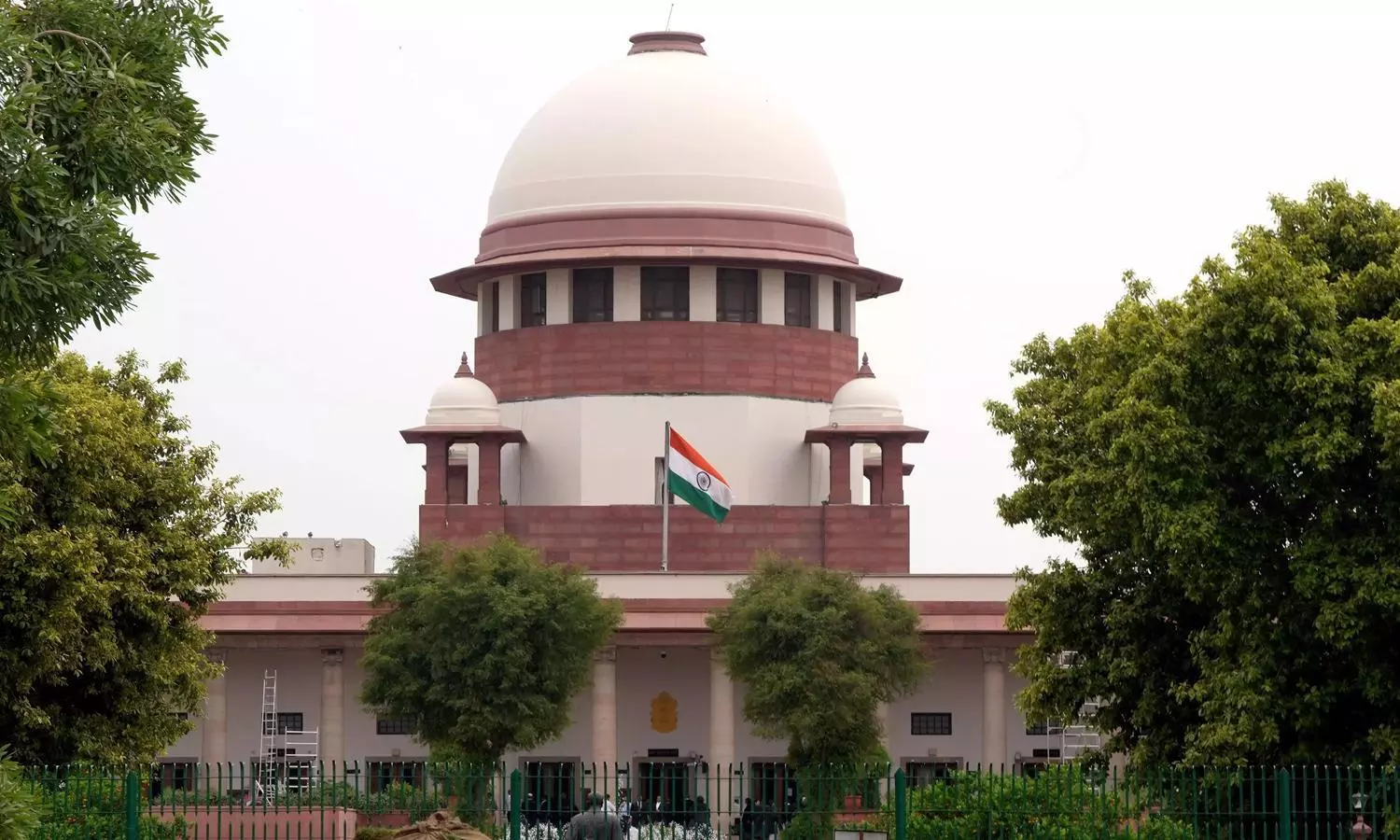
The Supreme Court is currently engaged in examining the validity of anti-conversion (freedom of religion) laws on pleas filed by the National Council of Churches in India and in order to deal with the matter, the apex court has issued formal notice to the Union government through the law and justice ministry along with Himachal Pradesh, Odisha, Karnataka, Uttar Pradesh, Uttarakhand, Haryana, Arunachal Pradesh, Madhya Pradesh, Chhattisgarh, Gujarat, Jharkhand and Rajasthan.
When the Supreme Court has time, it will hear what the states have to say and what has aggrieved the NCCI.
India’s Parliament has changed the law on LGBTQ+A, taking away from the “self-identification” principle of the 2014 court ruling and could reshape how transgender people are legally recognised. It has inserted what it maintains is stronger measures to protect against trafficking and exploitation, such as “mandatory medical certification” to establish the identity of a transgender person. The Supreme Court has also been seized of the matter.
It is redundant but necessary to note that the states that have gone in for aggressively protecting religious freedom (Uttarakhand has already enacted a Uniform Civil Code, Gujarat is in the process of doing so and Assam, Madhya Pradesh, Uttar Pradesh and Maharashtra have declared their intention of doing so) have either BJP majorities or are ruled by coalitions dominated by the party. It equally unnecessary to point out that the news media and of course the all-pervasive social media puts out daily updates of where and how the police are monitoring “inter-faith marriages” and “conversions”, all under the pretext of upholding religious freedom and against “love jihad” and coercive conversions.
The purpose of the law is not to safeguard religious freedom; it is, on the contrary, a mechanism to monitor and prohibit in the name of protection “unlawful conversion from one religion to another and for matters connected therewith and incidental thereto”. It requires individuals to notify the police of their intent to convert 60 days in advance. The purpose of this notification is to enable the coercive and intimidating authority of the State to detect and discover whether such intentions are under pressure.
How many from the political elite voluntarily disclose their private relationships? Only one political party, Trinamul Congress, has had the guts to bring on board a Member of Parliament who is openly queer, Menaka Guruswamy. The Congress selected Apsara Reddy, born Ajay Reddy, to head the Mahila Congress; she later switched to the AIADMK.
The Aam Aadmi Party nominated Bobi Kinnar as a municipal councillor.
The shift towards increasing control through discipline and to punish, as in the 60-day reporting rule, and up to 10 years of imprisonment is a mechanism of surveillance, categorisation and intimidation. It is set up to establish the rule of a particular norm with a specific political and ideological goal. It is, as Michel Foucault explained it, as an “enclosed, segmented space, observed at every point, in which the individuals are inserted in a fixed space, in which the slightest movements are supervised, in which all events are recorded”, where “power is exercised without division”.
The extremes to which this imperative to insert individuals into fixed spaces has gone is evident in denying tribals the right to their identities as tribals, should any one of them convert, mostly to Christianity. The same denial of rights does not seem to apply when tribals join the Sanatan Hindu fold, abandoning their original identities. The argument for positive discrimination and reservation for tribals was rooted in principles of social justice and the admission that some Indians had been systematically, over centuries, been marginalised and most often excluded from holding and exercising power. Why that condition of marginality and backwardness changes after conversion is not clear; according to the Supreme Court, it is just so.
The exaggeration of politics based on identities and relationships is progressing towards a politics and a State mechanism that is determined to insert all individuals in a fixed space; as in everything else, space is created for exceptions and inclusions by those in control of the State to fulfil their own purposes. In other words, there is no rationality in who is inserted into which fixed space; it all depends on approval and not choice.