Shikha Mukerjee | Can Kejriwal Make BJP, Modi Pay For Jailing Him?

The political point that Mr Kejriwal faces is how can he be certain his credit score has been restored by the trial court’s decision? The test of the pudding for him will be to win Delhi back from the BJP
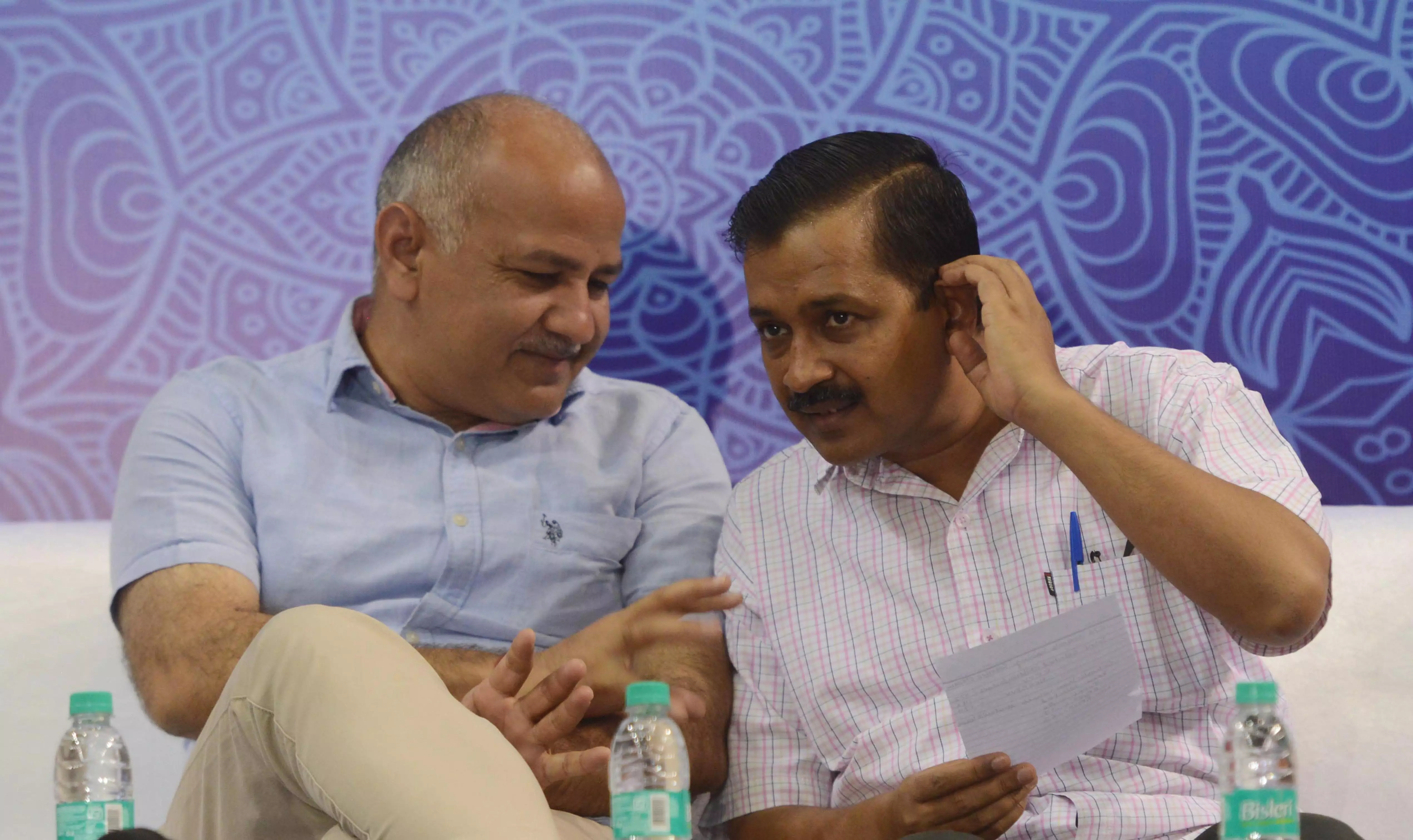
On being discharged and with all charges against him dismissed, Delhi’s former chief minister Arvind Kejriwal demanded fresh elections should be held in the National Capital Territory, in which he claimed his Aam Aadmi Party would sweep the BJP out of power. He added, for good measure, that “the people of Delhi are fed up” with the leadership of Prime Minister Narendra Modi.
Mr Kejriwal has a political axe to grind. He is under pressure to restore his image as an honourable man, meaning one who didn’t design a liquor policy that enabled the AAP to collect funds illegally for political purposes, like the Goa elections, as the CBI had alleged. Had Mr Kejriwal a larger purpose as an Indian politician who has been discredited by the utterly incompetent and totally disgraceful investigations of the CBI, he would have challenged Mr Modi differently. As the minister responsible for what the CBI does, the PM is accountable for the CBI’s incompetence. If Mr Kejriwal was not as narrowly engaged in restoring his political reputation, he should have attacked his opponent, Mr Modi, for heading an agency that engages in “pre-meditated and choreographed” investigations, as the trial court noted.
The political point that Mr Kejriwal faces is how can he be certain his credit score has been restored by the trial court’s decision? The test of the pudding for him will be to win Delhi back from the BJP. Since it is highly unlikely the BJP will oblige him by rising to the bait, Mr Kejriwal has to think of other ways to destabilise the current Delhi government and win back his constituents.
The problem with political posturing is the gains that are looked for are invariably short-term. There are vastly bigger issues the trial court’s 158-page order raised. The indictment of the CBI, scathing as it, is not a big deal. The heart of the matter is the concern the court raised: “what emerges is a troubling picture of an investigation steered by a preconceived outcome”, as evidence, or rather meeting the requirements of evidence as prescribed by the law, was flagrantly flouted.
The court spelt it out; the CBI’s case was “pre-meditated and choreographed”, based on “layered assumptions” and “fragmented circumstances”. Who, therefore, was the mastermind behind the case as it now stands? It raises the question on whether the investigation followed the rules of investigation or was it a guided exercise in embroiling the chief minister and his deputy and others? Was there a reason why the expansion and assumptions and presumptions based on which Mr Kejriwal and Mr Sisodia were arrested by the ED and the CBI happened on the eve of the Delhi elections?
The discharge by the trial court of Mr Kejriwal and deputy chief minister Manish Sisodia was based on the lack of legally valid evidence produced by the CBI into the alleged liquor scam, in which only in the fourth supplementary chargesheet, in 2024, was the chief minister’s involvement included and he was named the “kingpin”. What is worse, the CBI, according to the trial court judge, effectively relied on the court to “join the dots” based on “presumption”.
It was not the trial court’s responsibility to ask who in the CBI planned and executed the attack on Mr Kejriwal, Mr Sisodia and 21 other people. The court did require the CBI to take “appropriate departmental proceedings” against the erring investigating officer. The CBI, the court said, must be held accountable. Regrettable as it is, in public perception, proceedings like departmental inquiries and fixing of accountability are mostly sham; a scapegoat is found and agencies like the CBI are seen to have acted in accordance with the rules.
When Mr Kejriwal was arrested, the Opposition parties said the “agencies” were being misused by the ruling BJP to discredit the AAP. The same was said when Jharkhand’s chief minister, facing an electoral fight that the BJP wanted to win, was arrested and incarcerated during the campaign period. It is a different matter that Hemant Soren won and the BJP lost.
Since perception is how political futures are decided, there is now enough reason to shout that two and two make four; if the CBI indulges in steered investigations that are not independent, the Opposition is justified in accusing the Modi government of using agencies to manipulate political outcomes, including elections. In April 2024, Mr Modi, in an interview, also choreographed, declared that Central agencies were not being misused; he defended the agencies, saying they were just doing their work and added, even he had no right to interfere in their work. The measure of efficiency, he said, was the soaring number of investigations started by the agencies, some 7,000 plus, after he took over as Prime Minister in 2014.
The Opposition has been vocal about the abuse of power and hollowing out of institutions. The Supreme Court, when it admonished the CBI to “not only be above board but must also be seem to be so” in the Kejriwal case, and told it not to behave like a “caged parrot”, was effectively telling the agency and its battery of lawyers that the courts should not be taken for a ride. The point is that the courts are being taken for a ride, because the courts behave in ways that suggest that they act only when their self-interest is not served. The Supreme Court was justifiably outraged by the insertions in a NCERT-approved textbook singling out the judiciary as a corrupt institution. If the judiciary believes it is the watchdog of the Constitution and should not be a punching bag for someone’s frustrations, then it needs to be a little more active.
Having directed complainants against Assam’s chief minister Himanta Biswa Sarma’s vicious attacks on Muslims and his declared policy of stripping Muslims of their rights and spaces in Assam, which is tantamount of incitement of hate against a particular community, to go to the high court in Guwahati, the Supreme Court ducked an opportunity to lay down the law, as it exists. It was probably smart disagreeing with the ruling side’s advocate that a specific law pigeonholing crime on the basis of race and region, would be polarising.
Polarisation politics in India has now expanded to the point that sweeping generalisations can be made that everything is polarised; colour, song, nationalism, speech, dress, food, language, worship, identity, consumer choices, statistics, demographics, science and culture and more.
Depending on who is “us”, passing fancies of the electorate like Prime Ministers are being deified. The choreographing of how “us” and “them” are different and separate is mind-boggling.