Shikha Mukerjee | Bengal Puja Tragedy Sparks Wish For One-engine Sarkar

The public needs someone to blame; and the blame for the Chorbagan tragedy has shifted to the new line-up of BJP’s North Kolkata heavyweights, Tamaghna Ghosh and the MLA from Jorasanko, Bijay Ojha. It is not sufficient, though logically necessary, that various minions of the committee are arrested for the lapses in crowd control. The public seems to have made up its mind; the committee failed
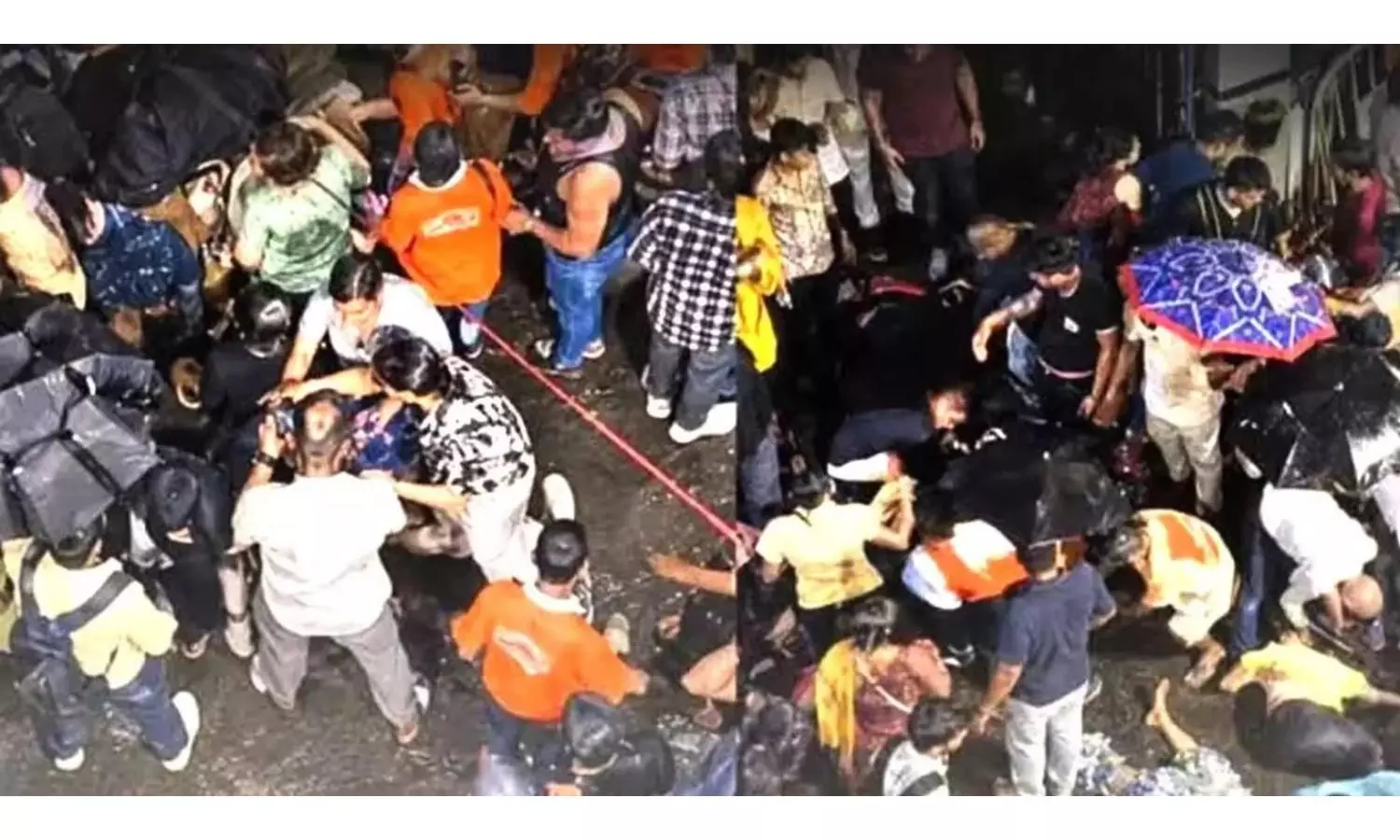
Stampedes and miserable traffic management is not how Kolkata organises and manages its biggest public festival, the Durga Puja. For a festival of its size, comprising, by chief minister Suvendu Adhikari’s reckoning, 58,000 pujas, marking a 25 per cent increase, with a seasonal spend of over Rs 50,000 crores and celebrated in every nook and corner of Kolkata and the districts, organisation and management are key.
The manmade disaster of a stampede, killing 19 people inside the “pandal” or structure that housed the 2026 version of the goddess Durga and her universe at Chorbagan, in a narrow lane in North Kolkata, is the outcome of organisational failure. As the first outing of the sanitising “Sanatan” order, the tragedy spread a pall of pain on people and organisers, reversing the optimism and the pro-mise that all “progress” is linear. It is not.
Experience matters in the levels of management required for a safe and secure puja that is easily accessed by the public. And, everyone, almost the entire population of 100 million plus, in West Ben-gal is an expert on how pujas are best managed. As addicted pandal hoppers, travelling into the city and out, people are intrinsic to the festival.
The 2026-top-trending-on-social-media Chorbagan Sarbajanin Puja was announced as a model “Sanatani” event, a landmark of purified piety and strict adherence to the protocols of ritual accuracy. How the strict order of ritual prescribed in the Devi Mahatmyam-Durga Saptasati can be further purified is a puzzle. With a new order of management and a new chief patron, Devdeep Adhikari, the newly elected chief minister’s nephew, the puja was expected to ensure ritual purity and near-perfect management. It failed.
The tragedy was an inexcusable failure of crowd management in a crisis situation. It happened inside the pandal-pavilion structure. To recap what happened, it rained, heavily. Crowds tried pushing in and succeeded. Crowds exiting the pandal did not. There was an announcement that crowding could endanger the temporary structure. There was panic and people tried pushing forward. The outcome was disaster.
It is a time-honoured rule that inside the perimeter of the puja pandal, the committee is responsible and accountable for all management and monitoring. Outside, it is the Kolkata Police with a proud reputation for obstruction of free traffic flow.
The public needs someone to blame; and the blame for the Chorbagan tragedy has shifted to the new line-up of BJP’s North Kolkata heavyweights, Tamaghna Ghosh and the MLA from Jorasanko, Bijay Ojha. It is not sufficient, though logically necessary, that various minions of the committee are arrested for the lapses in crowd control. The public seems to have made up its mind; the committee failed.
There is growing nostalgia for the old order of administration, though not specifically the Trinamul Congress or the Communist Party of India (Marxist)-led Left Front. The old is gold underlies the criticism that police was not exclusively focused on crowd management outside the pandal. The police, it is widely believed, is even more politically weaponised and, therefore, failed on two counts; prevent vandalisation of mostly CPI(M) book stalls outside puja pandals despite court orders to the contrary and traffic plus crowd management. If the police chose to be less efficient about supervising the clogging of entry and exit points from within a puja structure, it does not follow that its slackness was the principal cause of the tragedy.
The verdict is seriously harsh against the new order that the BJP ushered in after it triumphed in the May elections. Had the Adhikari government paid heed to the truth about the Durga Puja as a participatory event where the public is primary to the celebration, the management of the pujas might have been different. The Unesco citation of the Durga Puja as an intangible cultural heritage of humanity noted it is “the best public performance of religion and art”, that era-ses the “divides of class, religions and ethnicities”.
The effect of the tragedy is plummeting confidence, already in a downward spiral, about a government that promised freedom from fear and an increase in efficiency summarised in the BJP’s election promise of eradicating “bhoy” and improving “bharsa.”
Heading into a possible municipal election at year-end, the Adhikari government will face a test of its performance as assessed by urban voters. The results may not reflect the deep sense of disappointment, frustration and disapproval that public opinion aired on social media reflects. It does, however, have the potential to serve as a barometer, much like the gubernatorial and state/local elections do in the United States and everywhere else in this flawed but functional democratic world.
Whatever the BJP order in West Bengal may have achieved in six months, it has begun to transform how the people perceive themselves. Ins-tead of being obsessively inward-looking, like frogs in a well, poor and middle class and upper class Bengalis have begun to track what the BJP is doing in the rest of the country.
The countrywide protests seem to be evolving into a long term movement and struggle against perceived injustices of exclusion of voters under the SIR that has deleted 13.37 crore hitherto-enfranchised people. Anger over deletions may or may not affect the voting outcomes in the municipal elections, because the issue does not appear to have had any impact on the recent bypolls in Muslim-majority Rejinagar in Murshidabad and Hindu-majority Nandigram. The possibility, however, exists; mismanaging the Durga Puja may push urban middle class fence-sitting voters off their perches.
SIR has grown into the BJP’s biggest challenge; its credibility, legitimacy and confidence are under scrutiny by both young and older voters, fed up of many things like inflation, unemployment, joblessness, the communally divisive politics of Hindutva and corruption and indifference of the administration to urgent needs like better education, healthcare and infrastructure for the poor and economically less advantaged. Voters more likely to use the municipal elections to deliver a rap on the knuckles to the BJP and Mr Adhikari are the urban poor. The erosion of its limited political capital is not good news for BJP and Mr Adhikari. The plan was that the magic of the double engine would boost the party’s capital, in West Bengal, primarily for the 2029 Lok Sabha election. That plan is failing. Public opinion is growing over a return to the single engine, federally autonomous model headed by independent leadership.
Shikha Mukerjee is a senior journalist in Kolkata