Shikha Mukerjee | After Nitish: New Order Leaves All in Fix in Bihar

Tejashwi Yadav and Chirag Paswan emerge as key players in post-Nitish Bihar politics
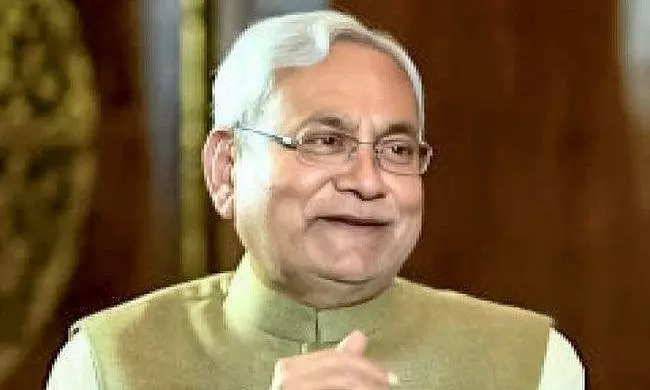
Crystal ball gazing is par for the course in politics. The exit of 10-time Bihar chief minister Nitish Kumar, whose comings and goings are vividly captured by the mocking but nevertheless indulgent description of “Paltu Ram”, and his retirement to the Rajya Sabha seems a fairly straightforward change.
As the slightly bigger partner in its coalition government with the Janata Dal (United), the BJP is obviously going to stake claim to the top state job, fulfilling its ambitions of heading Bihar in ways that follow the tried and tested manual used in other BJP-ruled states.
That is how crystal ball gazing becomes a hazardous exercise in anticipation, because there are variables and there are probabilities. But nothing will quite add up till Bihar begins to readjust to a new era of leadership.
Nitish Kumar’s exit and the induction of his son and heir, Nishant Kumar, a rookie in politics, is not the real game changer; he is, at best, a sideshow. The real players in the post-Nitish Kumar Bihar are from within the BJP. It would have been perfectly easy for the BJP to name Nitish Kumar’s successor the day the grand old man of Bihar politics filed his nomination papers for the Rajya Sabha. It is an excuse that courtesy demands the BJP wait till the election is over. It is likelier that having persuaded Nitish Kumar to remove himself outside Bihar, the BJP is now weighing its choices.
There is enough speculation, and Bihar politics is always a glorious space for gossip and calculations.
The BJP can’t follow the routines it seems to prefer since 2019, of choosing a lightweight if not a nonentity to head the state. The party is in a minority in the 243-seat Assembly. It is not even close to the halfway mark. The strategy for replacing Nitish Kumar is therefore complicated. It can do what it did in Maharashtra when it poached Eknath Shinde first and then Ajit Pawar, split the Shiv Sena and the Nationalist Congress Party, reducing the elected coalition government of the Maha Vikas Aghadi in 2022 and setting up the Mahayuti coalition in power.
After Nitish Kumar as chief minister, the JD(U) seems ready to splinter. The forecast is that the JD(U) can break up in different ways, with different leaders heading in different directions. One lot can make tracks for the BJP; another lot can make tracks for the Rashtriya Janata Dal of Tejashwi Yadav and a third lot can hope to make deals with Chirag Paswan, the leader of the Lok Janshakti Party and a very successful election organizer, who has converted a small party into a potential challenger. If these splits occur, that leaves the JD(U) seriously incapacitated; and the BJP in a fix.
Bihar’s future politics will not be dominated by the BJP, Mr Paswan and Mr Yadav, who are both young and ambitious and the state is their homeland. As bhoomiputras with lineage and legacy, there is no doubt that Tejashwi Yadav will need to figure out how to play against the BJP and against Chirag Paswan; the same dynamics is true for Mr Paswan. He has succeeded in bargaining hard with the BJP in seat-sharing negotiations in 2024 and 2025; and his strike rate is extraordinarily impressive; five out of five in the Lok Sabha election and 19 Assembly seats of the 30 seats his party contested.
Way back in the past, when the Janata Party was breaking up, there were three young and ambitious leaders, from different castes. There was Lalu Prasad Yadav, there was Nitish Kumar, a Kurmi, and there was Ram Vilas Paswan, from the Scheduled Castes.
Between Lalu Yadav and Nitish Kumar and with Ram Vilas Paswan in play, upper caste dominance in Bihar ended. They were brother-enemies. With Nitish Kumar out of the game, at least that is how it looks like and Nishant Kumar too new, inexperienced and untutored, Bihar’s politics will see a new game, with heirs of fathers “who embossed the state with their imprint on either side of the millennium”.
The late Sankarshan Thakur, journalist and author, described the Lalu-Nitish relationship as a “strange diptych”, two people who were joined at the hip, but fractured.
Bihar’s pride and its fiercely defensive sensibilities about its identity will come into play as the future bhoomiputra leadership contest gets underway. The present setup in the BJP has not nurtured a successor to the late Sushil Kumar Modi, who was popular and strong enough to stand up to Nitish Kumar, to the point that the party’s central leadership deemed it wiser to steer him out of Bihar and give him a place in New Delhi. The BJP therefore is at a disadvantage in that it does not have an obvious leader in Bihar.
The generational change in Bihar will test the political capabilities of Mr Yadav and Mr Paswan as they navigate the political space that has opened up after Nitish Kumar. How caste forces align themselves in the new era is not clear, as yet, because as the successor to the JD(U), Nishant Kumar lacks connect with the base, both electors and party organisers and workers.
There will be an ideological churn as well; the old socialist politics of Ram Manohar Lohia and Jayaprakash Narayan have faded, though the spectre of pro-people pro-poor politics at the level of discourse remains. The BJP’s “Sabka Saath, Sabka Vikas” narrative is not an alternative, as was irrefutably confirmed when even the BJP had to sign on to endorse Nitish Kumar’s demand for a caste census, that later became a socio-economic survey of castes.
There are no easy or short-term solutions to Bihar’s perennial problems of unemployment, backwardness, poverty and all its related problems, floods, crop emergencies and corruption. Voters in Bihar are well aware that the solutions are not coming soon; what they do expect is a leadership that has empathy and the will to respond when there are crises, while taking small and ultimately insignificant steps to delivering long-term change. In the post-Mandal era, where caste and privileges are under scrutiny and reconfiguration, the next generation of leadership faces a more complex reality of higher aspirations and stronger drag coefficients among Bihar’s labour force,
which is mostly located in the rural areas, relatively unskilled and inclined to migrate. Chirag Paswan, Tejashwi Yadav or someone else has the job of convincing voters by the time the next election comes around in 2030 that Biharis can depend on one of them to empathise because none of them can do any more.