Shikha Mukerjee | 30 Days That Shook World: Games With Constitution

Two basic questions arise from introduction of a constitutional amendment that could be a belated effort to legislate on wrongs in the past or it could be a pre-emptive move meant to change the rules of the political game, ahead of crucial Assembly polls in Bihar in 2025, and Tamil Nadu, West Bengal, Assam, Kerala and Puducherry in 2026
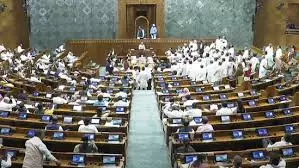
The Narendra Modi government likes to spring surprises. The Constitution (130th Amendment) Bill 2025 for removing suspected wrongdoers from holding elected public offices as Prime Minister, Union ministers, chief ministers and state ministers was a “shock and awe” event during Parliament’s Monsoon Session, where the ruling minority BJP government and its NDA partners were under constant attack by an Opposition that has suddenly found its mojo.
Two basic questions arise from introduction of a constitutional amendment that could be a belated effort to legislate on wrongs in the past or it could be a pre-emptive move meant to change the rules of the political game, ahead of crucial Assembly polls in Bihar in 2025, and Tamil Nadu, West Bengal, Assam, Kerala and Puducherry in 2026.
The first question is why in the Monsoon Session, without following the convention of preliminary consultations with other political parties and the large body of independent or invested experts from the law, academia, retired judges and the administration. The second question is how to interpret and understand this move that has short-term, long-term and far-reaching effect on India’s political dynamics and the existing landscape where different parties are in power in different states?
It is easy to conclude that the constitutional amendment was a hasty effort at diverting political and public attention from the surprisingly successful cohesive and coherent INDIA bloc fightback against the Election Commission’s Special Intensive Revision process in Bihar that delisted 65 lakh voters out of a total of 7.89 crore voters. It can also be seen as a hurried move to deflect attention from the Modi government’s lame defence about the initiation and outcomes and shutdown of Operation Sindoor, the failure to negotiate a trade deal satisfactory to India with the United States, despite the friendly relations between Mr Modi and President Donald Trump, and among other things, the chronic problems of joblessness, economic performance, farm sector woes and the tensions of identity politics over religion, ethnicity, caste and more.
The proposed constitutional amendment, as it stands, does not lend itself to taking it at face value, as a step to uphold the “canons of constitutional morality and principles of good governance” that would be in the best interests of the public and the “welfare of the people.” If the amendment were truly to uphold public morality and probity in governance, then the exercise ought to have been preceded by a semblance, if not substantive, consultation with all representatives of the political class, from NDA allies to the Opposition parties in the INDIA bloc and outside it. Any question raised about the intention of the proposed amendment effectively undermines its purpose.
The abruptness of the constitutional amendment’s introduction can be explained if the assumption is that the Modi government remembered suddenly that there was a gap in the existing laws that needed to be plugged following the political theatre that developed after Arvind Kejriwal, then Delhi’s chief minister, was taken into judicial custody and remained jailed for weeks, or that Jayalalitha, sworn in as Tamil Nadu’s chief minister, had to step down because she was convicted in a corruption case, or that the Supreme Court had felt it necessary to offer S. Balaji, a minister in Tamil Nadu’s DMK government a choice, between resigning or having his bail cancelled. That, however, is not entirely plausible as an explanation.
Given the intensity of the polarisation and the hostility between the ruling side and the Opposition in India’s politics, the timing of the legislation and its intent require more explanations than have been forthcoming. The reaction of the Opposition, including party leaders and chief ministers, has been hard-hitting. Mamata Banerjee called it the “death knell of democracy”, while M.K. Stalin said “this is how dictatorships begin”. Rahul Gandhi likened it to “medieval times, when the king could just remove anybody at his will”. Akhilesh Yadav said his Samajwadi Party would not join the committee to examine the amendment. This is how polarising the move has proved to be.
Since the BJP-led NDA needs support from other parties to get the two-thirds majority it needs to pass the proposed change, working on creating a consensus about it would be the expected course of action. By turning the amendment proposal into a confrontation, the Modi government has triggered speculation that it may resort to various questionable ways to get the two-thirds majority it needs to pass the bill. Or, the bill may have been introduced and sent to a joint committee as yet one more exercise in political posturing, like the “One-Nation-One-Electon” bill that is currently leading an extended life in a joint committee that has asked for an extension to consider it more.
The proposed legislation is suspect because if it is passed, by whatever machinations is required to get a two-thirds majority in the two Houses “present and voting”, there are short-term, long term and far-reaching effects. In the short term, Mamata Banerjee and M.K. Stalin clearly feel threatened by its power.
In the long term, other Opposition chief ministers and ministers have reason to feel equally threatened by the extraordinary power the bill gives to the police and the judiciary to proceed against and incarcerate politically-appointed executives. The far-reaching effect hypothetically is that in case an Opposition party succeeds in winning an election and forming a government, that government could be destabilised almost immediately if a criminal case is filed against the incumbent chief minister. The same reason could be valid if a political coalition wins enough seats in the Lok Sabha to form a government.
Calling it a “Get Out of Jail or Get Out of Office” legislation, as lawyer Sanjay Hegde has done, is a fair assessment of the effect of the 130th Constitution Amendment, as it is proposed. By setting a deadline, the proposed bill is effectively mischievous in its intentions. In case after case after case, the Supreme Court has pointed out over several years that investigations and the prosecution’s case are interminable extensions to keep cases going: “This is the pattern, just make allegations without reference to anything”, as Justices Abhay S. Oka and Ujjal Bhuyan said on the Chhattisgarh liquor scam.
Extended incarceration, in a bail-driven judicial system, is a means of excluding the political Opposition, by obstructing participation and blocking access to office. When ends and means are aligned to serve a dubious purpose, the political fight converts itself into a full-fledged declared war to use lawfully approved destabilisation as an underhand means for regime change.