SANJAYOVACHA | Modi-Sitharaman Budgets Miss The Woods For Trees | Sanjaya Baru

The annual Economic Survey, prepared by the Union government’s chief economic adviser and his team, who work within the portals of the Union finance ministry, in fact offers an excellent account of the global and national economic context and environment and the challenges and opportunities that these present
Dr Manmohan Singh is still remembered for the historic Budget speech he delivered in 1991. Palaniappan Chidambaram branded himself as the author of the “Dream Budget” of 1997, with his tax rate cuts. Yashwant Sinha became famous as the “rollback minister”, for reversing many Budget proposals under pressure from allies in Atal Behari Vajpayee’s National Democratic Alliance coalition government. Pranab Mukherjee earned notoriety with the “retrospective taxation” proposal of 2009.
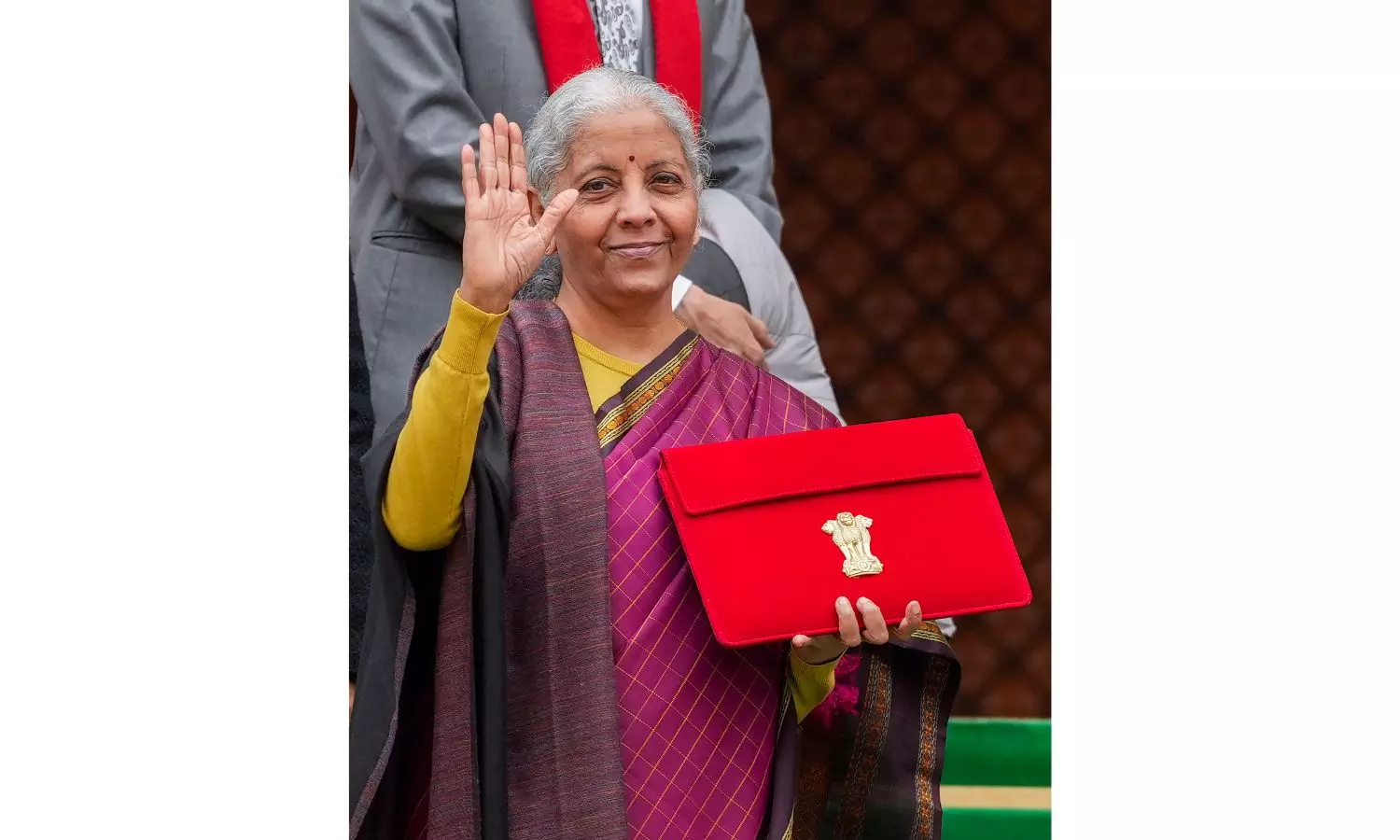
After earning the distinction of making the maximum number of Budget speeches in Parliament, nine as of now, what will Nirmala Sitharaman be remembered for? For becoming breathless and almost fainting while reading out the longest Budget speech? For having the biggest number of acronyms in any Budget speech since Independence? For not cracking a single joke in any speech?
Ms Sitharaman’s speeches, presenting what should rightly be called the Modi-Sitharaman Budgets, are full of sectoral announcements and initiatives that consistently shy away from defining a larger vision. All about trees with little focus on the woods.
This year was certainly one that required a more forward-looking visionary statement, offering a view of the woods surrounding the trees. Clearly, Ms Sitharaman’s many sectoral initiatives have been crafted to deal with the challenge facing the woods – the global uncertainty and domestic demand slowdown. But the Budget speech does not specify how her many initiatives are likely to address these challenges.
The annual Economic Survey, prepared by the Union government’s chief economic adviser and his team, who work within the portals of the Union finance ministry, in fact offers an excellent account of the global and national economic context and environment and the challenges and opportunities that these present. The Budget speech could have framed the plethora of initiatives within this context, explaining how these policies will address the challenges the economy and the people of India are facing.
In fact, the budgetary strategy does seek to address five significant challenges India is facing without specifying them -- youth unemployment, inadequate private corporate investment, the new global trade order, the challenge of acquiring new technologies and strategic resources and the need to enhance investment in health, education and research.
While everyone routinely mouths the slogan that India will become “Viksit” -- a developed economy -- by 2047, few address the question of “how”. As Montek Singh Ahluwalia, the former deputy chairman of the now defunct Planning Commission, said at the Centre for Economic and Social Studies (CESS), Hyderabad, to become a developed economy by 2047, the country has to push up the average annual rate of growth from 6.5 per cent in the past two decades to 8.0 per cent in the next two decades. What needs to be done?
It was incumbent upon Ms Sitharaman to inform Parliament as to how her expenditure and revenue proposals will enable this acceleration in growth, at least during the remainder of this government’s term, that is up to 2029. The three “kartavyas” which Ms Sitharaman mentioned -- stepping up growth, meeting aspirations and ensuring equitable development -- are well taken. How the expenditure proposals will deliver on these goals is not quite clear.
Ms Sitharaman has been widely, and deservedly, credited and complimented for adhering to fiscal discipline. By retaining the fiscal deficit to national income ratio at 4.3 per cent in fiscal 2026-27, she has stayed the course. One consequence of maintaining this discipline while yielding on direct and indirect revenues, is that total Central government expenditure has risen by only around 7.0 per cent in nominal terms. If this is so, how do the many sectoral allocations made add up? If the government is spending more in some areas, is it spending less elsewhere?
Many have noted the sharp hike in defence expenditure. It appears that some in the government have gently suggested to the media it should draw attention to this fact in the backdrop of Operation Sindoor and the policy of “atma nirbharta” in the defence sector. The curious fact is that ever since 1948, the first India-Pakistan clash, defence spending has always been hiked after each such episode -- 1962, 1965, 1971 and 1999 -- and then it declines. What the armed forces require is a five-year defence plan, and a procurement policy that guarantees purchase from arms manufacturers so that the latter are incentivised to invest. Episodic hikes mean nothing.
Ms Sitharaman has taken initiatives to attract investment from non-resident Indians, perhaps against the background of declining foreign direct investment. But it remains to be seen if overseas Indians will put their money where their mouth is or merely chant “Bharat Mata ki jai” and retain their savings overseas. The Budget has also shied away from addressing the
issue of putting in place a policy on a bilateral investment treaty that will encourage FDI to return.
As for the many initiatives announced by the finance minister, their impact on the economy and employment generation will depend on implementation by both the Union and state governments. This points to the importance of state capacity -- a subject on which the Economic Survey has much to say in its brilliant Chapter 16. Part two of Chapter 16 offers an excellent evaluation of the limitations of state capacity and what needs to be done about it. Unless state capacity is drastically improved, allocated funds will remain either unspent or mis-spent.
Ms Sitharaman has done well to repeatedly refer to the “ease of doing business” (EoDB) and to the “ease of living” (EoL) as policy objectives. These are good intentions but the delivery on these goals is left to other ministries and state governments. To the extent that tax administration has been eased, the finance minister has made her contribution. The burden of delivering on EoDB and EoL rests with the Prime Minister and the chief ministers.
Without a decisive move on these fronts, the static within the system that stifles enterprise and slows growth will not be eliminated.
It was amusing to see the reaction of most business leaders representing business associations like the Confederation of Indian Industry (CII) and the Federation of Indian Chambers of Commerce and Industry (Ficci) continue to mouth their approval of budgetary policy as they always do. Such fulsome praise as they offer has to be matched by an increase in private corporate investment that has remained virtually stagnant for over a decade. The proof of the pudding will be in the eating.
Sanjaya Baru is a writer and economist. His most recent book is Secession of the Successful: The Flight Out of New India