REFLECTIONS | After Starmer: Will UK Go From Frying Pan Into Fire? | Sunanda K. Datta-Ray

All this is a major setback for Sir Keir’s centre-left Labour Party which swept the polls in the 2024 general election by winning a landslide victory that secured at least 410 seats and ended 14 years of Conservative rule. The decisive win gave Labour a substantial majority in the 650-seat House of Commons, which makes it seem all the more strange that the surge of goodwill evaporated so quickly
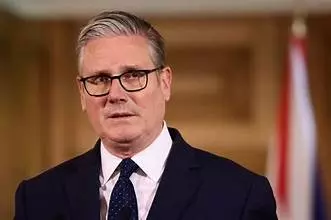
The antics of Britain’s ruling Labour Party politicians recall the hoary proverb “Whom the gods would destroy, they first make mad”. It is variously attributed to ancient Greeks like Euripides or Sophocles and no doubt to classical Indian masters as well.
Even if Sir Keir Starmer survives the current tamasha, Labour politicians won’t have much reputation for sagacity left unimpaired, especially if they now make a beeline to return to Europe, which seems not unlikely. The crisis reflects most badly on the modern British aaya rams and gaya rams among his colleagues.
Everything seems to have burst into the open only last week when Wes Streeting, the secretary of state for health, resigned from the Starmer Cabinet, and on Saturday finally staked a claim to the party leadership and the top job. He won’t be the only one, others are likely to stake claim too. Similarly, no one is bothered that Mr Streeting’s partner -- fiancé is the word he uses -- is male. What did cause a slight flutter was that the most likely contender for Sir Kier’s position, Andrew (Andy) Burnham, couldn’t bid for it, not being an MP. He was mayor of Greater Manchester. But he had been an MP from 2001 to 2017, and made no secret of his present prime ministerial ambitions, and was spotted on the train to London’s Euston station almost as soon as the news of a possible vacancy became known. He only needs a safe seat. Many believe that the road to Number Ten is now clear, although it will be long and tortuous.
Britain’s next general election must be held by August 15, 2029. Sir Keir might quit before then, and Mr Burnham (providing he is already in the Commons) or some other Labour MP may take over as a lame duck PM. But it will not be easy to restore the dignity of the position and confidence in the incumbent’s ability to heal the wounds of a bleeding nation that, to quote Dean Acheson, one-time US secretary of state, has lost an empire but not yet found a role. In these last few weeks, an abrasive Donald Trump has rubbed it in more than once that he, too, believes in Acheson’s argument that Britain's reliance on a “special relationship” with the US and a weak Commonwealth means that its independent power status has gone.
Only last week, King Charles III’s speech from the throne -- written of course by the Prime Minister -- warned that an "increasingly dangerous and volatile world" threatens his country and that this volatility stems from global instability, particularly the West Asian conflict. He might have added that a plethora of would-be prime ministerial aspirants can only aggravate tension, and that in the middle to long run it might benefit the egregious Nigel Farage, former leader of the UK Independence Party and now heading the right-wing populist Reform Party, a man with a powerful reputation for anti-Semitic, anti-Paki and anti-Black sentiments.
All this is a major setback for Sir Keir’s centre-left Labour Party which swept the polls in the 2024 general election by winning a landslide victory that secured at least 410 seats and ended 14 years of Conservative rule. The decisive win gave Labour a substantial majority in the 650-seat House of Commons, which makes it seem all the more strange that the surge of goodwill evaporated so quickly.
Less than two years later, Labour lost the most seats of any party in the local and regional elections held throughout the country in early May. Not only that, but the Reform UK Party, led by Nigel Farage -- an ally of President Donald Trump’s and the central figure in the Brexit movement -- made significant gains. A feature of this transformation was that Britain’s traditionally two-party system seemed suddenly to splinter into a bouquet of small and middling political groups. Other organisations, particularly the left-wing Green Party, also recorded notable wins so that a cacophony of politicians began baying for Mr Starmer to resign while even some of his own lieutenants began clamouring that Labour needed a new leader.
“The Prime Minister needs to go. That is not negotiable,” wrote Clive Lewis, another senior Labour member of Parliament, with a candour that would have been unthinkable in Indian politics. Other Labour MPs followed suit. It was the widely hailed triumph of the centre-left over the centre-right Conservative Party, presided over by former Prime Ministers like Rishi Sunak and Boris Johnson. It also appears to have been a decision of principle which is rare in the rough and tumble of parliamentary politics. Josh Simons, the first-time Labour MP from Makerfield, who is vacating his seat, says the Labour Party had been “imploding” over the past week. Making the sacrifice for the party, he said, “was too big an opportunity to miss”. Makerfield, incidentally, is where Mr Burnham, a Manchester man, has lived most of his life.
If a single reason must be cited for the Labour Party faring so badly, and, by implication, for the growing unpopularity of Sir Keir Starmer's tenure, it has to be Britain’s weak economy which, in turn, reflected global strains such as the rising cost of oil and the expense of transport, both inflated by the closure of the Strait of Hormuz. But the rumpus over his appointment of Peter Mandelson, who apparently had links to Jeffrey Epstein, the convicted paedophile, as ambassador to the US and lying about their relationship, a surge in anti-Semitism that forced the government to declare a "national emergency" and a host of minor deficiencies that drew heavy media scrutiny and criticism regarding the acceptance of hundreds of thousands of pounds in "freebies" and hospitality since 2019 all add up.
Catapulted into a challenging post, Sir Keir Starmer must have disappointed thousands of voters who feel, like Wes Streeting, that they have lost confidence in the Prime Minister. Accusing him of treating well-meaning critics with disdain and of sacrificing his followers while himself remaining untouched, the former health minister wrote: “Where we need vision, we have a vacuum. Where we need direction, we have drift.” There could hardly be a more brutal indictment of the man who is expected to lead Britain out of chaos and recapture the sense of mission that once ruled half the world. But if Nigel Farage is Britain’s destiny, that might well be from the frying pan into the fire.