Pradeep S. Mehta and Amit Dasgupta | How To Navigate Global Politics In A Trump-driven Era Of Uncertainty

Even the World Trade Organisation (WTO) needs to be recast to suit the preferences of the United States, without bothering about its poorer members
Geopolitics is undergoing unprecedented turbulence ever since Donald Trump began his second term as US President a little over a year ago. Uncertainty and confusion have emerged as defining characteristics, triggering understandable global concern. To call 2025 an international relations nightmare will be an understatement. The way out is to neuter President Trump before he can cause any further damage.
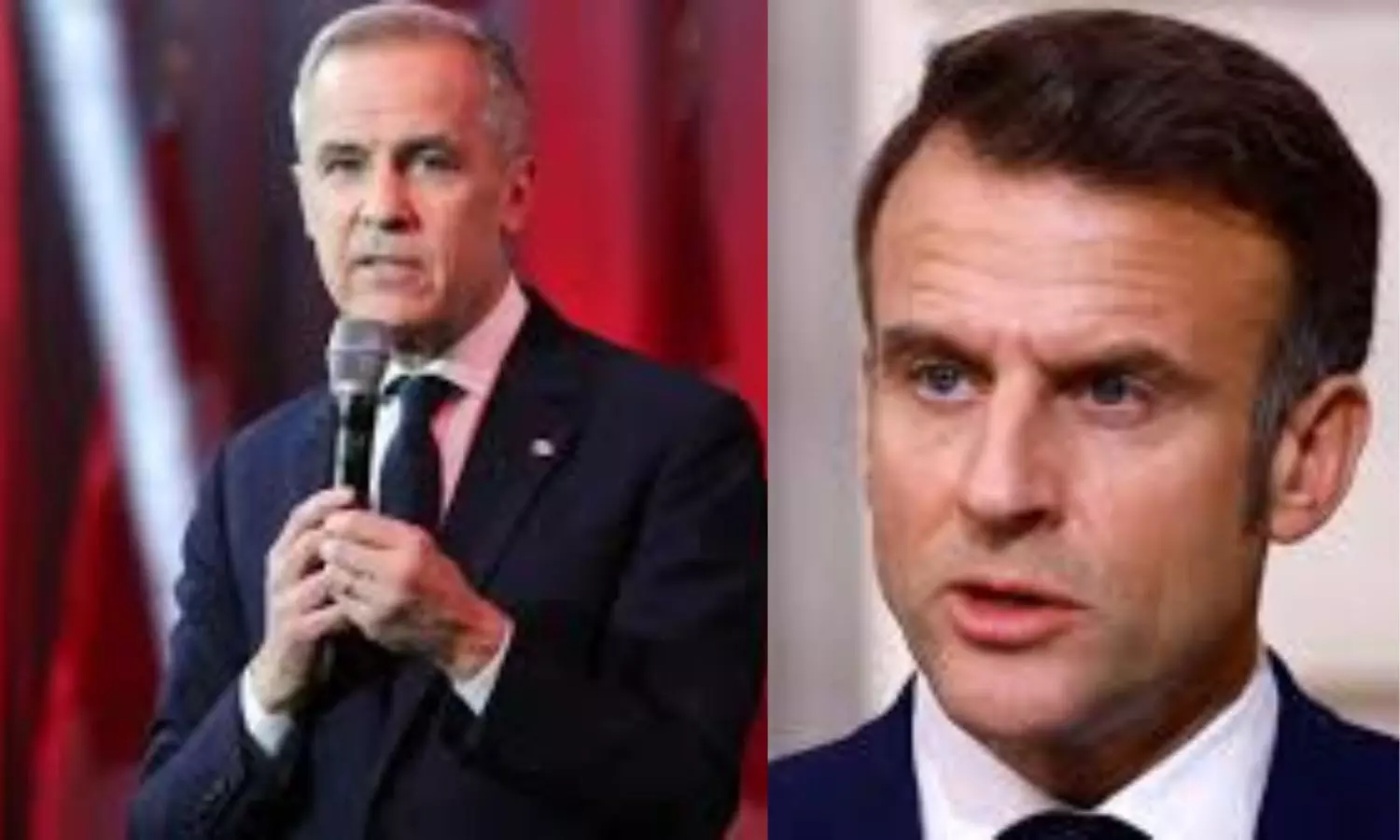
He has recently launched the global Board of Peace (which is not limited to Gaza, as initially thought), and which is properly the job of the United Nations. Even the World Trade Organisation (WTO) needs to be recast to suit the preferences of the United States, without bothering about its poorer members. Perturbed with this attack on multilateralism, French President Emmanuel Macron and Canadian Prime Minister Mike Carney spoke candidly at the World Economic Forum meeting in Davos last week of the need to search for a sustainable and strategic global order based on collaboration and cherished values.
Mr Carney’s speech has gone viral. He said: “Middle powers must act… If you are not on the table, you are on the menu”. This type of language was used by poor African countries when the WTO came into being in 1995, reflecting the view that the WTO is an unequal treaty.
Ever since he took over as US President for the second time, Mr Trump’s behaviour has been irrational. He has weaponised tariffs for goods to enter the US as his power stick. Mr Trump’s primary objective is to be unpredictable, and thus to steer the narrative. It’s also increasingly clear that his thinking is transactional and unapologetically imperialistic, and that he is egotistical by nature and looks at personal profits in international deals. Consequently, he is unforgiving of those who disagree with him. These are the hallmarks of a greedy bully.
Consider, for instance, the US attack on Venezuela. Since he took over as President, he had signalled his intent. His focus was primarily control over Venezuela’s “beautiful oil” and its supply, especially to China. Through a military operation, a sitting President and his wife were abducted to the US to stand trial on trumped-up charges of narco-trafficking. Widely-shared images of a handcuffed Nicolas Maduro were meant to not only humiliate him but also to convey to the world what Mr Trump was capable of doing to countries or leaders who denied him what he wanted.
He has now expressed his interest in acquiring Greenland, an autonomous region of Denmark, ostensibly to ensure Arctic security, which the US could easily have done through military means with other Nato countries. What is important is that Greenland has significant deposits of critical minerals and uranium, which Mr Trump wants control over. Arctic security is just an excuse.
This is a direct threat to America’s long-standing European allies. The Danish Prime Minister has warned that any US takeover would herald the end of Nato. Further, some European countries have sent a contingent of troops to Greenland to resist US troops, if required. Mr Trump retaliated by imposing additional tariffs. Europe has suspended ratification of the recently negotiated US-EU trade agreement.
The arena is set for what could be a major confrontation and a fracture of the Western alliance, leading to global disorder. Mr Trump knows his bullying strategy will be severely undermined if he were to cave in. The Europeans also know they are no match for America’s military power. Unless a formula which is acceptable to Mr Trump is found, Greenland will soon become US territory. A huge strategic disruption in geopolitics is in the offing.
There were signs of turbulence when Mr Trump weaponised tariffs. Many countries, including EU members, accommodated his unreasonable demands because of their heavy dependence on Washington. Nations around the globe were targeted, with India being among the worst hit (threatened with 500% tariffs if it doesn’t stop buying Russian oil and arms). It also became clear that Mr Trump was not going to be constrained by treaty obligations, international law, or commitments made by previous US administrations.
India has realised that the US is not a dependable partner. Mr Trump’s statements (India is a “dead economy”) and the offensive rhetoric of his officials point to deep-rooted negative perceptions of India. While it’s not in India’s interest to alienate Washington, a shift in strategic thinking is vital to strengthen partnerships with other countries. Building bridges with Beijing is central to India’s strategic interest. The India-EU trade deal is an exceptional example of this kind of forward thinking.
New Delhi needs to review its hands-off policy over Beijing. Any enhanced links with China do not imply we are not mindful of the border disputes and other challenges that China poses. But it does provide the strategic space to move from outright distrust to seeking collaborative engagement on a range of soft issues, including improved market access. Such steps will enable Beijing to see the advantages of a cooperative relationship with New Delhi, rather than an adversarial one.
Mr Trump’s approach to global affairs is the tipping point in the recrafting of foreign and security policies globally. How nations reinvent their strategic thinking will determine their future. India, too, is in the same boat. We can either legitimately sit at the high table of global affairs or become a casualty and a forgotten chapter in the history of aspirant nations. This will require that we are able to tell Mr Trump, and indeed anyone else, that while ensuring our strategic interests is our priority, New Delhi would do so in keeping with international law and with a focus on global peace and welfare; and that this cannot be attained through hegemonic aspirations and adversarial behaviour.
Pradeep S. Mehta is the secretary-general of CUTS International, a 42-year-old leading global public policy research and advocacy group. Amit Dasgupta is a former Indian diplomat and a Distinguished Fellow at the Australia India Institute. The views expressed here are personal.