Pavan K. Varma | Don’t Let America Decide From Where To Source Oil

The US government has issued a presidential order to set up a “monitoring committee” to ensure that India does not buy oil from Russia “directly or indirectly
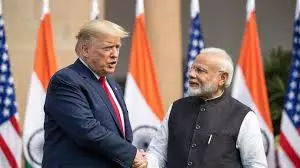
In the 19th century, colonialism overwhelmed and plundered nations through military power; later, neo-colonialism used military and economic power to co-opt nations into servility; today, we have, in Trump’s doctrine and practice, the advent of tariff imperialism.
I do not make hasty judgements. The India-US trade deal would naturally involve some give and take, and I had cautioned against premature euphoria or blanket condemnation. But in the details subsequently made public, one issue is a matter of deep concern: Is America putting a veto on India’s purchase of fuel from Russia?
The US government has issued a presidential order to set up a “monitoring committee” to ensure that India does not buy oil from Russia “directly or indirectly”. Such an arrangement is tantamount to a direct challenge to India’s sovereignty. Monitoring, in this context, is a euphemism for outside supervision. It implies suspicion, conditional trust and the presumption that India must be kept under watch lest it deviate from an approved path. Such an arrangement, if accepted, would set a dangerous precedent. Sovereignty is rarely lost in one dramatic moment; it is more often diluted through small concessions presented as pragmatic compromises.
The minister of external affairs, in a statement after the US Monitoring Committee was announced, has not categorically asserted that India will exercise its sovereign right to decide where it sources its imports from. It has merely said that “national interest will be the guiding factor in our choices”, which would depend on “adequate availability, fair pricing, and reliability of supply”.
One would have thought that our response should have been far less ambivalent. In the past, India has always defined national interest in terms of the notion of strategic autonomy. It was never isolationism, nor was it naïve moralism. It was the recognition that a civilisational state, emerging from colonial subjugation, must preserve the right to decide for itself — who it trades with, whom it befriends and how it safeguards the welfare of its people. That principle has never been abandoned, but this is precisely what seems to have happened now.
The blunt question is: Can a third country dictate to a sovereign nation what commodities it may buy, from whom, in what quantities, and at what price? To suggest that India should voluntarily restrict its energy options — particularly when discounted supplies are available — is to ask it to bend before a third county’s fiat ignoring our sovereign rights. Even if cheaper oil is available elsewhere, the choice to avail it must be ours, not an order by an outside power. Besides, purchasing oil from Russia is not only an issue of fuel supplies. India-Russia relations are time-tested, and we have extensive and strategic tie-ups in the areas of security and defence. To put such a relationship in jeopardy, not because our national interest dictates it, but because a third country has so directed, is a challenge to our autonomy and dignity.
The threat by America that punitive tariffs or additional sanctions will be reimposed if India does not comply, sharpens the sense of diktat. Sanctions, by definition, are instruments of coercion. When applied extraterritorially and unilaterally, they challenge the very notion of equal sovereignty among states. To acquiesce to such pressure would be to accept a hierarchy in which some nations legislate not only for themselves, but for others as well. For instance, would America accept a condition, under the trade deal, that India has the right to impose punitive tariffs on the US if it in any way bolsters Pakistan’s military establishment and the terrorism infrastructure it openly supports against India? I think not.
Supporters of acquiescence argue that the strategic partnership with the United States is too important to jeopardise. This is undoubtedly true — but partnerships, to endure, must be based on mutual respect. Strategic convergence cannot mean strategic submission. India has shown, time and again, that it can maintain strong relations with diverse powers without becoming an appendage of any. Indeed, it is precisely this independence that makes India a valuable partner, not a pliant one.
There is also a larger systemic concern. If India accepts restrictions today on oil from Russia, what prevents similar pressures tomorrow on defence procurement, technology partnerships, or relations with other countries deemed inconvenient? Once the principle of external veto over internal decision-making is conceded, the slope becomes perilously slippery.
Another argument often advanced is moral — that buying Russian oil indirectly supports its invasion of Ukraine, or any other actions that the so-called “rule-based international order” may not endorse. Morality in international relations, however, has always been selective, contextual and subordinate to national interest. History offers no shortage of examples where today’s moral arbiters have themselves traded with regimes of dubious virtue when it suited their strategic or economic needs. India’s position, even on Ukraine, has been consistent and transparent: It advocates dialogue, diplomacy, and de-escalation while keeping its national interest paramount. This is not cynicism; it is realism tempered by restraint.
India’s rise in the world has been accompanied by a renewed assertion of its voice, conscious of its history and responsibilities, and not apologetic when defending legitimate national choices. Nor should we hesitate in asserting that sovereignty is not a bargaining chip to be traded for short-term advantage.
In the final analysis, this is not an argument against engagement with the United States, nor a defence of any particular supplier. It is an argument for first principles. India’s national interest is best served when its choices are made in New Delhi, not ratified elsewhere. Trade deals must enhance prosperity, not circumscribe autonomy. Strategic partnerships must widen options, not narrow them. The United States, for its part, must decide what kind of relationship it truly seeks with India. Is it one of partnership between equals, or one of alignment enforced through pressure?
Trump is transient. But sovereignty is not. A free nation does not need permission to buy from wherever it wants. To accept otherwise would be to forget not only the lessons of history, but the meaning of independence itself.