Parsa Venkateshwar Rao Jr | What Does The End Of ‘War On Naxals’ Really Mean For The Majority Of Indians?

The end of Naxalism on March 31, 2026 is perhaps just an incidental detail. The political battle of propaganda over who had ended Naxalism will continue to rage
The Narendra Modi government at the Centre has now declared “victory” over the nearly 60-yeard-old Naxalite movement. The movement had emerged at Naxalbari in West Bengal in 1967. There are three parallel stories intertwined in the denouement of the government-Naxal encounter through the decades.
Prime Minister Narendra Modi would naturally want to claim credit for the victory because the right-wing BJP is viscerally opposed to the extreme left-wing ideology of achieving a socialist revolution through violence. The BJP, though it doesn’t say so, is opposed to any egalitarian polity, and it gets round by focusing on improving the lives of the poor without subscribing to the idea of equality in absolute terms. The Congress too was against Naxalites, otherwise known as Maoists, but it professed socialism and it did not place cultural nationalism with its virulent majoritarian bias at the top. So, there is competition of a kind between the two major parties over their opposition to the Naxals.
The end of Naxalism on March 31, 2026 is perhaps just an incidental detail. The political battle of propaganda over who had ended Naxalism will continue to rage. The fact that Naxalism has dwindled, tapered off during the Modi government’s tenure will give the BJP the bragging rights. The third strand of the story is that Naxalism was breaking from within, both ideologically and structurally. The Naxals and their sympathisers can claim that they were not defeated, but they have pressed the pause button as it were.
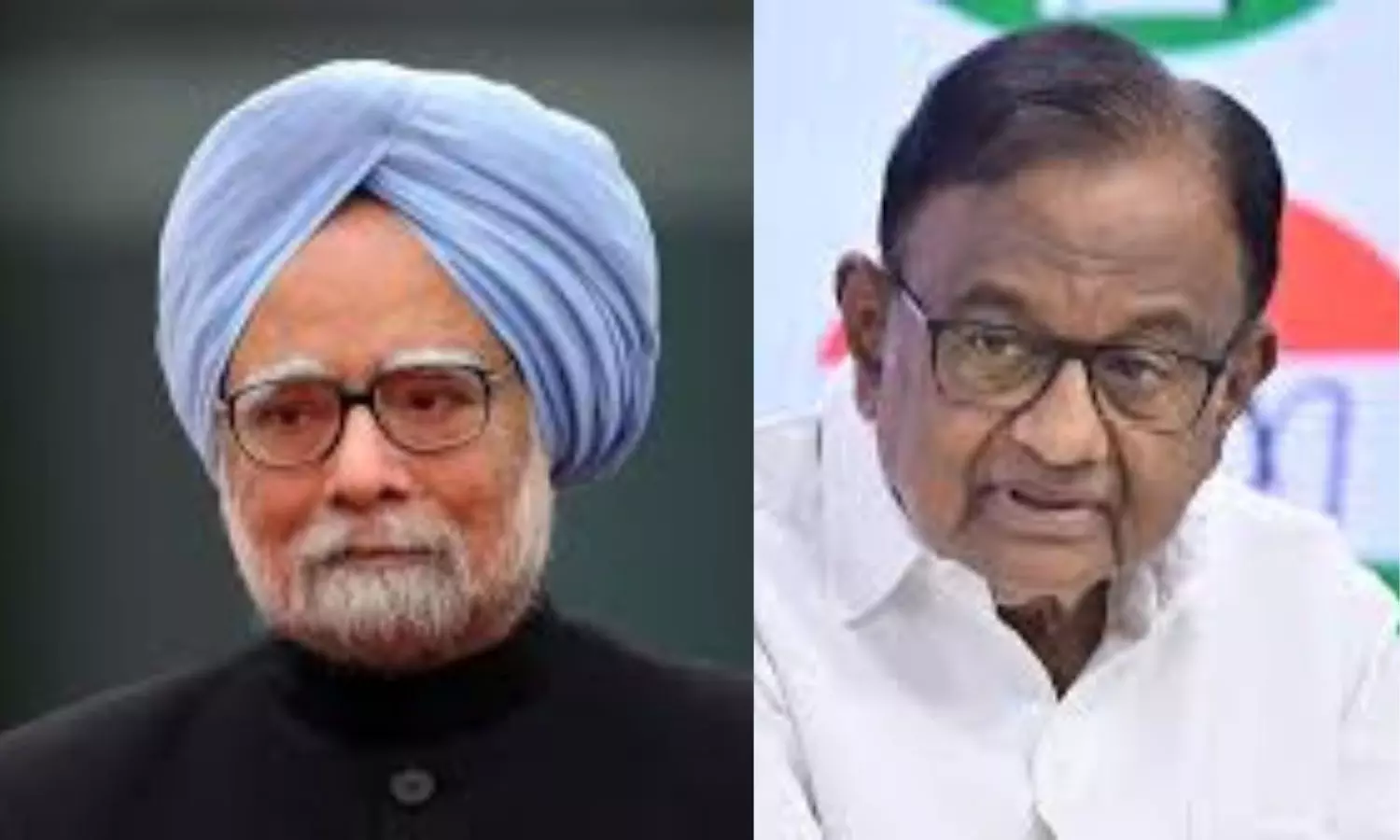
It was former Prime Minister Manmohan Singh and former Union home minister P. Chidambaram who were determined to fight left-wing extremism (LWE). The acronym LWE is their invention. The government’s statistics, as released in a press statement of April 10, 2025, shows that there was decline in Naxal activity between 2010 and 2014. The Press Information Bureau (PIB) release entitled “Naxamukt Bharat Abhiyan: From Red Zones to Growth Corridors” shows that 720 civilians were killed in 2010, and this declined to 222 in 2014; and it further fell sharply to 121 in 2024. Similarly, Naxalite attacks on economic infrastructure stood at 365 in 2010, 100 in 2014 and 25 in 2024. Narendra Modi formulated his own plan to counter the Naxals in 2014 when he came to power. The National Policy and Action Plan, approved by the government in 2015, was his blueprint. It involved allocating more funds for strengthening the police forces through improved infrastructure, greater financial allocation, expanding roads and the communications network. This included extending 4G mobile telephones to Naxal-affected areas. And it seems to have paid off.
It is the internal story of the Naxals that is of interest as well. Most of the senior leaders and ideologues in the party seem to have reached the end of their tether, as it were. There is a reference to a 22-page booklet from the top ideologues which has advocated giving up the armed struggle, and to adopt democratic and constitutional methods to achieve the Communist goals. There is indeed a distinction between the socialist utopia and the Communist one. Karl Marx, the principal ideologue of Communism, and the Naxal godfather, Chairman Mao, would have insisted that Communism is not socialism. The polemics could make for interesting debate, but that is not of relevance in the calm that ensues with the purported end of Naxal violence.
The real question will revolve around the issue of poverty and development. Mr Modi had put the issue rather succinctly. He said: “It is true that Maoist violence had stalled the progress of many districts in central and eastern India. That is why, in 2015, our government formulated a comprehensive “National Policy and Action Plan” to eradicate Maoist violence. Along with zero tolerance towards violence, we have also focused on a massive push to infrastructure and social empowerment to bring a positive change to the lives of poor people of these regions.” Home minister Amit Shah, in a September 28 speech, gave a polemical punch when he said that the people who had argued that the rise of Naxalism was due to poverty and lack of development had constructed a false narrative, when the real case was that Naxalism was the reason that development did not happen. Mr Shah is extending the fight against Naxals to the Naxal sympathisers in civil society. It has not much to do with who is right in the analysis, but what is the reality. The reality seems to be that Naxalism is on the backfoot, and the Modi government can crow about it.
It is also an interesting turning point for society, its economic and political aspects. There has been tremendous economic growth in a relative fashion. People earn more money today than they did 10 years ago, and 25 years ago. The economy could be much worse for a lot more people today than it was decades ago in real terms, despite the increase in wages and salaries, and the economic growth rate. The job opportunities are much more diverse, and also much more fragile and even greater uncertainty with the volatile global situation. The unrest of the people is not likely to die away because Naxalism is not there any longer. It is here that the political aspect arises. Do people have more opportunity to express their needs and distress today, or is the political space choked in the name of security and cultural nationalism? There is enough reason to believe that the Hindutva dominance of the polity is silencing voices of dissent. It is the failure of democratic ways and means that could lead to possible eruptions of the Naxal kind in future. Clearly, the BJP is not fond of democratic dissent, and therein lies the danger. The Naxal menace is at an end. The Hindutva majoritarian menace dances on the political horizon.