The Syrian Wars of the third and second centuries BCE, between the Ptolemaic and Seleucid empires, were at their core a struggle for control of mercantile revenues and the fertile plains that fed imperial ambitions. So too were the Roman-Persian Wars that raged across centuries for dominion over the Fertile Crescent
The collapse of the Islamabad Memorandum was a predictable reckoning. The US-Iran deal promised a cessation of hostilities, an end to Iranian restrictions on the Strait of Hormuz, a phased reduction of American military assets in the region, sanctions relief for Tehran, and a substantial economic commitment to Iran’s reconstruction. A 60-day deadline was set to resolve the outstanding nuclear-programme issue. By early July, that architecture lay in rubble.
The Houthis in Yemen, acting at Iran’s behest, have announced a blockade of the Bab al-Mandab strait. Saudi Arabia and 13 other nations have formed the Multinational Maritime Defence Alliance in Riyadh to counter Houthi threats in the Red Sea and Bab al-Mandab. In less than three weeks, a diplomatic thaw had given way to maritime warfare, proxy escalation and the crystallisation of opposing military blocs.
To understand why durable stability remains elusive across the Middle East, one must first recognise that this land has been the central corridor of the Old World. Long before oil, it was the overland and maritime crossroads connecting the Indian, Chinese and Persian civilisations with Egypt, Greece and Rome.
The Syrian Wars of the third and second centuries BCE, between the Ptolemaic and Seleucid empires, were at their core a struggle for control of mercantile revenues and the fertile plains that fed imperial ambitions. So too were the Roman-Persian Wars that raged across centuries for dominion over the Fertile Crescent.
Religion added a vertical dimension to these horizontal struggles. The seventh-century Arab conquests momentarily unified vast stretches of territory, but the succession crisis following the Prophet Muhammad’s death in 632 CE embedded a fracture that would deepen over 14 centuries. The Sunni-Shia divide originated in a dispute whether the caliph should be chosen by consensus, as the Sunnis held with the election of Abu Bakr, or remain within the Prophet’s bloodline through Ali ibn Abi Talib, as the Shias insisted.
The Safavid conversion of Iran in the 16th century sharpened the divide irreversibly. The Ottoman-Safavid rivalry transformed this theological schism into an imperial struggle for legitimacy and territory. For the Sunni Ottomans, control over Iraq and especially Baghdad, with its shrine to Abu Hanifa, conferred religious authority. For the Twelver Shia Safavids, sovereignty was inseparable from guardianship of the shrine cities of Najaf, Karbala, Kadhimiya and Samarra.
The consequence was a centuries-long war that turned Iraq into a sectarian battleground. Ottomans categorised native Arab and Kurdish Shias as potential Persian subjects, issuing fatwas that condemned them as heretics and enacting laws that prohibited marriage between Ottoman women and Shia men. This state-administered framework of suspicion passed into the genetic code of the modern Iraqi state.
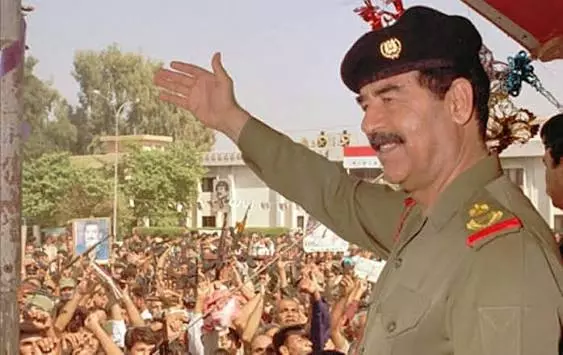
The two Persian Gulf Wars, the American-led dismantling of Saddam Hussein’s Sunni-dominated regime in Iraq and the mass uprisings of the Arab Spring after 2011 tore away the thin membranes of authoritarian stability, releasing the sectarian demons into civil wars in Syria, Yemen and beyond.
Yet the most enduring source of instability are the political boundaries, which were imposed on the region with almost artistic indifference to its human geography. The collapse of the Ottoman Empire after the First World War presented a vacuum into which European colonial powers and local nationalisms rushed, but the outcomes were shaped far more by the former than the latter. As early as 1916, Mark Sykes and François Georges-Picot were drawing lines across the Levant, partitioning it into British and French spheres of control in five distinct entities.
The Sykes-Picot Agreement remains the original sin from which a century of conflict has flowed. Before the ink was dry, Britain compounded the betrayal. The Balfour Declaration of November 1917 pledged a Jewish national home in Palestine, directly contradicting the terms of the Sykes-Picot agreement and the earlier McMahon-Hussein Correspondence, in which the British had promised the Arab Peninsula, including Palestine, to Sharif Hussein bin Ali of Mecca in return for his revolt against the Ottomans. Britain, triple-dealing, promised the same land to the Arabs, the Zionists, and its own colonial administration.
The consequences were immediate and lasting. The 1920 Treaty of Sèvres attempted to formalise the dismemberment, but its boundaries collapsed under the weight of Turkish resistance, leading to the Treaty of Lausanne, 1923, and the emergence of a Turkish republic that repudiated the colonial carve-up, an exception that proved the rule.
In Damascus that same year, a constitutional convention of delegates from Syria, Jordan, Lebanon and Palestine declared an independent Arab Kingdom under Faisal, a pluralistic constitutional monarchy forged through compromise among diverse communities. However, the French army crushed it, and Faisal fled. The suppression of that indigenous, negotiated vision of the post-Ottoman political community would haunt the region for decades.
Lebanon is another case study in the violence of well-intentioned sectarian engineering. The French created the state of Greater Lebanon as a haven for Maronite Christians but enclosed within its borders a large Muslim population, setting the stage for a confessional system that, at independence in 1943, apportioned the presidency to a Maronite, the premiership to a Sunni, and the parliamentary speakership to a Shia. Unresolved demographic and political tensions fermented until they exploded in the civil war of 1975-1990. The Syrian occupation, the rise of Hezbollah and the spillover from the Syrian civil war further hardened sectarian identities.
Likewise, the Kurds sit astride the fault lines left by Sykes-Picot and Lausanne, their aspirations repeatedly instrumentalised and betrayed.
If this sweep of history teaches anything, it is that peace in the Middle East must be foundational. What is required is nothing less than a Westphalian moment for the Middle East. A durable peace demands a comprehensive set of political and social rearrangements that the international community has historically lacked the patience and the regional powers the trust to pursue.
The fires engulfing the Strait of Hormuz and Bab al-Mandab today are not anomalies; they are the latest chapter in a story that will not end until the region’s peoples and the powers that meddle in their affairs muster the wisdom to address the fundamental, unresolved issues that have kept the Middle East suspended between war and a mirage of peace for the entirety of its recorded history.
