This involves the Israeli Defence Forces (IDF) retreating to a “yellow line”, skirting Gaza City etc, but well within Gaza. Hamas has agreed to release 20 hostages and hand over the remains of another 28
The crisis over Gaza, triggered by the brutal Hamas attack on Israel on October 7, 2023, has begun deescalating. On September 29, US President Donald Trump announced his 20-point plan to resolve it. With both the Israeli Cabinet and Hamas giving their approval to its contours, Phase-1 has begun.
This involves the Israeli Defence Forces (IDF) retreating to a “yellow line”, skirting Gaza City etc, but well within Gaza. Hamas has agreed to release 20 hostages and hand over the remains of another 28. Israel in return must release about 250 Palestinians serving life terms and another 1722 detainees picked up from Gaza. Hamas seeks the release of some high-profile prisoners, who can help unite Palestinians politically, across Gaza and the West Bank. So far, Israel has not accepted this demand.
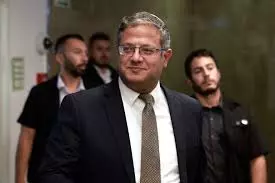
Simultaneously, Israeli national security minister Itamar Ben-Gvir, representing a far-right ruling coalition party, led 1,300 illegal Israeli settlers to intrude at the Al-Aqsa mosque in Jerusalem, the third holiest Islamic site. It was condemned by Islamic nations, including Saudi Arabia, Jordan, Qatar and others. The Palestinian foreign ministry saw it as an attempt “to thwart international efforts, including President Trump’s efforts, to halt the Israeli aggression and war against our people in Gaza”.
This underscores the threat to Israeli Prime Minister Benjamin Netanyahu’s governing coalition from his far-right partners. Perhaps with his reputation restored, Mr Netanyahu may not fear seeking a fresh mandate.
Since the UNSC Resolution 242 (1967), followed by Resolution 338 (1973), the core principle for resolving the Israeli-Palestinian issue has been “land for security”. US President Bill Clinton got Israeli prime minister Yitzhak Rabin and Palestinian leader Yasser Arafat to shake hands at the White House in September 1993. That kicked off the Oslo peace process. President Clinton’s final attempt, days before his presidency ended, in December 2000 is the closest any US leader has come to resolving the lingering dispute. But once the 9/11 attacks in 2001 occurred in the United States, the global attention shifted to counter-terrorism and combating Al-Qaeda. For two decades, the Palestinian issue appeared defunct. Israeli Prime Minister Benjamin Netanyahu tactically kept Hamas, controlling Gaza, isolated from the Palestinian Authority, wielding limited powers in the West Bank. Gaza functioned like an open-air jail with its occupants granted controlled access to Israeli territory. Meanwhile, as Mr Netanyahu came under increasing pressure of criminal prosecution for alleged corruption, he aligned with the far-right political parties. Consequently, he allowed more illegal settlements in the West Bank area.
Hamas’ 2023 attack caught the Israeli intelligence and government off-guard. It also revived the Palestinian issue. The US, under President Joe Biden, backed Israel targeting Hamas. The support persisted despite the mounting civilian massacre.
Much earlier, in the early part of his first term as President, Donald Trump had announced recognition of Jerusalem as Israel’s capital in December 2017. Following this, the US embassy was shifted there from Tel Aviv in May 2018. This unilateral concession, without extracting Israeli concessions, was unwise.
Following the 2023 attack, Israel began to decapitate Hezbollah and kill Hamas’ top leadership, in Gaza and abroad. Once Mr Trump was back in the White House in January 2025, Israel even attacked Iranian nuclear enrichment facilities. The US joined in bombing parts of the programme entrenched under mountains.
President Trump gave Israel a free hand over six months, while his chant seeking the Nobel Peace Prize got more persistent. The Israeli air attack on the supposed location of the top Hamas leadership, negotiating a ceasefire, in Qatar boomeranged. President Trump felt embarrassed as the Qataris had snuggled up to him with a Boeing 747 gift and the continued hosting of a US military base. This was the last straw which motivated the US to seek an end to Israel’s Gaza operation.
However, the next steps can be extremely challenging. First, the demilitarisation of Gaza and disarming of Hamas. Second, having Hamas abandon power, which it has wielded since 2007. Its surviving fighters must also opt for exile or amnesty.
Finally, the issue of transitional government, consisting of select Palestinians and experts. Overseeing that would be another body, led by President Trump, called the “Board of Peace”. The composition of these bodies and the methodology to disarm Hamas are unclear.
Meanwhile, the Nobel Peace Prize has gone to a Venezuelan pro-democracy activist, Maria Corina Machado. She shrewdly dedicated her award to President Trump. She is now in hiding and requires the US pressure on the Venezuelan government to institute democratic reforms and free elections.
According to Alfred Nobel the award is to be bestowed on a person, who during the preceding year conferred “the greatest benefit on mankind”. By this norm, any award for Mr Trump at this stage would be premature.
President Donald Trump is expected to visit Israel and Egypt on October 13. In Israel he will address the Knesset, as he needs to maintain pressure to ensure Israel’s government does not renege on its commitments under pressure from its far-right allies. In Cairo, he will address the Gaza peace conference along with Egypt’s President Abdel Fattah al-Sisi.
Mr Netanyahu has been openly claiming that no Palestinian state can be created. Since the Oslo Accords and especially since the Gaza conflict the Israelis have uninhibitedly allowed Israeli settlers to illegally continue grabbing more land in the West Bank. Thus the “land for security” formula has become progressively less implementable.
Where does India figure in this? Prime Minister Narendra Modi’s original tweet, praising Mr Netanyahu’s strong leadership, elicited negative reactions over charges of genocide against the Israeli leader. India must remain alert to Pakistan carving out a role in the international stabilisation force. Another element is Iran’s role, which the United States is trying to suppress by targeting nations engaging it economically.
Pakistan has shrewdly repositioned itself as a supplier of minerals, rare earths and energy to the US, based on presumptive deposits. It has offered the US a new port, between Iran’s Chabahar and Pakistan’s Gwadar ports. The Indian outreach to the Taliban is reminiscent of the Cold War-era India-Afghanistan alliance to contain Pakistan. While China was already active in the region, America’s re-entry complicates it. The Saudi-Pakistan military alliance and Turkey refusing to abandon Russian oil purchases and warning Israel indicates the realignments underway in the Islamic world. Thus, Indian diplomacy enters a challenging phase. The existing uncertainty in the South Asian neighbourhood will get impacted by West Asian turbulence, as President Donald Trump’s 20-point plan, punctuated with many unclear assumptions, unfurls.
