Hours later President Donald Trump fired a fresh salvo against India, on his Truth Social platform, when he announced the imposition of 25 per cent tariffs on Indian exports from August 1. Even more significantly, he condemned China and India for importing energy from Russia
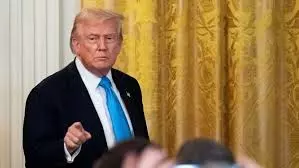
The debate over Operation Sindoor in the Lok Sabha earlier this week had ended with acrimonious exchanges between the Leader of the Opposition Rahul Gandhi and Prime Minister Narendra Modi, when the former sought a public declaration that the US President’s repeated claims of mediating the May 10 ceasefire between India and Pakistan were just “lies”.
Hours later President Donald Trump fired a fresh salvo against India, on his Truth Social platform, when he announced the imposition of 25 per cent tariffs on Indian exports from August 1. Even more significantly, he condemned China and India for importing energy from Russia. He demanded that Russia “STOP the killing in Ukraine”, and ended with “ALL THINGS NOT GOOD”. He threatened additional punitive tariffs if the energy imports from Russia continued. As if that were not enough, a fresh diatribe on India and Russia followed. He taunted that “they can take their dead economies down together”, saying the US had done “very little business with India”. The Indian government was caught off-guard, as the next round of trade talks were scheduled in New Delhi in the second half of August. Logically, till then, the US was expected to respect the status quo.
Two elements emerge from President Trump’s remarks. One, he resents India not agreeing to open its markets to meet his expectations. A stumbling block, as per reports, is India’s stiff resistance to opening the agriculture and dairy sectors, besides barring the entry of genetically modified crops or oils produced from them.
The second element is Russia. President Trump’s frustration with Russian President Vladimir Putin has mounted over recent weeks. Mr Trump has gradually moved away from claiming the ability to end the Ukraine war quickly because of friendship with Mr Putin. Signalling transition is the US resumption of weapons supply to Ukraine. The US sees as problematic China and India continuing to purchase Russian energy, indirectly funding the Russian military operations against Ukraine. China has promptly rejected the US demand. India merely ignored it.
Noticeably, President Trump has also simultaneously targeted Brazil, announcing 50 per cent tariffs and sanctions on the judge investigating former President Jair Bolsonaro. It is hardly coincidental that President Trump is now picking on the five original members of Brics -- Brazil, Russia, India, China and South Africa. He has threatened tariffs on any member which adopts an “anti-American” agenda. In particular, he has been agitated over a Chinese proposal for a new currency for trading amongst Brics members to replace the US dollar.
President Trump has been emboldened by his recent success in signing trade deals with many countries. Out of the 10 Asean members, the US has concluded deals with the Philippines and Indonesia, with 19 per cent tariffs, and Vietnam with 20 per cent. Trade discussions have been concluded with Thailand and Cambodia, despite their distraction with border skirmishes. After a trade deal with Japan, the US has now finalised one with South Korea. Most importantly, during his golfing trip to Scotland, on July 27, a trade deal with the 27-member European Union was announced. America’s trade deals with the EU and South Korea have some similarities, revealing the US preferences.
The EU has committed to buy $750 billion of US energy over three years, a period co-terminus with the Trump presidency. It also committed to invest $600 billion in the US. Similarly, South Korea agreed to buy $100 billion of US liquefied natural gas, besides investing $350 billion in America. However, unlike conventional trade deals, these arrangements lack details or implementation mechanisms. Hence, CNN’s Richard Quest has called them “largely garbage”. South Korea was vulnerable to punitive US tariffs as export of its goods and services constituted 44 per cent of the country’s GDP.
Some EU members are murmuring dissent. French Prime Minister Francois Bayrou called it a “dark day” when an alliance of free peoples, instead of defending their values, “resolves to submit”. The European critics argue that instead of accepting 15 per cent tariffs, Europe could have threatened to retaliate against US digital services, besides excluding US technology companies from public contracts. In any case, the EU cannot compel any member or company to buy US energy. Furthermore, the quantities of energy that the US would need to export to match the commitment are unavailable till 2030.
What then are the options for India? First, the import of Russian energy by India would require visible curtailment to satisfy President Trump. Noticeably, the US has allowed South Korea to limit US beef imports and also restrict trade in rice. That is the kind of opening India must negotiate, instead of a blanket ban on American agricultural and dairy products. With the Bihar Assembly polls approaching, the BJP understandably wants to be seen as protecting the interests of small and medium farmers. Working around it is the challenge.
Like the EU, India must plan to manage trade with the US over the next three years of the Trump presidency. Pinpricks may continue like Mr Trump announcing a trade deal with Pakistan, involving a US company handling the “huge” newly-found oil reserves in the Rahim Yaar Khan area of Pakistan. Negotiating with President Trump involves handing him ostensible gains, even though the substance of the deal may vary.
Over the last decade, the BJP government treated two elements as critical to India-US relations. One was an assumption that the United States found India vital to “balancing” China. Mr Trump’s transactional approach negates this, as he treats India and China like distinct business clients. The other was the role of the Indian diaspora in influencing the US government. The anti-immigrant crusade against non-white US residents has compromised the Indian diaspora’s ability to influence Mr Trump’s decision making. On the contrary, because of the BJP’s hype about the close interpersonal Trump-Modi relations, the optics of an aggressive Mr Trump threatening Indian interests becomes difficult to market in India.
India thus faces a choice. It can either, like Canada, Brazil and China, prepare to tolerate some pain and confront President Trump. Alternatively, it can emulate the EU, compromise tactically. and swallow the medicine. However, a diplomatic lesson emerges which the Narendra Modi government needs to imbibe. Diplomacy ultimately is about the interests of nations. Thus, public theatre, involving slogans and hugs, may facilitate domestic projection but is ineffective in balancing interests in a world transitioning to new trading, investment and strategic paradigms.
