Dilip Cherian | Is Latest Joint Secy Rejig Paving Road to 2029?

Key appointments under Narendra Modi hint at tighter control
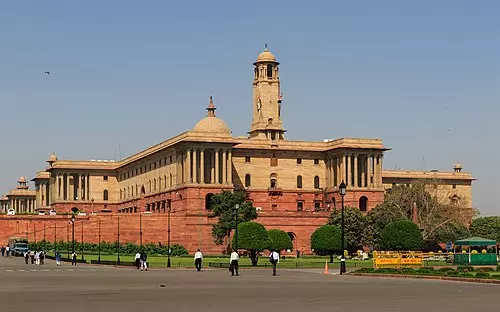
The Centre’s latest appointment of 48 babus at the joint secretary level across ministries looks routine on the surface. It isn’t. When postings cut across agriculture, commerce, defence, civil aviation and home, it’s less about filling vacancies and more about recalibrating the government’s operating system. Joint secretaries sit at that crucial junction where policy leaves the drawing board and meets the real world. Change the people there, and you often change how things actually get done.
The headline move is the appointment of Hardik Satishchandra Shah as private secretary to Narendra Modi at the joint secretary rank. That’s not just a posting — it’s a signal. It tells you who’s in the room when decisions are shaped, who filters information and who gets to nudge priorities.
Clearly, this isn’t an isolated reshuffle; it’s part of a longer game. The Narendra Modi government has been steadily tightening coordination across ministries, favouring officers who deliver, move files efficiently, and stay aligned with the larger political direction. With another round of changes expected later this year, this looks like scaffolding being put in place for the road to 2029.
There’s a logic to it. Governments don’t run on announcements; they run on execution. And execution, in India, is only as good as the babu handling the file. Put the right people in the right slots, and things move. Get it wrong, and even flagship schemes start gathering dust.
But let’s not pretend this is purely technocratic. Babu reshuffles have always doubled as political messaging. There’s also the issue of churn. Move people around too often, and institutional memory takes a hit. Projects that need steady hands don’t always benefit from musical chairs.
Still, the intent is hard to miss. This is about tightening the system, placing trusted officers where they matter most, and getting the machinery ready for the next phase. Whether it delivers sharper governance or just smoother optics will depend on one simple thing: Are these officers empowered to act, or just expected to comply?
Can a new team in Bihar change old habits?
Bihar is about to do what Indian states do best when power changes hands: reshuffle the bureaucracy and call it a reset. The difference this time? There’s a clearer sense of what that reset is meant to achieve.
Former chief minister Nitish Kumar has left a deep imprint, but if the early signals around Samrat Choudhary hold, this isn’t just about moving babus around. The idea is to build a compact core team, bring in technocrats who understand industry, and push Bihar toward manufacturing-led growth, which it has long promised but rarely delivered.
The logic is sound. States like Gujarat and Tamil Nadu didn’t attract investment by accident. They got the basics right — land, power, roads — and ensured the bureaucracy didn’t become a bottleneck. Bihar, for all its ambition, has struggled precisely here.
The sectoral focus on food processing, textiles and automobiles is sensible. These are scalable, job-heavy industries. But sectors don’t grow because policy says so. They grow when businesses can actually set up shop without getting lost in paperwork.
That’s where this “core team plus technocrats” approach will be tested. India has tried this before, bringing in experts, only to sideline them when their ideas hit bureaucratic inertia. Unless these technocrats have real authority, this risks becoming cosmetic.
The BJP’s strategy of changing the top and leaving the lower bureaucracy intact is politically neat. It signals change without chaos. But it assumes new leadership alone can shift old habits, which is a bit of a leap. Administrative culture doesn’t change with transfers; it changes with incentives and accountability.
Mr Choudhary needs to strike a fine balance. A more “assertive” administration can speed things up. It can also drift into over-centralisation, which investors tend to read as unpredictability.
Still, Bihar has an opening: a young workforce, rising demand, and a chance to plug into eastern India’s growth story. But the state’s problem has never been a lack of plans, but execution.
Smart officers, stuck system
Every few years, Delhi rediscovers the idea of “finding the right people". The latest buzz about the PMO and NITI Aayog scouting “next-gen” leadership from within babudom sounds both sensible and faintly familiar.
It’s a smart brief. Needless to say, India today needs officials who are as comfortable reading balance sheets as they are reading files, who can push infrastructure, decode digital systems, and still keep the politics of governance in view. It calls for babus who can think fast, execute faster, and speak the language of both policy and markets. The focus on officers with real delivery experience and not just a note-writing pedigree is overdue.
But here’s the uncomfortable bit. The system doesn’t fail for lack of talent; it fails despite it. Good officers aren’t rare. What’s rare is giving them room to take risks, back decisions, and survive failure. Without that, even the most “future-ready” shortlist becomes another revolving door of promise and frustration.
There’s also a subtle shift underway. When leadership is curated this tightly from the top, it inevitably reflects the priorities and preferences of the current establishment. That’s not necessarily a flaw, but it does blur the line between building institutional depth and building a loyal inner circle.
None of this makes the exercise pointless. In fact, it’s necessary. But talent-spotting, by itself, is the easy part. The harder question is whether the system is finally ready to trust the talent it keeps claiming to discover.