Bharat Bhushan | SC Hate Speech Ruling Casts Long Shadow On Minorities

The judgment will go down in history because the Supreme Court refused to apply the law against a Union minister who led a crowd in chanting “Desh ke gaddaron ko, goli maaro salon ko” (Shoot the traitors to the nation) during protests against the Citizenship Amendment Act (CAA) in 2020
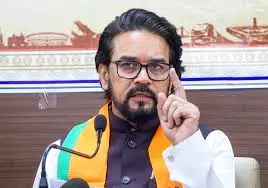
The Supreme Court judgment on April 29 on hate speech is likely to have a chilling effect on citizens, and not only on the minority community, which is the target of such speech.
The judgment, in a petition filed by Brinda Karat, will not be remembered for declaring that existing laws are sufficient for dealing with hate speech; for calling hate speech a threat to constitutional fraternity; or even for clarifying that no prior permission is needed for filing an FIR against hate speech or investigating it.
The judgment will go down in history because the Supreme Court refused to apply the law against a Union minister who led a crowd in chanting “Desh ke gaddaron ko, goli maaro salon ko” (Shoot the traitors to the nation) during protests against the Citizenship Amendment Act (CAA) in 2020.
The Supreme Court likes to give theoretical expositions of the law -- that is indeed, its job. It has pointed out that citizens must approach the police and escalate their complaints through the courts and enforcement agencies must do their job. However, even when precisely this process was followed in the Brinda Karat case, the police, the sessions court, the high court, and now even the Supreme Court have failed to act against hate speech.
The sloganeering in question was initiated by Union minister Anurag Thakur, Parvesh Verma and other leaders of the BJP. Can the court forget the context in which the slogans were raised? One only has to recall that on January 27, 2020 at a rally in Rithala, Delhi, Anurag Thakur led a crowd in chanting the “Desh ke gaddaron ko ...” slogan. He was campaigning for the Delhi Assembly elections of February 2020 while anti-CAA protests were going on.
On January 28, BJP leader Parvesh Verma made inflammatory remarks about anti-CAA protesters. In late February 2020, communal riots broke out in Northeast Delhi during anti-CAA protests. The ensuing violence left over 40 people dead and hundreds injured. Critics have argued that speeches such as Mr Thakur’s contributed to the hostile climate.
Taking cognisance of his hate speech, the Election Commission had in fact banned Mr Thakur from campaigning for a short while. Everyone, including the Election Commission, seems to have known that in the context of the unprecedented anti-CAA protests at Shaheen Bagh in Delhi, the targets were defined by their religious identity. Yet the Supreme Court does not think the incitement was sufficient to even warrant investigation, leave alone criminal prosecution. It has held that the slogan was not “directed at a specific community”.
In this case, the Supreme Court seems to have held the threshold for violent provocation so high that it renders hollow what it calls “sufficient” laws. Its consequences will be most damaging for the minority communities who have expected the judiciary to come to their rescue against threats and dehumanisation by hate speech. It could also erode the faith of secular citizens in the judiciary because of the judiciary’s hesitation in imposing restrictions on hate speech.
The scale of the problem is huge. Data collated by the India Hate Lab has shown that in 2025, across 21 states, there were at least 1,318 hate-speech events targeting religious minorities, especially Muslims and Christians. This represented a 13% rise over 2024 and a 93% rise over 2023. Nearly 98% of hate speech it found had anti-Muslim content.
It is ironic that in fact hate-speech laws are often used against minority communities for targeting Hindus and the legal machinery moves with alacrity in prosecuting non-Hindus for attacking Hinduism.
Such asymmetric enforcement of hate-speech laws was blatantly demonstrated when Mohammed Zubair of AltNews described a habitual foul-mouthed communal offender Yati Narsinghanand and some others, as “hatemongers” in a tweet. An FIR was filed post-haste for “outraging religious feelings”. Even though the Solicitor-General of India admitted in court that Narsinghanand had indulged in hate speech, it was the person who reported the instance of hate speech who was prosecuted quicker than the man who engaged in it. BJP spokesperson Nupur Sharma, for example, has not even been prosecuted or arrested till today for her derogatory remarks against Prophet Muhammad.
The Supreme Court’s behaviour has also been uneven. Its directions to the police to register hate-speech cases suo motu have not been followed on the ground. When petitions do come directly to the apex court, it has redirected the petitioners to high courts as in the complaint alleging failure of the UP government to act against Narsinghanand in December 2024. The petitioners were directed to go to the Allahabad high court instead.
Compared to swift action against minorities or their secular defenders on raising hate-speech issues, institutional inertia seems to take over when powerful political figures or religious leaders criminalise and dehumanise the minorities. It is left to ordinary people to speculate whether this reflects institutional bias or deference to the politically powerful.
The Supreme Court judgment will encourage communal actors to assume that there is no political cost to such rhetoric. On the other hand, the political benefits are tangible -- a rise in stature as a communal demagogue as well as real and measurable election benefits.
The Brinda Karat judgment also underlines the profound gap between judicial rhetoric and judicial remedies. The court’s eloquence about India’s founding civilisational principle of “Vasudaiv Kutumbakam” and about hate speech striking at the very roots of the principle of fraternity appears inversely proportional to its readiness to provide protection to a demonised and communally targeted community.
Under these circumstances, the judiciary must ask itself whether its credibility comes only from the Constitution or also from the public it is meant to serve. Surely how ordinary citizens are going to read its pronouncements must also matter to it.
Distanced from the events of 2020, the judgment can possibly be read as a defence of free speech. It may be argued that even if it is politically uncomfortable, a high threshold of hate-speech must be upheld to protect freedom of speech. But in the context that existed then, renders such a reading disingenuous.
Highfalutin words promising every citizen equal protection of the law, non-discrimination and the right to life and dignity are not just aspirations which adorn the pages of our Constitution: they have to be enforced for them to be real. Beautifully written judgments with no remedies for the complainants can be of no use to the citizens targeted by hate-mongers.
The writer is a senior journalist based in New Delhi