The law, which seeks to introduce 33 per cent reservation for women in the Lok Sabha and state Assemblies, was to come into effect along with the delimitation process after the ongoing Census was completed. Reports suggest that the government will go in for a delimitation exercise that will see the number of seats in the Lok Sabha and Assemblies increase by 50 per cent
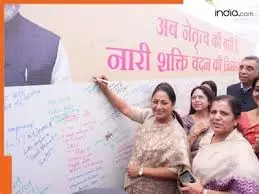
Prime Minister Narendra Modi’s call to all political parties to join the government’s efforts during the special three-day session of Parliament beginning on April 16 to implement the women’s reservation law is welcome, but the haste with which the government seeks to roll out one of the epoch-making legislations that the country had enacted and electoral reforms is not.
The law, which seeks to introduce 33 per cent reservation for women in the Lok Sabha and state Assemblies, was to come into effect along with the delimitation process after the ongoing Census was completed. Reports suggest that the government will go in for a delimitation exercise that will see the number of seats in the Lok Sabha and Assemblies increase by 50 per cent.
The delimitation will be carried out based on the 2011 Census, but population data will not be a criterion for assigning the number of MP seats to states. That way, the government has alleviated the fear of some states, especially in the south, that delimitation based on the new Census will result in their share of seats in the legislative bodies shrinking.
All right-meaning people will agree with the Prime Minister when he says one of the yardsticks of progress of a society is the role women get in the decision-making process. His reminder that the passage in 2023 of the Nari Shakti Vandan Adhiniyam reflected the unity of the country on this topic was also timely. However, it is unfortunate that the government has not thought it necessary to take steps that will strengthen this unity while implementing the law; it expects cooperation from the Opposition without deliberation.
Mallikarjun Kharge, All-India Congress Committee president and Leader of the Opposition in the Rajya Sabha, has already written to the Prime Minister demanding that the government call an all-party meeting to discuss the new reforms. Mr Kharge has pointed out that the government has not bothered to share the agenda of the special session or the details of the new legislative tools that will pave the way for the women’s reservation law.
The Union government has called the special session when several major states are heading to the polling booths to elect their Assemblies. It may be mentioned that these states together account for more than one-fifth of the total number of seats in the Lok Sabha.
If the government wants meaningful discussions on the new legislative enactments, it should also take the Opposition into confidence and brief them about the larger agenda of the special session, as they are all in broader agreement. It can also consider putting off the special session until the state elections are over. The wait need not be that long, as the final phase of the Assembly elections in this lot is scheduled for April 29.
The BJP-led National Democratic Alliance government at the Centre has a history of rushing important legislation, including amendments to the Constitution, through Parliament. It has refused to share the details of several laws before they are presented; there have been instances when laws were passed in the same manner. It will be in order if the government takes steps that can result in a foolproof enactment on a topic on which there is a national consensus.
