Landmark ruling urges cities to build and maintain footpaths for all walkers.
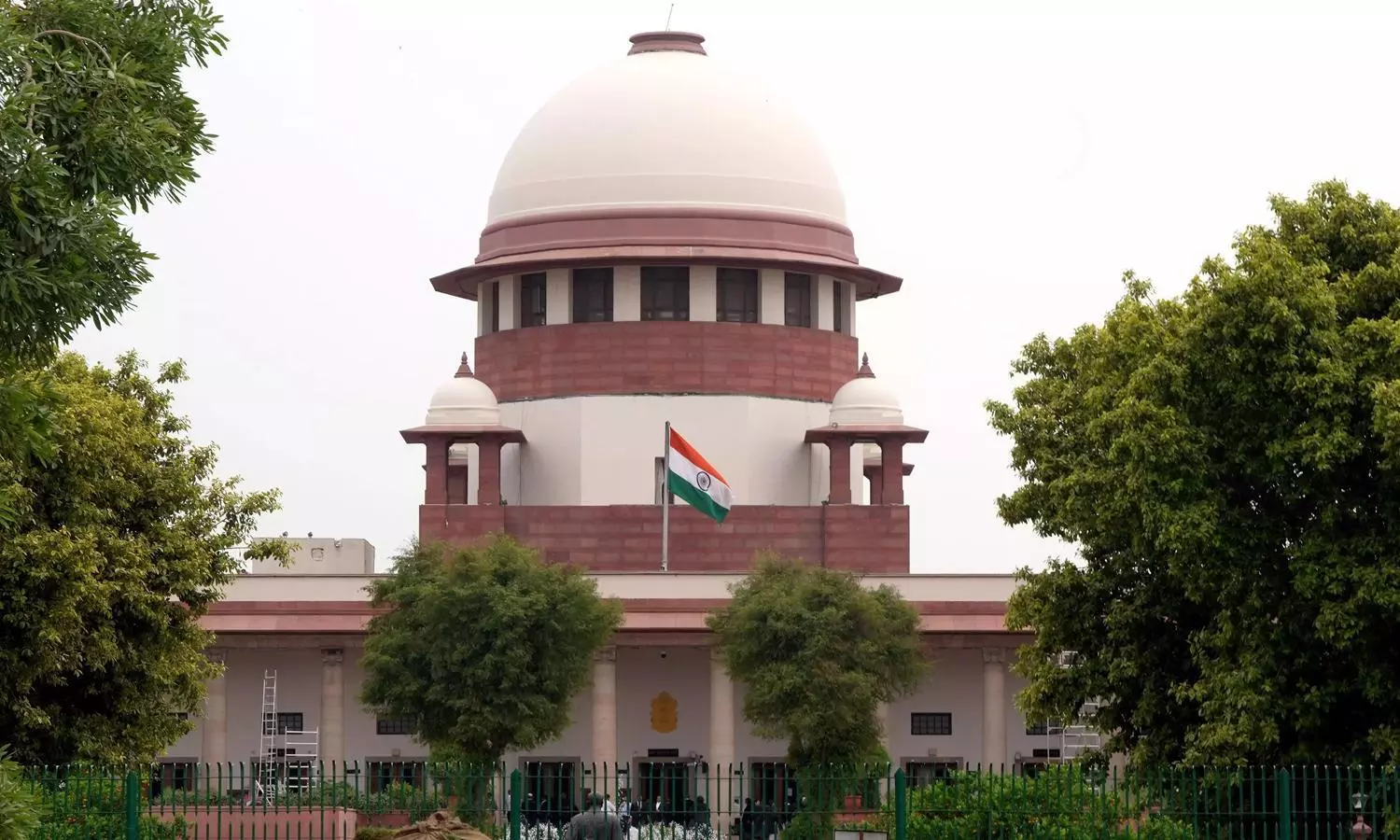
The Supreme Court judgement prioritising walking over motorised travel on the road and declaring that the right to walk on demarcated footpaths as a fundamental right contains great ideas that will go a long way in addressing one of the most under-focused human rights. It is important to push such ideas into the attention of the decision-makers unmindful of whether their time has come or not.
“If a road exists, there must then be a duty to ensure that a footpath is demarcated and maintained for walkers. This is an enforceable duty,” the court said expanding the scope of Article 19(1)(d) of the Constitution, which protects the right to move freely throughout the territory of India. To walk forms part of the freedoms guaranteed under the Article, the court ruled, when read together with Articles 19(1)(a), 19(1)(b), 19(1)(c) and Article 21 which safeguards the right to life and personal liberty.
The judgement which came on a petition seeking a higher compensation for the accidental death of a five-year-old boy who was walking to his school with his father is making an attempt to address several issues that plague our planning, especially urban planning. India hardly has planned cities, leave alone planned roads. These two both come up and expand on their own. Cities may have areas earmarked for the rich and powerful but their underbellies would be hellholes for the rest who live there. Roads are often taken over by those vehicle-haves while the have-nots are condemned to die under their wheels. Statistics has it that the number of pedestrians who died on the road has doubled in the last 10 years. More than 36,000 pedestrians are killed on Indian roads every year, that is 100 deaths on an average day. It’s an unacceptable and unaffordable set of data.
The planners may hold that India has been a poor country and it did not have models while they worked on ensuring the minimum to most people. They may also cite financial constraints. But those excuses are not available now. India is officially one of the top performing economies of the world; we have models across the world to understand how they protect the rights of the pedestrian.
It is important to note that the court was also critical of the Motor Vehicles Act, 1988, which again was all about vehicles and not about humans. The focus then was on how to protect vehicles and the humans in them; the rights of those who walk were never its concern.
The court order is now a wake-up call for the planners and the lawmakers to revise their opinions by factoring the rights of the larger share of the population. No country has unlimited resources to spend on a section of the people; they have to be optimised instead. In this regard, planners will be called upon to introduce more measures to disincentivise private transport and promote and encourage public transport. They will have to redesign old roads and approach further planning of new roads keeping in mind the Supreme Court judgment. The court’s call may sound a bit ambitious for now, but it is time it went into the planning process.