US President’s remarks on Iran and Venezuela raise concerns over power and sovereignty
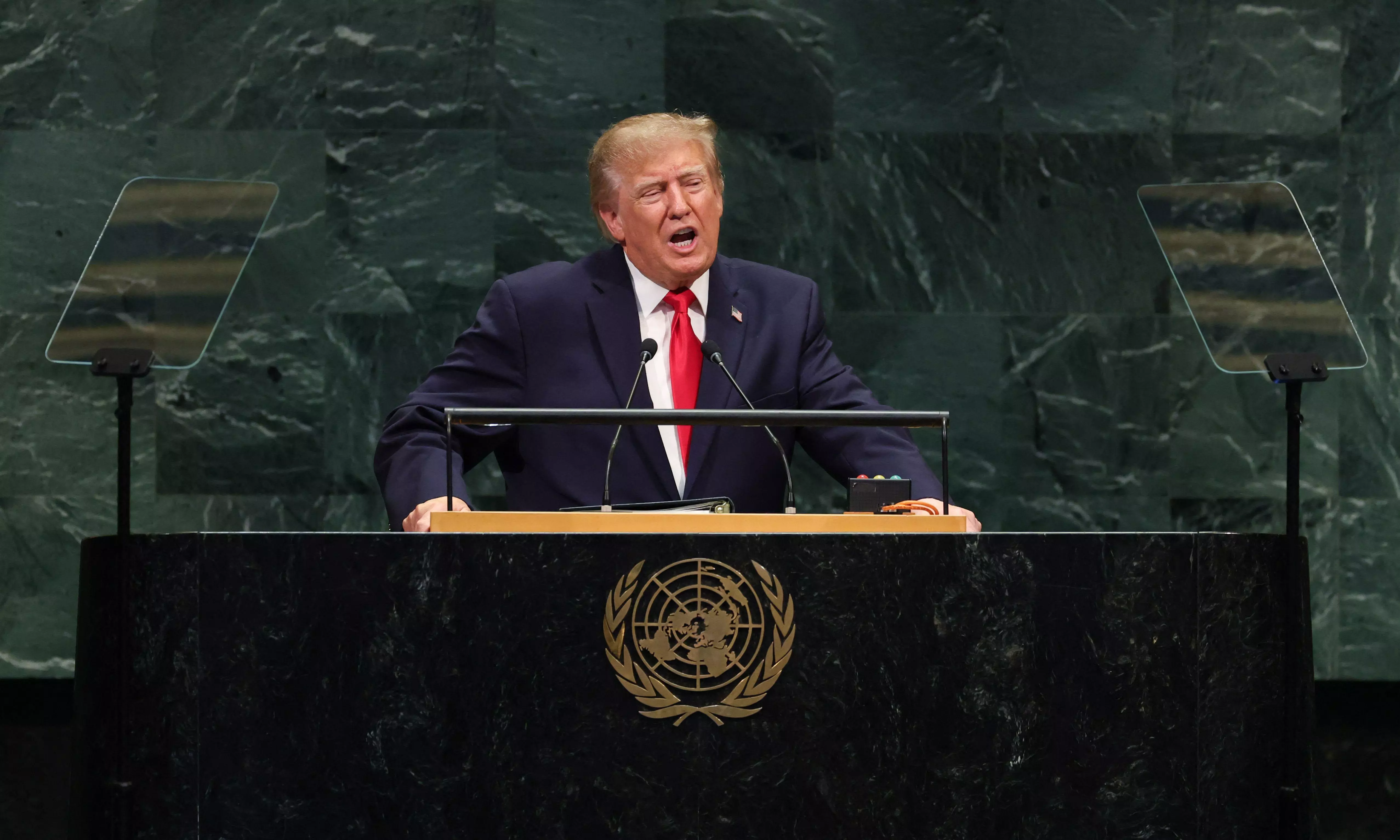
The United Nations was founded to prevent the repeat of the devastation that the World War-2 has made humans endure and from a conviction that even the strongest nations must be bound by rules. On September 22, however, US President Donald Trump used its rostrum to offer an entirely different vision, one in which American power gives Washington the right to decide the fate of other nations.
He asked whether he should “annihilate” the Islamic Republic of Iran if a deal was not reached. He recounted the US military operation in Venezuela and a subsequent oil agreement, billing it as the “spoils” of the victor. He predicted regime change in Cuba.
Though the United States has a long history of interventions and has supported regime change across the world, no US President has ever deployed the kind of candour Mr Trump’s speech had. Mr Trump presented military victory and access to another country’s resources as parts of the same transaction. It means a powerful country has a licence to invade the less powerful.
Going by this logic, Russia’s invasion of Ukraine should be perfectly acceptable to the US as Moscow saw Ukraine joining Nato as an existential threat to its national security. China could use the pretext to occupy Taiwan as part of its One-China policy. America and China could begin neo-colonialist regimes in resource-rich Africa, sending the world back to the 18th century.
The biggest casualty in this freefall would be the global economy. The United States has been one of the biggest beneficiaries of the rules-based global order. Though it is deeply in debt and has lost manufacturing to other countries, Mr Trump must realise it is no longer the 19th century when to win an economic war one accumulated spoils from vassal states. This is an era of brain power and the US would alienate the best of brains if it turns isolationist.