By their very nature, autobiographies and memoirs are selective and can be self-regarding but, to her credit, Sonia turned down the most wanted job in the country, which she hopes her son will occupy someday, if only to continue an interrupted family legacy.
There are always two sides to a story, and it is important that those on the power side of the barricade which separates them from the onlookers must tell their version in a nation that has lent itself too easily to opacity despite being an 80-year-old democracy, perhaps largely due to the public being so apathetic.
Sonia Gandhi was an enigmatic power centre without being formally in charge of government. In a country whose political field is filled with yes-men and sycophants standing beside leaders, her own story had to be told. What she has helped produce is an insightful work into how a witness to events from close to the power centre for years remembers how things played out.
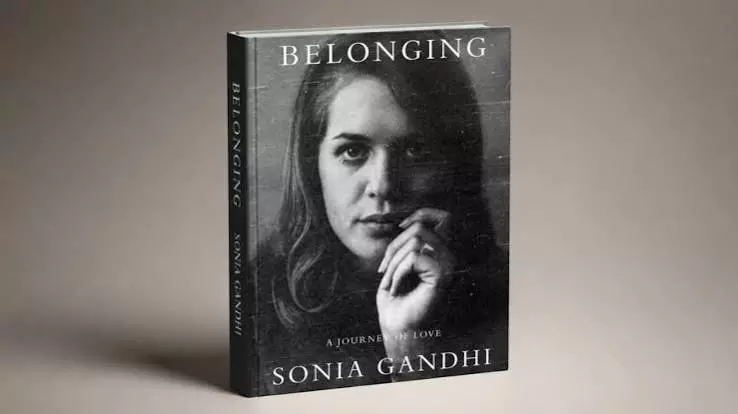
Belonging: A Journey of Love throws light on many of the contentious events that revolved around the survivors of the Nehru-Gandhi dynasty who were at the centre of things after tragedy had struck many of its members and hence the understandable touches of sorrow to her tale.
The empathy of a mother who lost her first-born in its infancy and the Rajiv Gandhi family’s dilemma in whether Sonia should accept the prime ministership that her party wanted her to offer revelations about the play of forces which the general public would love to hear about and now can read a firsthand account of.
The politics of a polarised nation that is lately very loud about it may invite greater scrutiny to what Sonia has to say, especially of the prime ministership, about which she writes as having turned it down because her children were fearful of her security, but later interjects a political angle in saying she did not want it as the BJP would decry a foreigner in the hot-seat.
By their very nature, autobiographies and memoirs are selective and can be self-regarding but, to her credit, Sonia turned down the most wanted job in the country, which she hopes her son will occupy someday, if only to continue an interrupted family legacy. That did, of course, make her an extra-constitutional authority to whom everyone bowed, including two-term Prime Minister Manmohan Singh.
It is in recapturing without hesitation a couple of India’s worst incidents of communal hate killings that Sonia introduces some equity into the reading of historic national tragedies. While condemning the Sikh killings in the wake of the assassination of her mother-in-law Mrs Indira Gandhi, she attributes them to the collapse of effective governance though her husband was the one in charge.
In revisiting the horrors of the Gujarat riots of 2002, she hints at a conspiracy behind the Sabarmati Express burning that led to a pogrom the nation should be truly ashamed of. It is remarkable that in all the adverse comments that the polemics of Sonia’s recounting of events drew, there was no effective refutation of the facts.
That the tale is out there is itself a tribute to Indian democracy, however flawed it might seem in periods of time in which it was under threat. One publisher may have backed off for whatever conspiratorial reasons there might have been, but another was willing to stand up for the right of someone as important as a fulcrum of a particular political era to have her say.
The opinions about any exposé may be colourful, the occasional presentation of facts may be one-sided, but the right to put a version of events out there has been upheld and there is reason to cheer because there is so much in the public eye now, including the innermost feelings within the Gandhi family, even as the writer can rejoice in having unburdened herself of her thoughts in her recollection of national events.