The Home minister’s offer to start a dialogue with those opposing the dam, particularly people of the Adi and Galo communities, is a start though the locals rejecting talks outright means the standoff persists despite a generous offer of the best possible rehabilitation and resettlement process
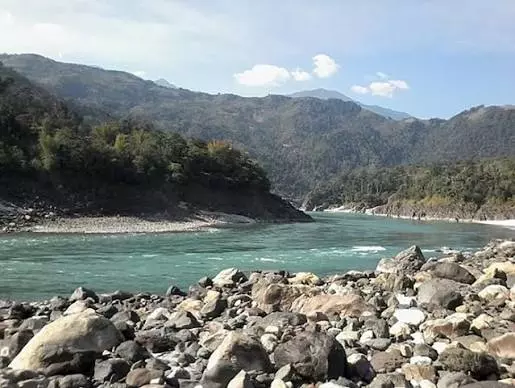
It is best that the Centre treads cautiously on the Siang dam issue as the 11,200 MW hydropower and water storage proposal named Siang Upper Multipurpose Project (SUMP) has brought to the fore the clash between national strategic goals and local rights.
The Home minister’s offer to start a dialogue with those opposing the dam, particularly people of the Adi and Galo communities, is a start though the locals rejecting talks outright means the standoff persists despite a generous offer of the best possible rehabilitation and resettlement process.
What the resistance movement to the dam that has taken the key border state by storm signifies is the locals have huge concerns over the displacement of people who have lived in the river zone for decades and who fear losing their ancestral lands to a modern development project. And then there is the issue of submergence of entire villages as well as forest reserve land.
Whatever be the need for advanced projects for water management, particularly in view of China taking up a massive 60,000 MW hydropower dam project further upstream on the Yarlung Tsangpo River which becomes the Siang on entering Arunachal Pradesh, concerns remain over damage to the river ecosystem. The agitation has brought enormous pressure on the Pema Khandu government.
Project planners have never been able to forecast or explain the possible effects of massive dams though Chinese experiments in this have largely been thought to prove that the benefits may just about outweigh the deleterious effects on ecology, particularly when the flow of rivers is interfered with.
The building of dams and creation of reservoirs are known to inundate vast forest areas, grassland, and agriculture while breaking up habitats and reducing connectivity for terrestrial and aquatic species. Habitat fragmentation is known to have cascading effects on the many functions of ecosystems that there is no knowing if the benefits outweigh the negative effects.
Concerns are also being expressed in Assam where the crucial water source which is the Brahmaputra gets around a third of its flow from the Siang River and tributaries. Given the history of problems in water sharing with lower riparian states always at loggerheads whenever states create dams upstream, there might be another major water problem that a river authority or the judiciary may be called upon to rule.
The positive side of the argument towards building the dam is to do with fears over how the Chinese may act in matters like sudden water release, which if it becomes unhinged in times of excess flow can pose a grave threat to the people of Arunachal Pradesh.
Arunachal Pradesh chief minister Pema Khandu calls the Chinese dam a “water bomb” to support his cause of a dam to control the flow and create a layer of water security in controlled release. Of course, the dam will make up for any deficit against Arunachal’s current peak demand of around 180 MW, which is only around 60 MW.
Not having taken the people into confidence before taking up the survey process, the government may have added to the resistance already building up. The Centre and state would be well advised to assess the implications of a large dam project and rely more on being transparent in the runup to the project.