The countries signed 15 pacts in areas such as ports, steel supply chains, telecom, climate, defense, electronics, shipbuilding, artificial intelligence, finance, minerals, semiconductors, supply chains among others
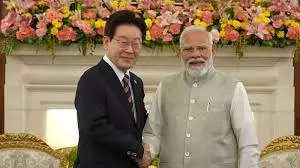
Prime Minister Narendra Modi and South Korean President Lee Jae Myung have agreed to further cement the close relationship between the two countries by elevating cooperation in various fields, including those considered to be strategic in nature.
The countries signed 15 pacts in areas such as ports, steel supply chains, telecom, climate, defense, electronics, shipbuilding, artificial intelligence, finance, minerals, semiconductors, supply chains among others.
Though the stated aim is to increase bilateral trade from the current $27 billion to $50 billion by 2030, the real intent of both countries — considered middle powers in the global hierarchy — appears to be de-risking their global alliances through multi-alignment.
After US President Donald Trump took office in 2025, American foreign policy became increasingly unilateral. The vast network of US allies across Europe and Asia found Mr Trump to be extremely unpredictable — one who eschewed rule-based global affairs and could sacrifice the interests of allies if a patch-up with a long-time rival could help him.
Mr Trump’s disdain for allies and friends was on display when he announced reciprocal tariffs. He snubbed European allies, gave a long rope to Russian President Vladimir Putin, and openly expressed his desire to conquer Canada. Similarly, he cozied up to Pakistan at the cost of India, which had long been considered the pivot of the American Indo-Pacific policy.
South Korea’s relations with the US too have become complicated because of Mr Trump’s financial and security demands: higher contributions from Korea for the defence budget, permission to allow the US to move its army in or out at will, and a Korean commitment to support Taiwan.
With the American nuclear security umbrella against undemocratic regimes appearing uncertain, most middle powers are scrambling to stitch together a network of friends — if not an alliance with ironclad guarantees — to help each other navigate the complex Trump era.