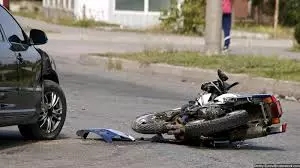
In the judgment, the apex court apportioned part of the guilt to the car driver who had applied sudden brakes, which led to a tragic chain of events that resulted in the amputation of the biker’s left leg after being run over by a bus coming in the adjacent lane
The Supreme Court’s judgment in a tragic road accident case from Coimbatore offers more than a legal precedent — it gives an urgent wake-up call for Indian administrators to introduce lane discipline on chaotic roads.
In the judgment, the apex court apportioned part of the guilt to the car driver who had applied sudden brakes, which led to a tragic chain of events that resulted in the amputation of the biker’s left leg after being run over by a bus coming in the adjacent lane.
At first glance, one may only blame the biker for not maintaining sufficient distance while driving on a national highway. However, the court’s observation that the car driver’s sudden braking without taking into consideration its impact on the trailing traffic was reasonable and logical. The judgment reaffirms the fact that road safety is a shared responsibility of the people who are using it.
In many developed countries, driving in designated lanes and following speed regulations are instinctive civic habits. However, Indian roads are a theatre of unpredictability, where one could find only a handful of socially-aware people following these basic road safety rules. A majority of road users in India don’t understand the importance of lanes.
In countries like Germany, Japan, or Singapore, lane discipline is drilled into the psyche of motorists through driver education sessions and any violation of road safety rules will lead to penalties. In India, however, riders have a free run on roads.
Though the Road Transport Authority conducts namesake tests before issuing driving licences, it is most often riddled with corruption. If the government wants to end traffic chaos, it needs to ensure people are well educated about traffic rules.
Similarly, the government needs to follow a carrot-and-stick method for the efficient enforcement of the road safety rules. It should incentivise good road behaviour by offering them discounts in health insurance and motor insurance. It should also introduce artificial intelligence-driven solutions to track people’s driving to penalise them for reckless driving. People must understand that a driving licence is not a right but a luxury which comes with responsibility.
