A massive cloudburst and flash floods that wreaked havoc at Dharali in Uttarkashi of Uttarakhand on Tuesday, killing at least five people and marooning nearly 70 people, is yet another grim reminder of climate change that is causing irreparable damage to the world.
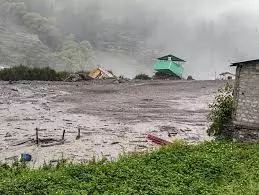
A massive cloudburst and flash floods that wreaked havoc at Dharali in Uttarkashi of Uttarakhand on Tuesday, killing at least five people and marooning nearly 70 people, is yet another grim reminder of climate change that is causing irreparable damage to the world.
The flash floods, according to locals, were the worst in the last 60 years. Almost half of the village — the main stopover on the way to Gangotri, which is a place of pilgrimage for Hindus — got buried under the fast flowing mudslide of slush, rubble and water. As a result, landslides blocked 163 roads impeding rescue missions.
Cloudbursts have been common for the ecological sensitive Himalayan region. However, there has been an increase in frequency and intensity for two reasons — global warming and local deforestation. While global warming has made rainfall extreme and erratic, bringing in higher volumes of water, deforestation and developmental activity removed trees that could anchor rain water flow on the Himalayas.
The massive devastation at Dharali, where several buildings fell as a pack of cards, brought back horrific memories of the 2013 deluge in Kedarnath and the 2021 Rishiganga disaster. All these are human-made disasters. While India alone cannot confront global warming, it can focus on what is in its hands — redefining development.
The government should make people realise that concrete buildings do not define development. While higher turnout of pilgrims would support the tourism economy for lakhs of people across the fold mountains, the associated construction activity is damaging Himalayas beyond repair.
Any drastic melting of the Himalayas would threaten the mighty Himalayan rivers, putting at risk the lives of nearly 200 crore people across India, Pakistan, Bangladesh, Nepal, Bhutan and Tibet. It will also affect India’s lifeline — the monsoon. This government, therefore, needs to evolve a developmental policy, which balances ecological concerns and people’s livelihood.