he issues that were raised at the conclave of chief ministers, lieutenant governors and administrators of the southern states and Union Territories were caused by the same bad blood that had engendered riots, agitations, protracted legal battles and even violence in the past several decades, indicating that no one, particularly politicians, learns from experience
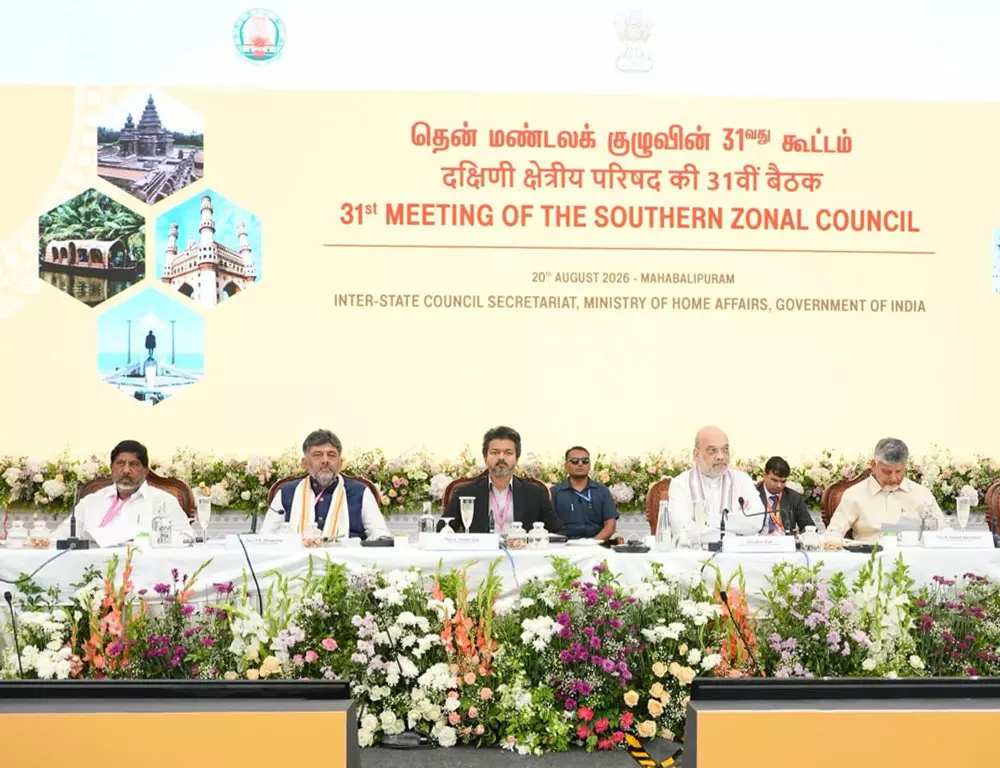
It was a peace-making confluence that, ironically, let differences and animosity spill over into the open, giving rise to the doubt if the southern states could ever see eye to eye on issues concerning water. Though Union home minister Amit Shah, the presiding deity of the gathering, batted for better cooperation among the state governments, the chief ministers, whom he was addressing, were in no mood to listen to him but pressed for the long-persisting demands of their states, turning the Southern Zonal Council into an anachronism.
While Amit Shah claimed that the Council resolved 1,445 of 1,869 interstate disputes that came up before it from 2014, the proceedings at the Fishermen’s Cove beach resort on Thursday made an observer doubt if that rate of success — around 80% — could be achieved hereafter.
The issues that were raised at the conclave of chief ministers, lieutenant governors and administrators of the southern states and Union Territories were caused by the same bad blood that had engendered riots, agitations, protracted legal battles and even violence in the past several decades, indicating that no one, particularly politicians, learns from experience.
Kerala has not given up on its demand, raised first in 1979, for the demolition of the over 120-year-old Mullaiperiyar dam located in its territory but providing water to parched districts of Tamil Nadu. Similarly, Karnataka that has been having a running feud with Tamil Nadu over the sharing of River Cauvery was insisting on building another dam across Cauvery at Mekedatu.
That the disputes which broke out during an earlier era dominated by leaders of previous generations continue to resonate at common forums like the Southern Zonal Council, despite several court interventions and other peace initiatives, is a tragedy because even modern-day leaders are seemingly keen on continuing the fights rather than finding solutions to the problems that primarily concern the needs of the common people.
Kerala, in a bid to stop giving water to Tamil Nadu came up with the theory that the Mullaiperiyar dam would give way anytime and wanted it to be decommissioned in 1979 though Tamil Nadu was legally entitled to have the facility till 2885. The fear was spread across Kerala and even a film titled Dam999 (the 999 referring to the 999-year lease period) was released in Malayalam.
Karnataka had been a habitual defaulter in releasing water in the Cauvery to Tamil Nadu despite the Supreme Court fixing a quantum of water to be let into the river from their dams — that was after several tribunals and committees failed to adjudicate on the water sharing process — in the protracted dispute.
When Karnataka wanted to build another dam at Mekedatu, which environmentalists fear would be an ecological disaster and Tamil Nadu saw as a bid to block the last drop coming into the state, there was opposition to it from different quarters. Still the conclave at Kovalam saw Karnataka standing by the project and even predicting that it would help Tamil Nadu solve its water shortage.
With Tamil Nadu insisting on all states adhering to court rulings and tribunal verdicts, it stood on the other side of the fence with no force looking capable of demolishing the fence in sight. Linking great rivers was once again talked about but such gargantuan projects are more akin to castles in the air.