China may not have passed an international alert on an impending disaster in time to help, which is what the Nepali media claimed. China reportedly has a strong monitoring and early warning system in border areas regarding any glacial lake outburst floods
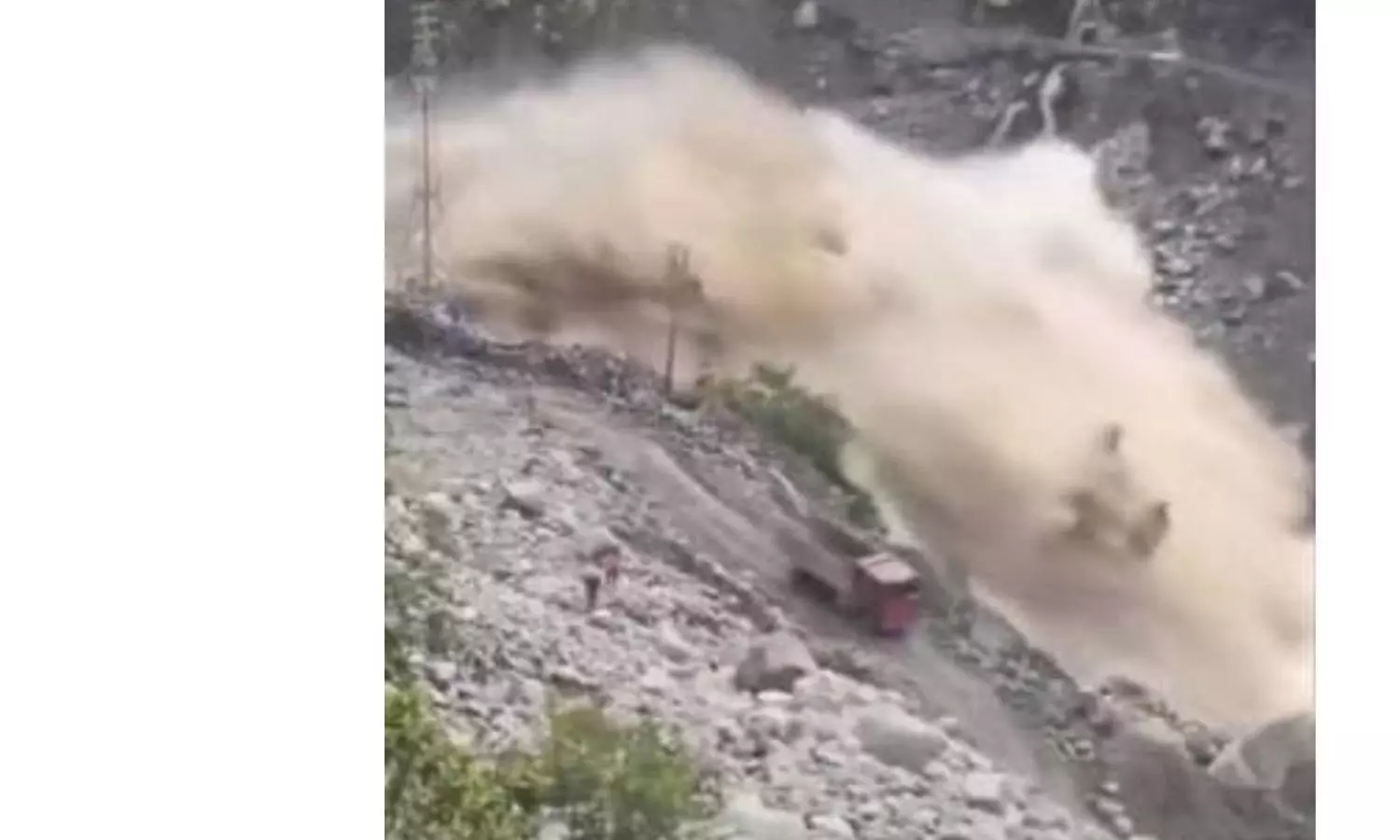
The scale of the glacial collapse disaster in the Himalayas is so huge that an exponential rise in the toll is only to be expected. Nepal’s security and disaster response forces are toiling manfully to help find any survivors before it is too late for them. The real toll could be above 1,000 only on the Nepal side while data from China is still being posted reluctantly. And the ground situation is not safe yet as news of a barrier dam breaking in Tibet kept the region on tenterhooks on Friday.
It is, however. too late to argue over the fundamental cause of the tragedy and whether it was a Chinese glacial lake burst, termed as a “geological disaster dam”, which triggered the glacial collapse that led to the gargantuan mix of ice, rock and debris flattening the terrain as it gravitated downstream in the Bhotekoshi-Trishuli river system. The fact is the glacial avalanche was the immediate cause of the catastrophe on the border, as substantiated by satellite observations.
China may not have passed an international alert on an impending disaster in time to help, which is what the Nepali media claimed. China reportedly has a strong monitoring and early warning system in border areas regarding any glacial lake outburst floods. Its action now in passing on a level 4 flood alert about a barrier lake building at the confluence of two rivers and which was beginning to overflow was a clear follow-up to the fateful event of August 26.
In a region filled with glacial lakes and glaciers, the importance of early warning can never be overstressed, but the difficulty of passing on information in real time which in turn will have to be transmitted to the population spread over a vast and remote area of poor communication capacity must also be considered. And then there is the threat of crying wolf and getting the people into a frenzy each time any glacial disturbance is noticed by remote sensing.
It takes several hours for the water to flow down the rivers that flow across the Nepal-China border and an early warning of the type that China put out on Thursday may be valuable in saving lives, if not the houses and other buildings. Of course, there is a need for greater coordination among the Himalayan nations if disaster warnings are to be meaningful and come in real time.
Historically, early civilisations were nurtured and flourished on the banks of water bodies like rivers. Living on riverbanks exacerbates the problems in the most modern era of extreme weather events in which flash floods have become commonplace. While shifting people away from near water bodies, at least in mountainous terrain, is still an impossible task, building an early warning system on mobile phone communication can be more easily established even if they will be patchy in the remote areas in which the latest tragedy struck.
The greater fear is one about which very little can be done and that is to do with the building of large infrastructure projects that can easily disturb the fragile mountain ecosystem. National security is the reason why nations would build roads, bridges and supporting infra in remote border areas which goes against the grain of general safety. But who is to bell the cat, considering China is the biggest such constructor, including dams and hydroelectric projects.