Startling as it may sound at a time when extraterritorial military action has been common enough and India and Pakistan came close enough to a full-scale war, India may have to take a pragmatic view of international relations in shaping which Pakistan, as the only Muslim-majority country known to have nuclear weapons, also holds strategic cards
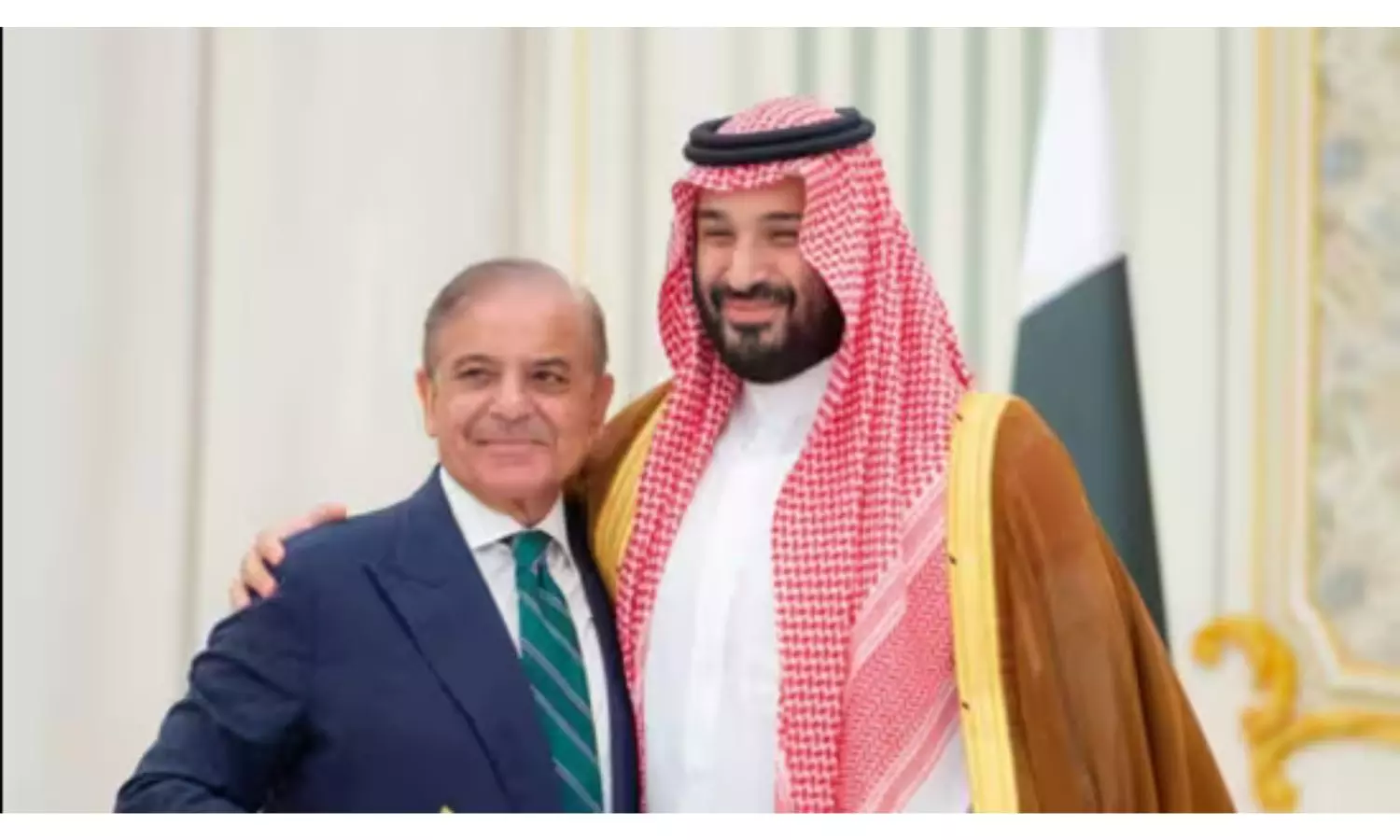
The sands have been shifting so much in geopolitics this year as to have thrown up several surprises even as two wars in Europe and the Middle East have been prompting the reshaping of foreign relations among nations. The latest development comes in the strategic mutual defence pact that Saudi Arabia and Pakistan signed this week with a Nato-like collective defence clause stating, “any aggression against either country shall be considered an aggression against both”.
Startling as it may sound at a time when extraterritorial military action has been common enough and India and Pakistan came close enough to a full-scale war, India may have to take a pragmatic view of international relations in shaping which Pakistan, as the only Muslim-majority country known to have nuclear weapons, also holds strategic cards. Also, India was kept in the loop regarding the pact as its ties with Saudi Arabia have also seen much strengthening in recent times, especially in trade.
The defence pact must be viewed as one that serves Saudi Arabia more at a time of uncertainties caused by the United States being seen as not so reliable an ally as before even if, in history, it has been the staunchest supporter of the Arabian kingdom. Given Israel’s recent strike on a specific building in Doha, Qatar, that was aimed at Hamas’ political leadership engaged in Gaza peace talks and the US’s tepid response to a Middle Eastern ally having its sovereignty invaded thus, Saudi Arabia may have been driven into seeking a nuclear umbrella from an ally with which it has had a benefactor-beneficiary relationship.
It is not only Tel Aviv about which the kingdom may have been worried as another perceived enemy in the Shia-majority Iran which is not far from acquiring the capability to build nuclear weapons. And they have also been accustomed to defend themselves against the Houthi rebels who customarily launched missiles into their territory. Considering the volatility of the Middle East makes it a cauldron of military action, Saudi Arabia’s anxieties driving the need for a defence pact are understandable.
Even so, it would be stretching scenarios a bit to believe that, in the event of an affray in the subcontinent caused, say, by India retaliating against Pakistan-sponsored terrorism, Saudi Arabia would send arms acquired from the US and Europe to Pakistan. Let us just say that historically Pakistan has needed alms and not arms from the kingdom, as seen in the many times that Saudi Arabia has bailed the nation out in times of economic crises.
While assessing the implications, India would do well to believe that the pact is more about posturing by Saudi Arabia that is situated in a neighbourhood beset by Arab-Israeli tensions and in which Israel has been known to not respect red lines as seen in its constant extraterritorial adventurism across the region, in Lebanon, Iran, Syria and Yemen and in Qatar most recently.
It is another matter that India, notwithstanding its righteous position against state-sponsored terror from across the border, finds itself increasingly isolated diplomatically, besides having to negotiate the complexity of dealing with Pakistan’s use of terror as a state policy. To look out for itself while not being in any relationship with any nation or alliance in a mutual defence pact has been India’s lot even though the neighbourhood has never been a friendly one. But then, standing up for itself has also been India’s strength.