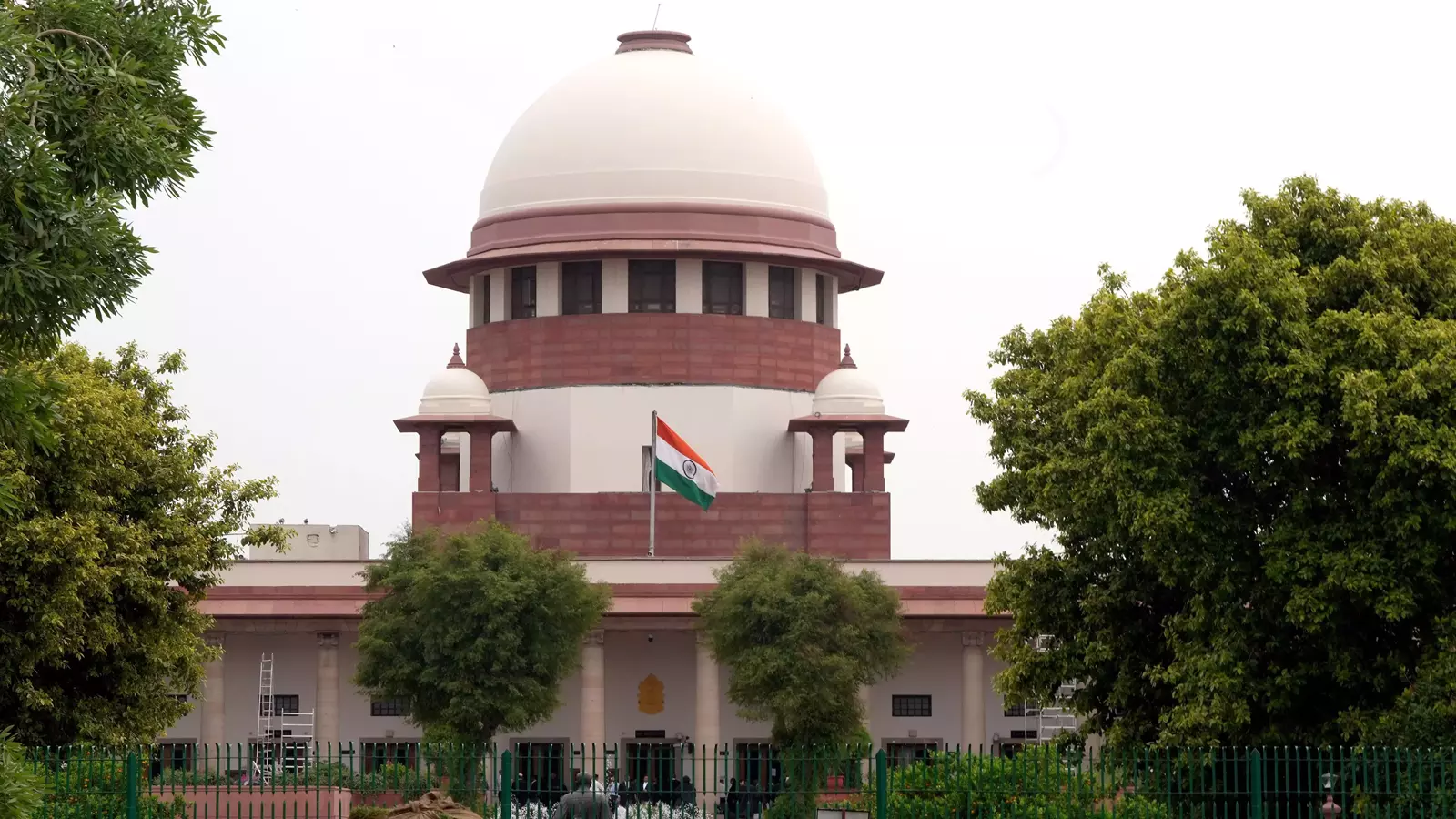
A three-judge bench of the Supreme Court has recalled a previous judgment on retrospective environmental clearances, marking a monumental shift in the country’s green policy. The recall could enable the government to grant environmental clearances to violators of the green laws who had already commenced the construction of projects in contravention of ecological laws.
The issue relates to a unanimous verdict delivered by a two-judge bench headed by Justice A.S. Oka (now retired) and Justice Ujjal Bhuyan on May 16, 2025, which banned the practice of granting ex post facto environmental clearances — a practice introduced by the Central government through its 2017 notification and 2021 office memorandum.
The practice of ex post facto approvals had allowed developers to start construction illegally and later seek retrospective approval showing their investment as a fait accompli, making mockery of the government’s attempts to protect the environment.
The latest majority judgment by two of three judges on the bench, who include Chief Justice of India B.R. Gavai,and Justice K. Vinod Chandran, supported the petitioners’ argument that the May 16 judgment would cause great economic costs and recalled the previous verdict. With 24 large projects worth Rs 8,293 crore pending at the Centre and another 29 worth Rs 11,168 crore stuck at the state level, the Chief Justice of India questioned whether demolishing them would serve the larger public interest.
In his scathing dissent verdict, Justice Bhuyan, however, wondered whether environmental oversight in India will remain a meaningful safeguard or be reduced to a mere procedural hurdle that can be bypassed after the fact. He observed that retrospective approvals violate the precautionary principle, which has become the cornerstone of modern environmental law.
While the economic concern expressed in the majority judgment is understandable, the Supreme Court should have given a limited reprieve only to these projects as a one-time exemption. A blanket approval of ex post facto approval of any violation is not desirable. It is difficult to believe that entrepreneurs investing hundreds of crores of rupees were not aware of legal and regulatory requirements. If they had gone ahead with the project despite knowing the position of law, it amounts to a deliberate violation of law and they should not be shown any leniency.
As per the Constitutional scheme, the Supreme Court steps in only in the case of confusion in the interpretation of law or if the law goes against the Constitution. Therefore, despite two verdicts of the Supreme Court, the Central government can still step in to frame a fair environmental policy which balances both ecological and economic concerns.
The Narendra Modi government should address the issue of retrospective approvals as they should not set an example for others. If the developers could be allowed to violate the law and get an approval as a fait accompli, people — who are responsible for accidents caused by high speed or drunk driving — could also offer to pay compensation for their error. If India wants to be the vishwaguru, the government should ensure that its policies are friendly towards people, and also to Mother Earth.