The Indo-Japanese relationship is also in sync with the emergence of a compact between middle powers to avoid getting sold out by a modus vivendi between the United States and China
Over 2,000 years ago, India’s celebrated strategist Chanakya’s Rajamandala Theory stated that “your neighbour is your natural enemy and the neighbour's neighbour is your friend”. If any country fits this bill for modern India, it is Japan. The strengthening relations between India and Japan for nearly two decades attest to this fact.
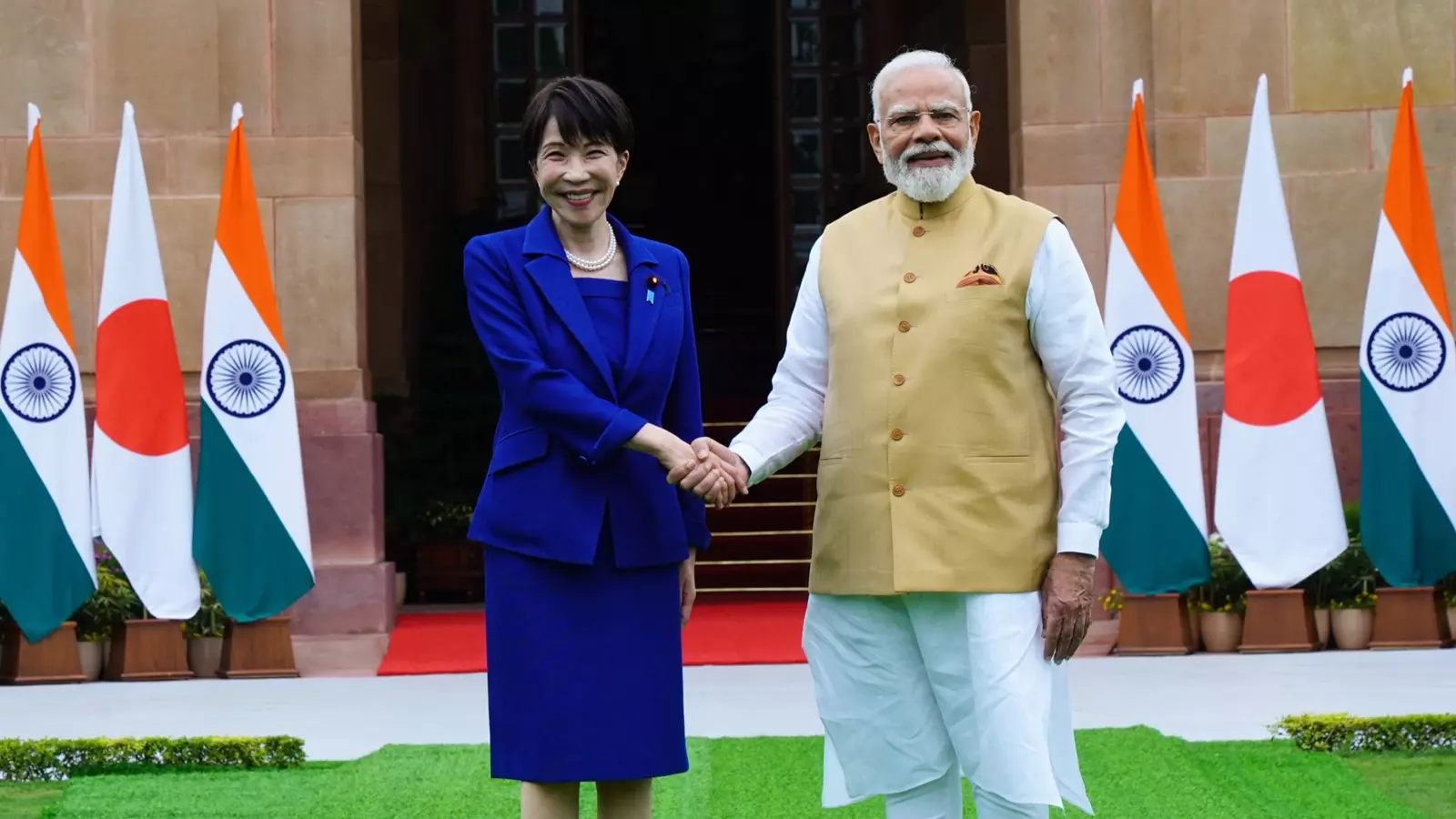
Following the pro-India policy adopted by her predecessor Shinzo Abe, Japanese Prime Minister Sanae Takaichi reaffirmed her country’s special strategic relationship with India. Both countries signed 12 agreements on cooperation in matters such as defence, technology, and economy among others.
Ms Takaichi’s visit to India is of significant value, especially in the wake of a new Trumpian era in geopolitics, which is marked by the transactional nature of relationships between countries. The withdrawal of the United States from the Indo-Pacific security architecture and an increasingly assertive China will force countries like India and Japan, the only two major powers in Asia outside the Sinosphere, to collaborate.
The Indo-Japanese relationship is one of the most complementary relations in the world. Japan has technology, while India has manpower to achieve scale. One of the best and popular examples of this synergy is Maruti Suzuki, which modernised the car sector in India, while giving scale to Suzuki Motor Corporation.
The Indo-Japanese relationship is also in sync with the emergence of a compact between middle powers to avoid getting sold out by a modus vivendi between the United States and China.
If India and Japan can co-opt South Korea and Taiwan, which are threatened by North Korea and China, respectively, they can successfully create a defensive arc of resistance and economic cooperation, which could be a reply to the string of pearls. This new four-member bloc could be the Quad 2.0, whose interests align much more closely than those between the older Quad of the US, India, Japan and Australia.