The G-20 is one of the most important intergovernmental forums, representing about 85 per cent of global GDP, 75 per cent of global trade and more than half of the world’s population
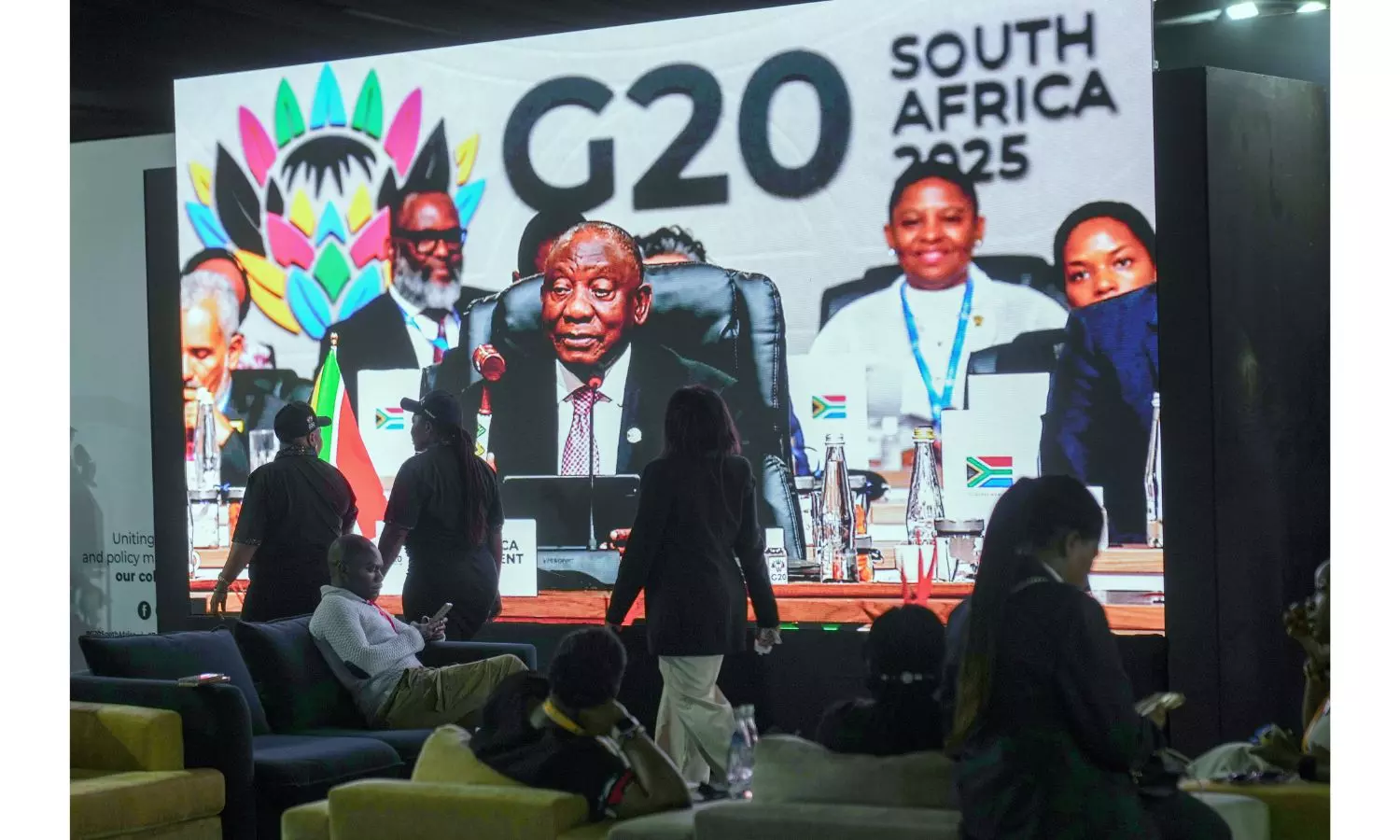
The summit meeting of the G-20 countries in Johannesburg is unique in many ways — the boycott by the United States following the Donald Trump administration’s allegation that the South African government was pursuing anti-White policies, European allies voting for a resolution that America had objected to and the summit passing the declaration at the commencement instead of at the conclusion.
The G-20 is one of the most important intergovernmental forums, representing about 85 per cent of global GDP, 75 per cent of global trade and more than half of the world’s population. Consensus at the G-20 meeting, therefore, will have a wider impact on the world. However, a global summit of such stature was dominated by the America-South Africa controversy, even though it took several other important decisions.
One of the key subjects that South Africa lobbied for at this summit was inequality. The summit called upon its members to address disparities in wealth and development both within and between countries. The leaders also called for efforts to help low-income countries cope with their debt, which is hindering development and eating into investments in infrastructure, disaster resilience, healthcare and education.
According to one estimate, 87 countries spend more than 10 per cent of their budgets on debt servicing. Six countries, including Sri Lanka, spend over 40 per cent of their revenue on external debt servicing. While financial discipline is important, global lenders must take steps to prevent debt from affecting these countries’ ability to provide basic facilities to their citizens.
Without referring to China’s export ban on rare-earth minerals, the summit also called for protecting the global value chain of critical minerals from “disruption”, whether due to geopolitical tensions or unilateral trade measures inconsistent with World Trade Organisation rules.
The G-20 summit also approved Prime Minister Narendra Modi’s proposal to counter the drug-terror nexus through financial, governance and security frameworks. Terrorist organisations have long been using synthetic drugs to raise money for their activities by smuggling them into developed or developing countries that the G-20 represents.
Other proposals put forward by India include a G-20 Global Healthcare Response Team — which would create a pool of medical experts who can be rapidly deployed during health emergencies and natural disasters — and a skills programme aimed at creating one million trainers to hone the skills of African youth.
On the sidelines of the G-20 summit, India, Canada and Australia — three former British colonies and rising middle powers — announced the formation of a trilateral technological partnership. This is perhaps the first time that Australia and Canada — the two members of the Anglosphere’s intelligence compact Five Eyes — have joined hands with India without being helmed by the United Kingdom or the United States.
Canada has strong expertise in artificial intelligence, quantum technologies, biotechnology, clean energy and space robotics, while Australia’s strengths lie in mining robotics, agriculture technology, solar innovation and cybersecurity. This partnership would diversify India’s current US-centric approach to technological collaboration, especially in light of the uncertainty caused by recent unilateral US measures against its partners.