While Pakistan has always been part of larger Western military alliances such as the Southeast Asia Treaty Organisation (Seato) and the Central Treaty Organisation (Cento), India must not be complacent about Pakistan. Unlike during the Cold War era, Pakistan has managed to cultivate ties with two rival power centres — Washington and Beijing — and has succeeded in creating a new military bloc
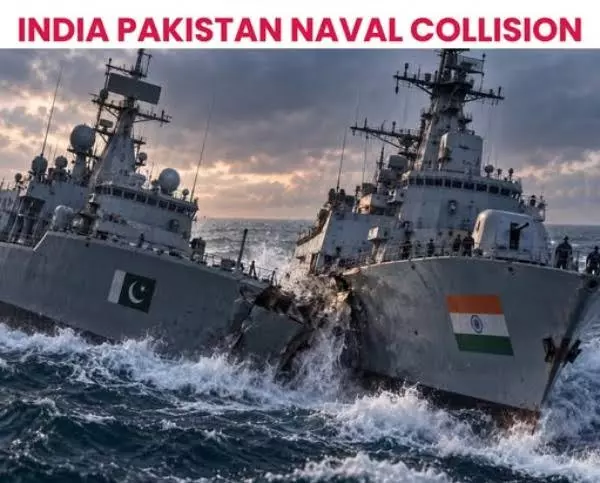
The collision of Indian and Pakistani naval vessels in the international waters of the Arabian Sea is the first publicly known military-related incident involving the two countries since the four-day hostilities in May 2025 in the aftermath of the Pahalgam terror attack.
The incident occurred on the evening of September 15, when a Pakistani Navy offshore patrol vessel, Hunain, closed in at high speed on an Indian Navy warship that was on a routine surveillance mission in the north Arabian Sea. The Pakistani vessel manoeuvred in an unprofessional and unsafe manner, leading to a collision with the Indian naval vessel. The Pakistani vessel reportedly suffered heavy damage, while the Indian vessel continued with its assigned task.
The ministry of external affairs summoned the charge d’affaires of the Pakistan high commission, Saad Warraich, and lodged a “strong protest”. The collision, however, indicates the fragility of peace in the region because of the trigger-happy attitude of the Pakistan Army.
In its response, Pakistan said its vessel was in international waters as part of its biennial exercise, SEASPARK-26. India, however, sought to place the blame on Pakistan, saying Islamabad had not duly informed New Delhi about the naval exercise under a 1991 agreement.
Ever since it was carved out of India, Pakistan has been the prime cause of conflicts in the subcontinent. Though Pakistan was on the back foot after the end of the US War on Terror, the country appears to have gained confidence because of its newfound importance in Washington and Beijing. The newly formed Mecca Pact — comprising Saudi Arabia, Pakistan and Turkey — appears to have given Rawalpindi a major role in West Asia.
While Pakistan has always been part of larger Western military alliances such as the Southeast Asia Treaty Organisation (Seato) and the Central Treaty Organisation (Cento), India must not be complacent about Pakistan. Unlike during the Cold War era, Pakistan has managed to cultivate ties with two rival power centres — Washington and Beijing — and has succeeded in creating a new military bloc.
According to another school of thought, America’s relations with Pakistan have always been transactional, and the newfound warmth between the two nations exists merely because Washington needs a postman to communicate with Iran. Pakistan’s importance to Beijing, on the other hand, is primarily linked to its role as a counterweight to India. The day India and China settle their border dispute Pakistan will lose its USP in Beijing.
Similarly, the three-nation Mecca alliance appears to be transitory, as it was formed out of Saudi Arabia’s fear of Iran. Riyadh has already clinched a civil nuclear agreement with the US that does not ban the enrichment of uranium on the Arabian Peninsula. If Saudi Arabia develops a nuclear bomb, it will no longer need to bind itself to a collective security arrangement with Pakistan.
New Delhi, nevertheless, needs to play its cards properly, without the grandstanding to which it has grown accustomed in recent years. It must, therefore, resolve its disputes, focus on development and bide its time.