Whatever be the levels of resistance and legal challenges to the alleged machinations of SIR, protests should not descend to the levels that they did in Malda where a mob gheraoed seven judicial officers — appointed by the Supreme Court to speed up the appeals process for those whose names have gone missing from the rolls — and confining them without food, water, or toilet use for more than nine hours
In a democracy, the will of the people must prevail, which is why free and fair polls are most essential. India has taken pride in being able to hold such polls over decades without raising major concerns over the sanctity of polls and the freedom of the people in marking their choice, on ballot papers in the past and through EVMs now.
Only ahead of the current round of polls in April 2026 have issues arisen over the way in which the updating of voters’ lists — a normal enough exercise conducted periodically — named SIR raised the hackles. And nowhere more intensely than in West Bengal whose voters will be exercising their franchise on April 23 and 29.
Whatever be the levels of resistance and legal challenges to the alleged machinations of SIR, protests should not descend to the levels that they did in Malda where a mob gheraoed seven judicial officers — appointed by the Supreme Court to speed up the appeals process for those whose names have gone missing from the rolls — and confining them without food, water, or toilet use for more than nine hours. And to boot, they were pelted with stones when they were belatedly rescued and allowed to leave the premises.
Nothing is designed to bring out the wrath of the top court than interfering with the work of judicial officers in any capacity, which is why the slamming of the protests came with added vigour. The words of the Chief Justice spelt out the real problem chillingly when he said that he had never seen such a “politically polarised state like West Bengal.”
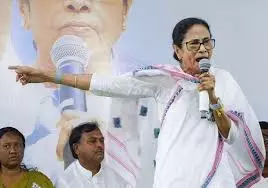
The TMC supremo and Chief Minister Mamata Banerjee may have championed the fight against the way the SIR has been seen to run in her state, with lakhs of people excluded on grounds that defied logic. Even then, it ill behoves the democratic-minded people if opposition is taken to rabid levels as they have tended to in this state. The inaction of the police, who invariably toe the line of the ruling forces, is common enough a malady in many states, perhaps no more so than in West Bengal.
Beyond legal redress, with judicial officers deployed to function as Election Registration Officers to adjudicate on objections raised by voters excluded from the rolls during the SIR and on top of which an appellate tribunal to adjudicate remaining objections, what more can be done to give everyone an opportunity to not miss the right to vote?
The police claim to have arrested the mastermind of the protests, but the probe by Central agencies as well as the local police should run their course to pin the culpability lest the police action also be suspected to be politically charged. It is a fond hope that the violence endemic to West Bengal politics does not visit the remainder of the run-in to the polls that must be held with the best that can be done to update the rolls in the remaining time.
It might seem curious that Mamata and her TMC have been campaigning on the fish and meat dishes that might be under threat as well as the Bengali language itself if the BJP, now the TMC’s main competitor, were to come to power. In a stroke, she brings in language, identity and food and culinary tastes into a political argument. But this is fair game as arguing on such matters and themes is part of the ways of democracy.
It would be best then that all parties campaign along acceptable lines and leave the completion of the SIR to the processes designated by the top court. After all, it is the people on the rolls who come to vote who will determine the outcome. Respecting the ways of fighting polls enhances the very foundation of democracy.