Local alliances blur ideology, leaving voters confused and accountability weakened
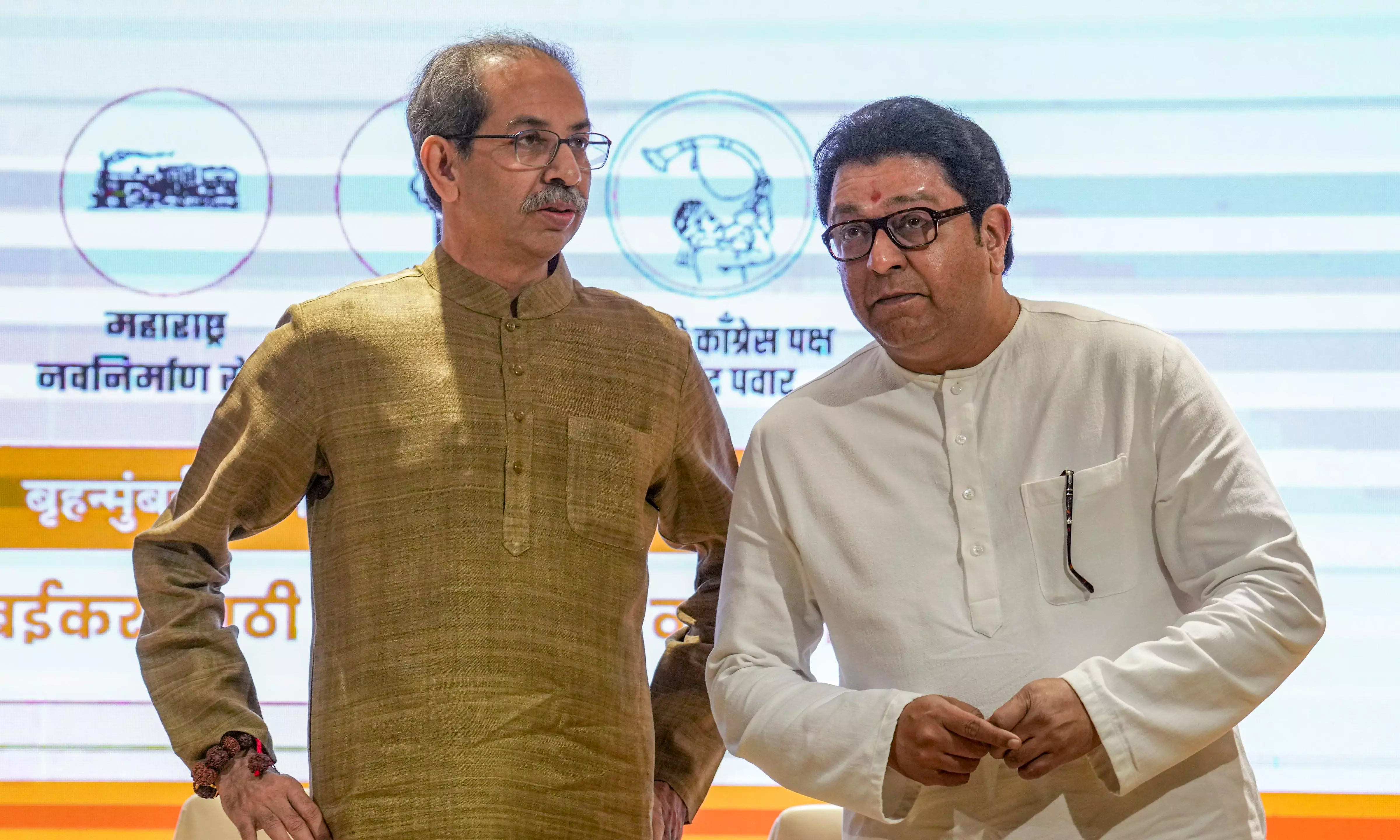
The elections to Maharashtra’s 29 municipal corporations — including the prized Brihanmumbai Municipal Corporation (BMC) — have become a theater of the absurd. As these civic bodies head to the polls on January 15, the electorate is being asked to navigate an array of “local truces” and “friendly fights” that defy logic. The alliances on display suggest that ideological boundaries have become entirely porous, and the ordinary citizen is left with a haunting question: Who exactly are they voting for?
In Mumbai, Uddhav Thackeray and Raj Thackeray have stitched together a tactical “Marathi pride” arrangement, driven less by principle than by political survival. Uddhav is fighting to retain his last bastion, while Raj is seeking a return to relevance. Elsewhere, the BJP and Eknath Shinde-led Shiv Sena are opposing each other in select pockets, while in Pune and Pimpri-Chinchwad, the two rival factions of the NCP have temporarily buried their differences to counter a resurgent BJP.
The Congress, meanwhile, has walked out of its alliance with the Shiv Sena (UBT) in Mumbai over Uddhav’s tie-up with the MNS, only to endorse a similar arrangement in Pune. The contradictions deepen in Ambernath, where the BJP has aligned with the Congress, and in Akot, where it joined hands with the AIMIM after municipal council elections. Senior leaders from three parties have rushed to disown these alliances and blamed local units.
More troubling for democracy, however, is the growing number of uncontested victories. As many as 68 candidates from ruling parties have already been elected unopposed after rivals withdrew their nominations, often invoking “development” as justification — a trend that bypasses the ballot box entirely.
These civic polls are far from low-stakes contests over roads, water supply or garbage collection. Control over civic bodies like Mumbai, Pune, Thane and Nashik is a gateway to massive finances and organisational muscle. It is this high reward that has encouraged parties to abandon ideology and embrace expediency.
Yet, cities are not merely chess boards for political manoeuvring; they are living spaces that require clear accountability. When rivals become partners for political convenience, the lines of responsibility blur and governance becomes an afterthought. As parties bargain and realign behind closed doors, they would do well to remember that civic elections are not just about who wins the power to rule, but about who delivers effective urban governance once the slogans fade and the reality of a crumbling urban infrastructure remains.
