It set aside the 2003 order of the Archaeological Survey of India restricting the right of Hindus to worship within the Bhojshala complex to once a week and permitting prayers by the Muslim community
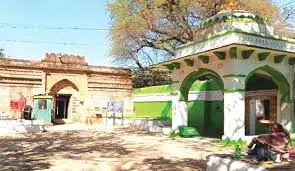
The pervasive logic the Supreme Court of India had applied while deciding the Ramjanmabhoomi-Babri Masjid dispute appears to be prevailing in the Indian judiciary going by the verdict of the Indore bench of the Madhya Pradesh high court which held the religious character of the disputed Bhojshala-Kamal Maula Mosque complex in Dhar district to be that of Bhojshala, a temple of goddess Saraswati. It set aside the 2003 order of the Archaeological Survey of India restricting the right of Hindus to worship within the Bhojshala complex to once a week and permitting prayers by the Muslim community.
In line, too, with the condescending and conciliatory character of the apex court’s Ramjanmabhoomi judgment, the high court has said that the state government may consider the application for allotment of a suitable land within Dhar district for the construction of a mosque or a place for prayers in accordance with law to the Muslim community “in order to secure the religious rights of the Muslim community and to ensure complete justice between the parties”. The court has also directed that the Government of India may consider the representations to bring back the statue of Goddess Saraswati in London Museum and re-establish it within the Bhojshala complex.
While the Muslims claim that the foundation of the mosque was laid in 1306-07 by a revered Sufi Hazrat Maulana Kamaluddin Chishti and it was built subsequently, the Hindu side said it was constructed on the remains of a temple built by the local king and dedicated to Goddess Saraswati and that it was a place of Sanskrit learning. The surveys conducted by the ASI indeed pointed to the presence of articles related to the Hindu faith and that the “existing structure was made from the parts of earlier temples”. The court accepted the findings based on the principles laid in the Ayodhya judgment which accords high probative value for archaeological findings of religious motifs, sculptures and pillars in determining the religious character of a disputed site.
There is no doubt that India is an ancient land and has borne the brunt of invasions and incursions, while injustices have been perpetrated on its people. They include the marauders who came in search of wealth and those who had religious motives. It survived them all, thanks to the organic character of this land and its people.
If we as a nation plan to rake these up and right every wrong that was committed centuries ago, then there will be no end to the disputes and the social unrest they can cause. Even the head of the RSS, the champion of Hindutva causes, advised against such a practice. The Ayodhya judgment, in short, accepted the right of one party and rejected that of the other by applying the same principle differently. It is unfortunate that those principles still find an echo in courtrooms across the country.
Parliament enacted a law, the Places of Worship (Special Provisions) Act, 1991, in order to put a stop to the practice of digging up disputed places of worship and causing social disharmony. Right thinking Indians will not disagree with the spirit of the law in that it reflects their urge to create a society which is at peace with itself. Courts finding loopholes in the law to allow vested interests to go after disputed structures will make this country a battlefield of interests. We deserve better social beings supported by better judicial minds.