If this announcement were juxtaposed with US President Donald Trump’s almost-diatribe against India, its economy, and the people of Indian origin, one could hardly fail to understand the trajectory of India-US relations, as America does not arm countries it considers rivals or enemies
HAL chairman and managing director D.K. Sunil recently announced that the state-run aviation company would sign a $1-billion deal with US major GE Aerospace this month for the supply of 113 GE-404 engines, which would soon result in India’s locally made fighter jet Tejas Mk1A taking to the skies, strengthening the country’s defence capabilities.
If this announcement were juxtaposed with US President Donald Trump’s almost-diatribe against India, its economy, and the people of Indian origin, one could hardly fail to understand the trajectory of India-US relations, as America does not arm countries it considers rivals or enemies. However, contrary to the deal over GE engines and the continuation of other key defence agreements between the two countries, Mr Trump has adopted a strident posture against India over trade and immigration issues, which have been cornerstones of bilateral relations between India and the United States.
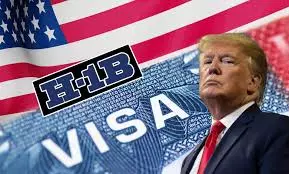
Over the decades, Indians have always looked to America for higher education, even though it was supporting and arming Pakistan. The people-to-people contacts increased in the 1990s when US companies hired Indian technology professionals in large numbers to fix their Y2K problem. This collaboration grew by leaps and bounds over the next 25 years, creating enormous goodwill for the US among Indians. However, Mr Trump sought to end this bonhomie by imposing a hefty application fee of $100,000 for the H-1B visa, capping the enrolment of foreign students in American colleges and the public humiliation and inhuman treatment of Indian deportees. Similarly, the United States is pursuing a confrontational policy against India over the latter’s reluctance to open its economy to American agricultural products.
In both issues where India and the US locked horns, the disputes involved jobs. While Americans believe that uncontrolled immigration is stealing their jobs, Mr Trump believes India’s reluctance to buy US farm produce makes it dependent on China, the only country comparable to India in population size. Similarly, for the Narendra Modi government too, these issues relate to people’s jobs. Tougher visa laws are denying Indians the opportunity to work in the US, while agreeing to Mr Trump’s demands on agricultural produce would rob millions of poor Indians of their livelihoods.
Any democratic country would find it difficult to compromise on an issue that involves the sustenance of its voters, especially when leaders are engaged in competitive politics — something both Mr Trump and Mr Modi pursue unabashedly. On the other hand, both countries appear to find convergence in elevating their defence relations.
A strong India — even with peaceful borders with China — would always be uncomfortable for Beijing and serve the American purpose of keeping a check on its challenger. For India, close defence relations with the US — though Washington is considered an unreliable arms supplier — would help it diversify its defence supplies.
The approach by the US and India on different issues hints that the relationship between the two countries, which was billed as strategic, has been downgraded to transactional. Similarly, India also has a transactional relationship with China, as they differ on defence issues while cooperating on trade and commerce — and this is the new normal in the post-Trump world.