The RSS was running true to form in declaring that the three-kid norm is ideal for balance and future stability
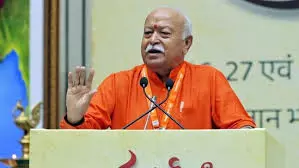
There never was a doubt that Prime Minister Narendra Modi, who is into the second year of his third term, will continue in office at least till the end of his five-year term. Likewise, there isn’t much of a doubt over Mohan Bhagwat continuing in his post as the supremo of the Rashtriya Sevak Sangh till the RSS opts for a new sarsangchalak.
The discussions in the three-day debates to mark 100 years of RSS may have been exhaustive, but the major point of focus the media latched on to was whether the retirement of two key figures whose 75th birthdays are just days away in September was discussed. Mr Bhagwat’s declaration that he never said he would retire at 75 years or that someone should at an event recently was, in fact, uttered in jest by a witty old leader.
But there was never an iota of doubt that the key figures heading the ideological wing and holding the top executive post of the country would not be bound by any retirement age thought of as ideal even if a few ageing leaders of the party had been sidelined as Mr Modi rose to the top in 2014. The RSS chief may have hinted at some friction between the RSS and the BJP having been generated by all the retirement talk, but that is put away behind them now.
Mr Bhagwat also claimed that the RSS does not dictate what the BJP must do, and he went so far as to suggest that since the election of the party president was a matter for BJP to decide, any delay was solely its doing. The delay had nothing to do with the 100-year-old organisation of social service volunteers from which political wings may have sprung up in its history.
The RSS was running true to form in declaring that the three-kid norm is ideal for balance and future stability. That he means Hindu families more than others is clear as he emphasises that rapid demographic changes have serious implications. RSS’s belief in a Hindu Rashtra is its choice and that is not going to change.
Any appeal to today’s generations to have more babies may, however, be falling on deaf ears because of the rapid spread of literacy and education in conjunction with the rising cost-of-living and the need to share shrinking resources that affect most aspects of life, because of which young people feel the most cramped up by today. And this thinking applies to people of all religions living in the world’s most populous country.
It was predictable that the RSS would support the government in its trade and tariff war with the US as its belief in self-reliance has been strong for a long time. Its stand on the New Education Policy and much of what the government is trying to achieve as in trying to contain infiltration was again predictable, even though the socio-cultural organisation may nurse a grouse or two about some of its hardline agenda not being wholly implemented.
Unlike its long campaign for the Ram temple that began decades ago and culminated in the temple being opened, it must come as a relief that the RSS will not on its own join any of the incendiary questions of “mosque or temple” movements that are proving divisive. However, that it won’t stop its swayamsevaks from doing so would mean that issues like the Krishna Janmabhoomi temple and the Kashi Vishwanath temple abutting a mosque will continue to fester in the legal system.