The power of youth has never been so accentuated as in these three upheavals that are reflective of the deep dissatisfaction in emerging generations about the ways of those who govern encouraging rampant corruption whose living symbols are visible in the prosperity that nepotism breeds freely
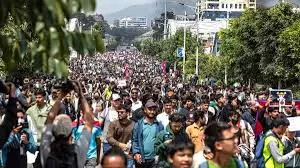
The Asian Spring has felled another “strongman” leader. The restlessness of youth, acutely reflected in their openly violent demonstrations against political leaders and symbols of authority, has dethroned Nepali Prime Minister Khadga Prasad Oli, much as it did the Rajapaksas of Sri Lanka in July 2022 and Sheikh Hasina Wajed of Bangladesh in August 2024.
The power of youth has never been so accentuated as in these three upheavals that are reflective of the deep dissatisfaction in emerging generations about the ways of those who govern encouraging rampant corruption whose living symbols are visible in the prosperity that nepotism breeds freely. Many political leaders, ruling and former, became the target of public wrath after agitating students were fired upon.
A ban on social media was the trigger that set off the violent chain of events on Monday that saw at least 19 young people killed by law-keeping forces, the torching of homes of ministers and leaders, including the private residences of the Prime Minister and President, and agitating students encircling ministers in the parliament building which was also set on fire.
The pattern of Asian leaders fleeing under pressure continued with Mr Oli, the head honcho of the Communist party that headed a tense coalition with the Nepali Congress, and who like the Rajapaksas and Sheikh Hasina needed the help of the armed forces to be extricated as the protesters closed in, breaching police barricades and overpowering the helpless laws and order machinery.
There should be a lesson in this Nepali entanglement for democratic governments which think nothing of shutting down the internet or banning popular global social media platforms at the merest sign of social strife. Such media may offer effective means of communication and, perhaps, allow the sowing of revolutionary thoughts, but they are just the medium that can spread a message, and not the problem, or solution, itself.
In free and open societies like the three Asian democracies which fell most recently, social media has become a window to the world of the people. They cannot be denied their right to the information and opinion highways just because rulers of many nations do not have the thick skin to face criticism. Social media does not necessarily create dissent though it could be a convenient medium for the spread of such a social phenomenon.
Gen-Z is how the Nepali youth described themselves as they rebelled against Oli’s rule and protested the social media ban volubly. By the time the government allowed the social media back online, a reckless police force had fired at students setting off even greater violence with the agitators even seizing arms and brandishing them while going on an absolute rampage on Tuesday.
Creating jobs to give youth a key to a secure future and a life worth living in third world economies is not the simplest job. And youth unemployment runs at 17.2 per cent in Nepal from where thousands migrate to India and elsewhere in search of jobs. That jobs seem the least of the priorities of those who govern — on the basis that they can capture a proportion of the public vote sufficient to capture power — is the most noticeable failing of Asian nations and economies.
For Nepal, there may be little to gain in trying to guess whether this uprising sprung from a former king of Nepal triggering a return to monarchy movement or a foreign hand playing a role as was suspected in Bangladesh last year. What they need most is stable control to restore order and find a way to put back a democratically elected government in place. But to ensure that these lessons of democratic insurrections are never forgotten is a different matter altogether.
