WIDE ANGLE | Raghu Rai: What I Learnt While He Raised News Photos To The World Of Art |Saeed Naqvi

In his persona two professionals coexisted: a newspaper photographer with a keen eye and an artist who had pitched it as high as Cartier-Bresson, possibly the world’s greatest photographer in his day. It was Raghu’s determination that Bresson, at the peak of his reputation, would spot in Raghu the genius which brought the two together. Raghu valued immeasurably the many compliments Bresson paid him
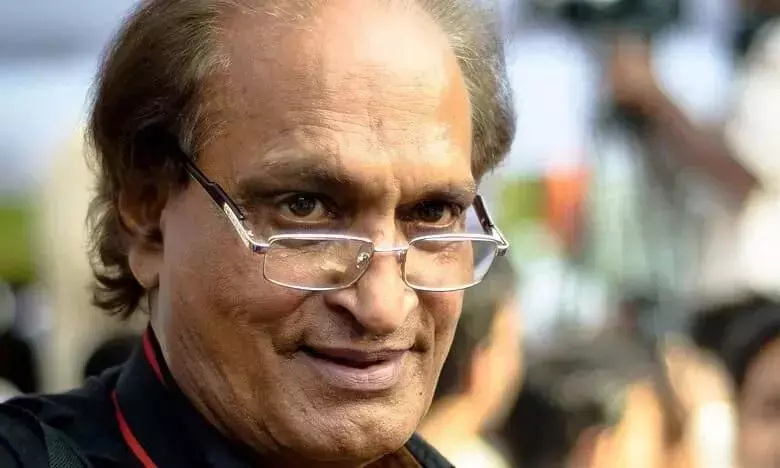
Raghu Rai and I entered the portals of The Statesman, New Delhi, in the same year: 1964-65.
A paradox attended his adoration for his elder brother Paul, tall with strong features, a thoughtful photographer, because his admiration was tinged with sibling rivalry, not vicious but competitive, mimicking.
When he entered The Statesman, two features about him stood out: a rugged face on a tall frame and a penetrating eye which saw you in snapshots. There was about him no hesitancy of a novice but a certitude as he towered over the news editor, his hands resting at two ends of a wide table. But his entreaty was polite.
“Five columns, please, Sir -- above the fold.” Two distinct certainties were involved -- a confidence in the picture on offer and a rapport with the NE, a function of sincere communications.
Sometimes he gave expression to his boundless energy in words which could be misunderstood. Gathering grey clouds during a boat trip on the Hooghly inspired him to such ecstasy that he turned around to our artistic friend, Desmond Doig, who was also quite famously gay, threw his arm upwards and yelled with passion: “O’I could rape you… Promise.”
Desmond fixed him in his gaze… Raghu backed off like he had just learnt about the birds and the bees.
There was a certain innocence about him but that rugged, animal appeal and audacious, groping eyes drew women to him compulsively.
In his persona two professionals coexisted: a newspaper photographer with a keen eye and an artist who had pitched it as high as Cartier-Bresson, possibly the world’s greatest photographer in his day. It was Raghu’s determination that Bresson, at the peak of his reputation, would spot in Raghu the genius which brought the two together. Raghu valued immeasurably the many compliments Bresson paid him.
It was said of El Cordobez, Spain’s greatest matador ever, a hero like the Spaniards had never known, that he did not know that the earth was round. Well, Raghu did not quite know who the Beatles were until I dragged him to Chaurasi Kutia (84 cottages) on an elevated ground above the Ganga on the other side of Lakshman Jhula, in Rishikesh. The Beatles had come to meditate at the ashram of Maharishi Mahesh Yogi, the giggling guru. All the foreign correspondents based in New Delhi and hundreds who had flown in for the Beatles story paced up and down the flat ground outside the ashram. In anticipation of the Beatles story I had got initiated into meditation by the Maharishi. I therefore had the password which the multitudes craning their necks into the ashram would have paid a fortune for.
At the gate, the sadhus recognized me as an “avid meditator”. Raghu and I were in. With alacrity that was his hallmark, Raghu placed his zoom lens on my shoulder and clicked the frame which the world was waiting for -- the Beatles, with the Maharishi in the sylvan surroundings of the ashram above the Ganga. That one shot made it to the front page of every newspaper in the world.
Raghu’s evolution was meteoric. He raised news photographs into world art. This was independent of his exceptional eye on the Taj Mahal, Mother Teresa, the Dalai Lama, and all the contemporary musicians. No war photographer had mixed valour, victory with a deep sense of tragedy as in his coverage of the Bangladesh war.
Once both of us were part of the press team that accompanied then external affairs minister Atal Behari Vajpayee in 1978 to Pakistan. Lahore casts its spell on every visitor, but for Raghu and another colleague, Krishan Kumar Katyal, the garden city invoked a deep, abiding memory: it is not far from Jhang on the Chenab River, the land of Sohni-Mahival, Sassi-Pannu, Heer-Ranjha. Well, this land of love happened to be their place of birth, inspiring Raghu to incorporate into his the being all the romance associated with Jhang.
The irony, of course, is that Katyal was able to locate his house and the primary school where he was put through his first paces in Urdu grammar. Raghu was too young at the time of Partition. He saw Katyal walk into the sweet shop: Raghu was left with his nose pressed hard against the shop window.
None the less, he made a carnival of the visit mingling with the local folk who had become a cheering crowd, surrounding the photographer from India. By way of a rustic prank they made him ride the only beast of burden they had -- a donkey. Raghu handed me his camera for safe keeping. Thank heavens I had the presence of mind to click that memorable shot.
Once driving through the tribal stretch of Karnataka, Raghu saw smoke billowing out of a cluster of huts. It was dusk. Banjara women wearing mirror jewellery preparing their meals. The alluring frame, the rustic beauty of the women cast a spell on Raghu.
He leapt out of the moving car, adjusted his camera, got down on one knee and, slowly, feet by feet, he was virtually in whispering distance from the exquisite belles looking around like nervous peacocks. This divine frame was interrupted by the appearance of their menfolk, returning from the fields after a hard day’s work.
Was the scene suddenly charged with danger? It was a painful anticlimax: “Hit us on our backs. Please don’t hit us on our stomachs.” They began to move away, leaving the women not for Raghu’s photography but anything, just anything that we wanted. I shall never forget Raghu’s anguished face, tears rolling down the cheek of this very strong man, reduced to the innocence of a child at a beautiful thing having turned so ugly.
The writer is a senior journalist and commentator based in New Delhi