Tanvika Baru | The Acoustics of Audacity: The Insolence of Effluvia

Acoustic contamination now lies almost ineradicably embedded within the metropolitan soundscape. But each phenomenon, considered in isolation, may be rationalised as an incidental concomitant of urban existence; collectively, however, they constitute an unremitting auditory siege.
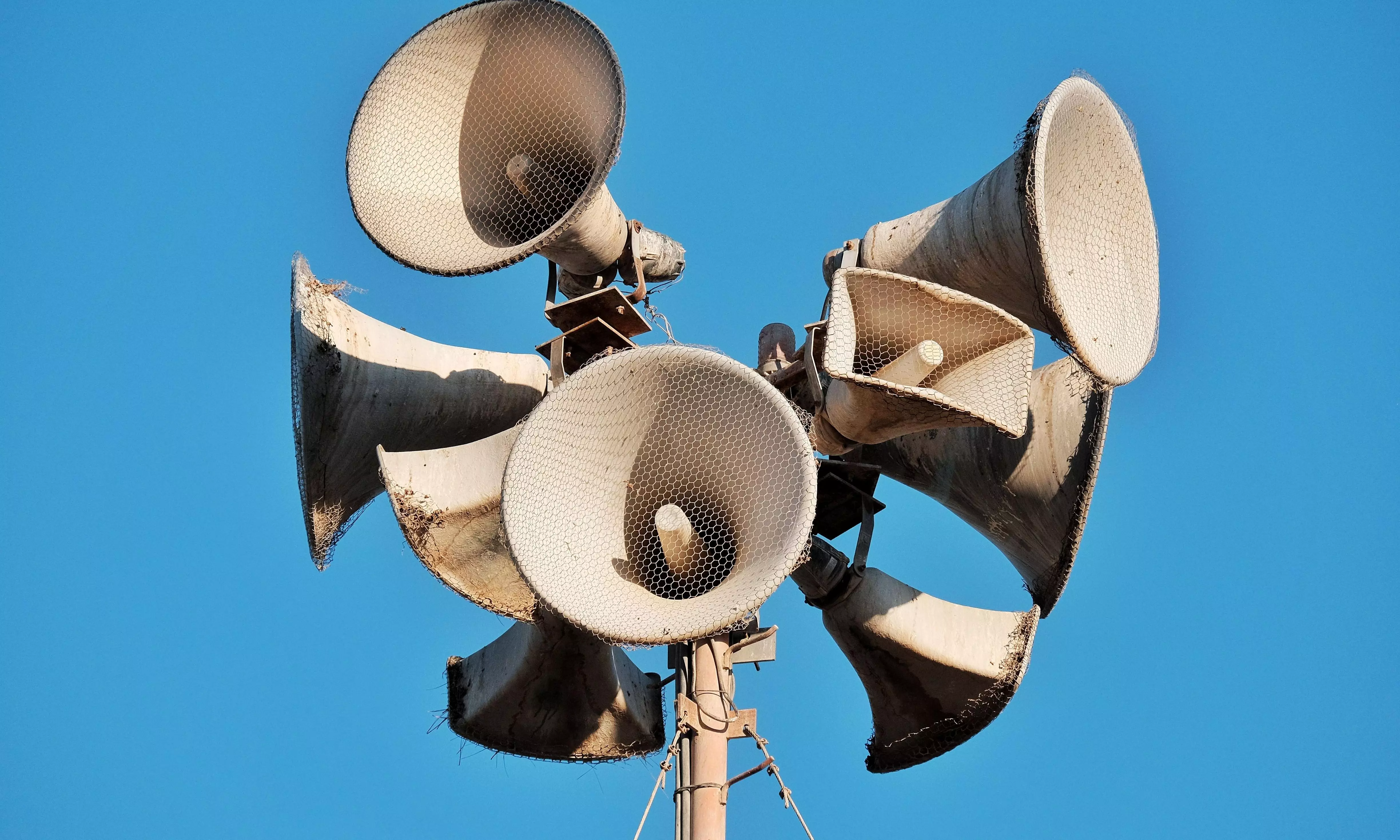
The decibel burden of urban habitation frequently necessitates recourse to law enforcement, the formal lodging of complaints, and the increasingly Sisyphean endeavour of addressing one’s neighbours with studied equanimity. One may exhaust every refinement of civility, marshal reason with deliberative restraint, and pursue the most conciliatory modalities of neighbourly diplomacy, yet such overtures become utterly nugatory when confronted by individuals inherently impervious to decorum and deficient in regard for the sanctity of shared domestic space. What ought to constitute an elementary compact of coexistence instead degenerates into an interminable contest between civic forbearance and sonic imposition.
In Hyderabad, acoustic contamination now lies almost ineradicably embedded within the metropolitan soundscape: sirens cleave the ambient stillness; vehicular klaxons proffer their ceaseless metallic clamour; the resonant calls to prayer traverse densely inhabited neighbourhoods; children career through apartment corridors with exuberant abandon, occasionally accompanied by an indiscriminate barrage of invective; and festivals periodically transfigure residential precincts into theatres of amplified tumult.
Each phenomenon, considered in isolation, may be rationalised as an incidental concomitant of urban existence; collectively, however, they constitute an unremitting auditory siege. The repercussions extend well beyond ephemeral irritation: persistent exposure to intrusive noise can exact an emotional and corporeal toll, engendering agitation, fatigue, querulousness and sustained sensory vigilance. When excessive decibels assume a quotidian character and consideration becomes conspicuously inaudible, quietude is transmuted from an elementary expectation of habitation into a recherché privilege.
At certain conjunctures of domestic cacophony, the residential environment metamorphoses into an involuntary polyphonic totality of acoustic excess—an avant-garde opera to which nobody has purchased a ticket, yet everyone has been unwillingly conscripted into its audience. Windowpanes vibrate, crystalware quivers, doors resonate, and partition walls acquire an unsolicited percussive lexicon due to the unremitting reverberations of inverters, centrifugal pumps, drilling, exhausts, and compressors; one half anticipates the intervention of a coloratura soprano ascending into some vertiginous crescendo, while chandeliers oscillate with almost Wagnerian portent. Yet the denouement possesses none of the theatrical catharsis such a spectacle promises.
Tennessee Williams’s The Glass Menagerie provides an especially apposite literary analogue: the accidental shattering of Laura’s unicorn transmutes fragility into auditory rupture, rendering vulnerability momentarily palpable through resonance. In lived reality, however, there is neither theatrical resolution nor intermission—only the physiological reverberations of relentless disturbance. What one household may construe as exuberance or quotidian conviviality may register within another as an unwelcome assault upon sensory equilibrium.
Acoustic force, like fracture, possesses a threshold beyond which it ceases to be incidental and becomes injurious; the distinction is that shattered fragments are conspicuously visible, whereas the fragmentation of an overtaxed nervous system remains invisible yet corporeally consequential, perceptible principally to the individual compelled to endure it.
What renders the predicament still more insidious is the manner in which religious observance and gendered assertions of ascendancy can serve as instruments of entitlement, converting differences of custom, conviction or conduct, into occasions for belligerence. Faith, when externalised through incessant amplification, can cease to constitute an inward article of conscience and assume the character of an unbidden imposition upon the acoustic commons; gender, likewise, may remain entangled with hierarchies of authority, performative machismo and the fallacious supposition that volume is a legitimate proxy for power. The consequence is not merely an increase in ambient tumult but a deterioration in the very phenomenology of convivial habitation, wherein reason is subsumed before it can be articulated and an appeal for restraint is misconstrued as an affront to prerogative.
For those subjected to such conditions, the consequences can be profoundly debilitating. Sonic intrusion does not necessarily terminate when its immediate source subsides; its physiological reverberations may persist, compromising composure and the capacity for ordinary functioning. It can likewise impede convalescence in adjacent hospitals and compromise students’ concentration during examinations.
For an individual whose sensory apparatus has become exceptionally reactive to auditory stimuli, including misophonia and PTSD, the relentless barrage can render even quotidian responsibilities—bestirring oneself at daybreak, maintaining domestic order, procuring necessities, assuming the imperatives of caregiving, acquitting oneself of professional responsibilities, or attempting the restorative work of recuperation—disproportionately arduous. What ought to constitute the restorative architecture of everyday existence emerges instead as an exercise in attrition. Aural saturation progressively depletes the cognitive and emotional reserves required not merely for productivity, but for the elemental vocation of inhabiting one’s own existence.
Yet the dominion of unwanted sensation does not terminate at the threshold of hearing. Beyond the realm of hearing lies an equally intrusive olfactory plume: an invisible dispersion of emanations permeating household interiors. The ambient medium becomes an unbidden confluence of volatile compounds, arising from the pungency of spice tempering ascending through ventilation shafts, the dense, resinous effluence of oud, the acrid exhalations of incense, concentrated odoriferous preparations, and synthetic volatiles disseminated by mosquito coils and fragranced aerosols. Superimposed upon this olfactory palimpsest are the airborne emissions associated with pest abatement treatments and freshly applied paint.
What originates within one household consequently becomes an olfactory incursion, permeating corridors, fenestration and domestic interiors with scant regard for the demarcations between private and communal space. For those experiencing hyperosmia, hyperventilation syndrome and vestibular migraines such saturation can render otherwise innocuous substances disproportionately intense and somatically overwhelming; in individuals susceptible to severe allergic reactions, particular airborne exposures may precipitate profound physiological perturbation, including anaphylaxis. If excessive decibels can assault auditory equilibrium, pervasive airborne effluvia can likewise compromise perceptual homeostasis, transforming the very medium through which respiration occurs into an inescapable vector of inhalation.
We tend to attribute pollution to agricultural burning, biomass fires, construction, temperature inversion, industrial emissions, and vehicular exhausts. Much less attention is paid to what we intentionally add to the air around us. Reed diffusers, musty linen, sewage, floor disinfectants, fragranced floral arrangements , refuse, spotlights, oil wick lamps, fermented fruits are ubiquitous when in hotels, places of worship, salons, airports and boutiques.
Perhaps, in making the air more olfactory, we have merely made its contamination less perceptible.
Beyond these domestic emanations, an apartment block’s service shaft can become a vertical repository of olfactory dereliction: abandoned cardboard boxes, saturated with dust, moisture and decomposition, are consigned there alongside old mattresses, some harbouring insects amid other organic detritus. Under monsoonal conditions, rainwater permeates the accumulated refuse, humidity facilitates microbial proliferation, and the confined enclosure assumes the character of a receptacle for putrescent odours, water-laden particulate matter and biological contaminants. Such effluvia do not remain obediently contained; these emissions migrate through ventilation apertures and adjoining residential spaces, converting torrential downpours—ordinarily an atmospheric reprieve—into an unwelcome catalyst for sensory deterioration. A structure intended to accommodate essential utilities thus serves as an unbidden conduit for the return of discarded material, delivering the consequences of collective negligence back into the very dwellings from which residents imagined having expunged it.
Perhaps the greater indictment is that much of this affliction is avoidable. A social order predicated upon reciprocity, sensory consideration and gender parity would not require the vulnerable, the enervated or the differently constituted to wage miniature campaigns merely to secure a modicum of tranquillity. communal habitation need not operate upon the principle that the most accommodating must perpetually subsidise the most inconsiderate.
One person’s exercise of expressive or religious liberty cannot rationally confer an unlimited entitlement to colonise another person’s sensory environment.
The ethic of civic fraternity ought surely to encompass the corresponding obligation to temper personal prerogative where its invocation causes disproportionate detriment to others. Until such reciprocity becomes an instinctive social principle rather than an abstract aspiration, soundscape degradation will remain more than an environmental nuisance: it will constitute an indictment of a society that has refined the language of individual autonomy while remaining curiously illiterate in the vocabulary of mutual regard.
Law-enforcement authorities are often compelled into the language of toxic positivity, without necessarily possessing the requisite capacity to elucidate emotional distress manifesting into physical ailments that may themselves have been repeatedly dismissed. Without possessing first hand knowledge of or genuinely comprehending the psychological and physiological consequences of trauma or Long COVID, however, intervention risks becoming an extension of the very misunderstanding it purports to address.
Prayer, domestic labour, caregiving, enforced silence, deference to elders and those accorded social privilege, meditation, matrimony, or psychiatric intervention—a fatiguing litany of prescribed responses that substitutes conformity for comprehension. The hypocrisy is arduous to disregard: “Who will police the police?” And yet, alongside the reassurance, “With you, for you, always,” the experience of seeking that very protection can become its own ordeal when authority responds to melancholia with platitudes rather than insight and mindfulness.
Even ostensibly restorative spaces are pervaded by relentless sensory saturation: the reverberation of machinery and conversation, clamorous, omnipresent music, overabundant illumination, acrid chemical effluvia, and thermostatic temperatures maintained at an almost glacial severity. Even the minutiae of physical arrangement—the inclination of a salon chair, the articulation of the cervical spine at the shampoo bowl, the sustained imposition of an unnatural posture—can have consequences for bodily equilibrium; indeed, extreme cervical positioning during hair washing has, in rare instances, been associated with grave vascular complications along with podiatric and cranial massage, too readily regarded as innocuous, can become perilous when performed without any meaningful understanding of marma points. The profusion of synthetic olfactive compositions—permeating emollients, nail lacquers, restorative masks, protective aerosols, oxidising agents, and serums—has rendered the very air oppressive to breathe within windowless confines.
What, then, is the rationale for extricating oneself from the domestic sphere in pursuit of repose, only to encounter its conspicuous antithesis within a space ostensibly consecrated to tranquillity? The space is frequently punctuated by unrestrained conversation, telephonic declamations, and an almost studied indifference to the auditory presence of others; wired earphones or wireless earbuds, it would seem, remain an optional courtesy. The resulting soundscape bears an uncanny resemblance to an aircraft cabin—one extricates oneself from the domestic cacophony in pursuit of reprieve, only to encounter its remarkably well-appointed replica within the very sanctuary to which one had fled.
The same superficiality appears in the treatment of physical environments. Someone reports intrusive mechanical noise or vibration, yet rather than possessing a grounding in acoustics, resonance, structural transmission, or architecture, they are simply instructed to acquiesce. Buildings are increasingly exhibiting structural instability, succumbing to demolition or sealing, and in some cases undergoing a catastrophic collapse with the abruptness of falling blocks.
Residents too must recognise their civic obligation to remain vigilant and refrain from conduct that compounds structural or environmental vulnerability. Fire hazards and injudicious alterations are not trivial inconveniences; they constitute latent perils capable of precipitating catastrophe. Such vulnerabilities demand foresight, vigilance, and collective stewardship; complacency in the presence of foreseeable peril is itself a form of negligence.
Forget that a country bereft of the requisite equipment, specialised knowledge, diagnostic acumen, technical proficiency, and clinical sensitivity can scarcely provide even an EpiPen, let alone a CBCT scanner, liquid biopsy, handheld mesh nebulizers, infrared thermography, CyberKnife, or silent MRI with requisite efficacy.
We scarcely possess individuals sufficiently mindful to treat their environment with due regard. Instead, we continually indulge the histrionics of the entitled, permitting the petulance of the privileged to dictate the tenor of public life. Safai karamcharis who confided in me the realities of their daily existence, while grappling with the absence of roti, naukri, parivar, kapda, makan, izzat, davai, shiksha, and sahayata, often strike me as more grounded and literate as they are labouring under the misapprehension that health, parity and dignity are attainable within the conditions to which they are consigned.
Some structures degrade through disintegration; others through the insidious percolation of what they were never architecturally ordained to restrain, permitting it to permeate the lives within. For all our engineering, it is still character that proves the least structurally sound.