Syed Ata Hasnain | The Trade Deal With Us and India’s Quiet Consolidation

New Delhi navigates pressure with calibrated choices and quiet confidence
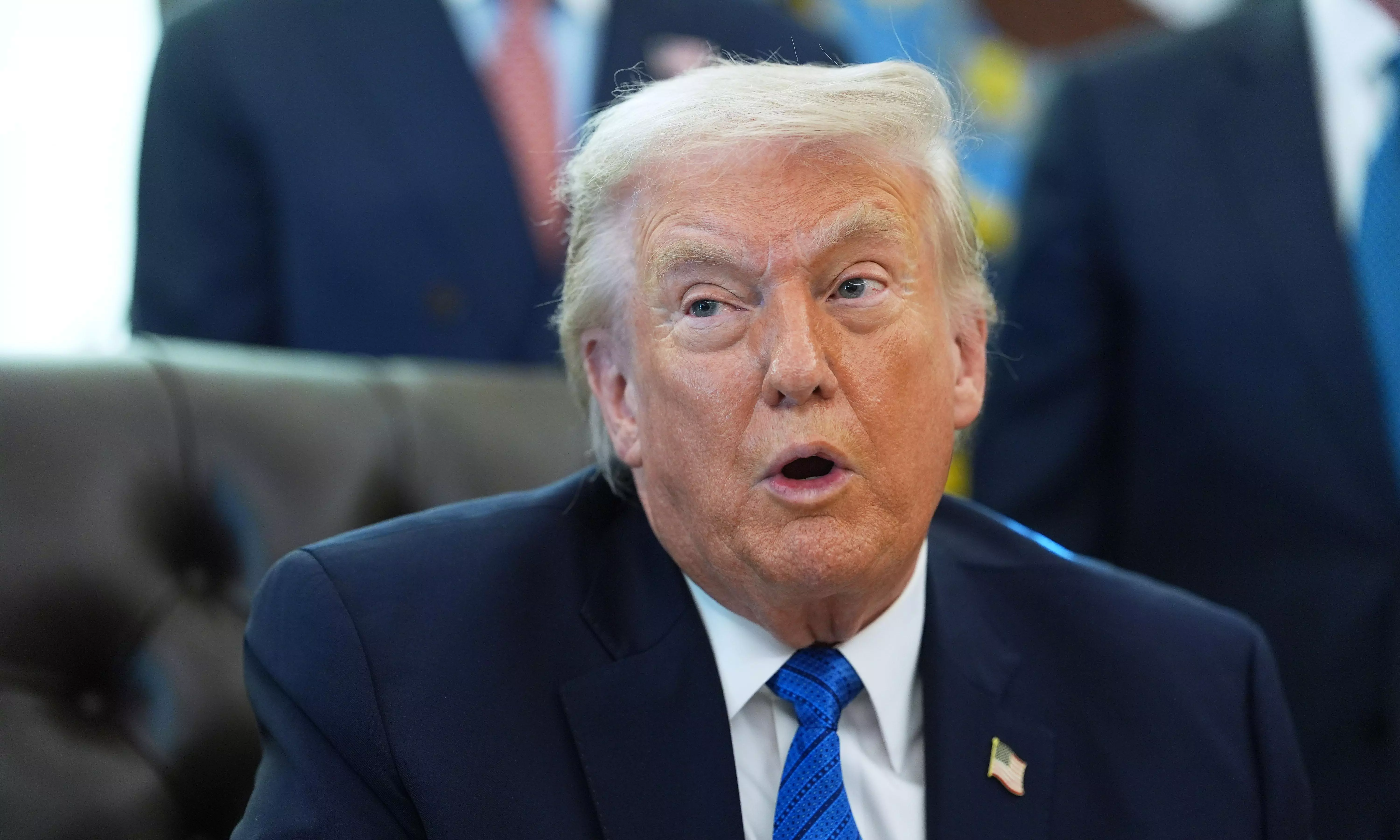
Much of the commentary surrounding the recent India-US trade deal, which was announced on Monday shortly after President Donald Trump spoke to Prime Minister Narendra Modi, has been animated more by anxiety rather than analysis. The dominant question -- whether India has succumbed to pressure, particularly on the issue of Russian energy -- reflects a tendency to read diplomacy as a zero-sum contest, where adjustment is mistaken for capitulation. A calmer examination suggests something quite different. What New Delhi has demonstrated over the past year is not drift or retreat, but strategic patience anchored in forethought, an ability to manage the grey zones of contemporary geopolitics, and a quiet confidence in its own standing.
India’s leadership recognised early that the international environment was entering a phase where economic instruments would increasingly be used as tools of strategic persuasion. Trade, tariffs, energy sourcing, supply chains and market access have become extensions of statecraft rather than purely commercial domains. In this space, the challenge for a country committed to strategic autonomy is not to resist all pressure reflexively, but to absorb it without losing agency. India has done precisely that. It has retained its core economic interests, preserved diplomatic respect across regions, and adjusted tactically to emerging realities without signalling submission or dependence.
The narrative that India has “given in” on Russian energy overlooks both context and continuity. India’s engagement with Russian crude was always driven by energy security and price stability, not by ideological alignment. Adjustments made today reflect changes in market conditions, global scrutiny and India’s own diversification strategy rather than a rupture with Moscow. On the security front, there is no evidence of disruption. Defence cooperation, supply chains for equipment and spares, and long-standing military-technical ties remain intact. Russia, under its own constraints, continues to value India as a dependable partner and a significant market. Any accommodations made by President Vladimir Putin are likely to be reciprocal and pragmatic, shaped by mutual interest rather than coercion and based upon realpolitik.
Equally important is what India has chosen not to do. In West Asia, New Delhi has resisted the temptation to rush to join the Gaza Peace Board, despite external expectations and some amount of media pressure. This restraint has preserved India’s strategic balance in a deeply polarised region. India continues to engage Israel closely, maintains longstanding ties with the Arab world, and retains credibility with the Palestinian leadership, which has itself sought engagement with New Delhi. In an era where alignment is often demanded loudly, India’s refusal to be hurried has enhanced rather than diminished its relevance. Restraint here has been a strategic choice and wisely so.
The broader India-US relationship must be viewed through this lens of continuity rather than episodic tension. The fundamentals remain unchanged. Strategic convergence in the Indo-Pacific region, shared concerns over coercive behaviour by China, cooperation in defence, technology, intelligence and resilient supply chains, and the deep reservoir of people-to-people ties continue to anchor the partnership. The relationship with the United States has always been one of interests rather than alliances, and this has not altered. Washington fully understands that India will not be a subordinate ally but remain a consequential power whose cooperation strengthens regional balance. New Delhi, in turn, has shown that it can engage closely without allowing the relationship to become prescriptive or exclusive. India understands changing perceptions on geopolitical interests and the need to progressively calibrate.
On the security front, there has been no dilution of India’s role in the Indo-Pacific. Maritime cooperation, joint exercises, logistics arrangements and defence technology collaboration continue. India has not outsourced its strategic calculus nor signed up to escalatory postures that do not serve its interests. Its emphasis on stability, deterrence and balance reflects both regional realities and India’s own assessment of long-term security. Far from being placed on the strategic backfoot, India has continued to shape its environment with quiet confidence.
Economically, the timing of recent developments could hardly be more favourable. With a trade understanding with the European Union complemented by the Indo-US deal, Indian markets and industry have reason to be optimistic, although there is nothing competitive here. Together, these arrangements expand access, stabilise investor sentiment, and reinforce confidence in India’s growth trajectory. At a time when global capital is cautious and many economies face headwinds, India is being read as a stable, opportunity-rich destination. This perception has not been manufactured through rhetoric; it is the cumulative outcome of sustained reform, political stability, and strategic consistency.
Importantly, these gains have not come at the cost of sovereignty or choice. India has leveraged its scale, its market depth, and its geopolitical relevance to negotiate outcomes aligned with national interest. This is not dependency; it is bargaining power exercised with discipline. The ability to engage major economic blocs without being locked into rigid alignments is itself a measure of strategic autonomy.
Looking ahead, India-US relations are likely to deepen further, even with friction from time to time. Differences will persist on trade protectionism, technology controls, climate financing and regional tactics. Such divergences are natural between two large democracies with distinct political cultures and priorities. What is unlikely is a fundamental rupture. The structural logic of the relationship remains strong. The United States needs India as a stabilising force in Asia and a partner in shaping emerging technologies; India benefits from access, cooperation and influence without surrendering independence. The relationship will remain transactional in parts, but strategic in its overall direction.
Credit for navigating this complex phase must also be placed where it belongs. The steady economic stewardship and negotiating clarity provided by Commerce Minister Piyush Goyal have helped protect core interests while allowing calibrated adjustment. Equally, sustained diplomatic engagement, undertaken well before public announcements, reflects a long-view approach rather than reactive crisis management. Such outcomes are rarely the product of impulse; they emerge from anticipation, preparation and patience.
In sum, India has emerged from this period not weakened but experienced and steadied. It has shown that strategic autonomy is not about rigidity, but about confident adaptation. It has demonstrated that economic pragmatism need not erode diplomatic respect. And it has reaffirmed that India can engage a rapidly changing world on its own terms. In a global order marked by pressure to choose sides, India has chosen instead to choose its interests, its timing and its judgment. That quiet consolidation of position may well prove to be one of its most significant achievements in this unsettled era.
The writer, a retired lieutenant-general, is a former GOC of the Srinagar-based 15 (“Chinar”) Corps