Skand Tayal| How Dependable Are US Security Guarantees For Japan, S. Korea?

The US has abandoned Afghanistan and transformed its role in the Ukraine-Russia conflict from a security enhancer for Ukraine to an arms dealer. President Donald Trump has made ambiguous comments about the US commitment to help defend Taiwan against any aggression from China. There is serious tension between the US and other Nato members
In the Indo-Pacific, the United States is the formal security guarantor of Japan, Republic of Korea (ROK), Australia, New Zealand, Thailand and the Philippines through bilateral defence agreements. For strategic planners of these countries, the US guarantees include a “nuclear umbrella” defined as the “Extended Nuclear Deterrence (END)”.
The policy of END was developed by the US during the Cold War as a strategic military doctrine to protect non-nuclear weapon US allies against potential threats from the Soviet Union and China. Its objective was to convince allies that they need not build their own nuclear arsenal, as the US would deter any large-scale aggression by threatening a nuclear response.
In the last 10 years, the global strategic landscape has become more uncertain and long-established security alliances are being challenged from within. The US has abandoned Afghanistan and transformed its role in the Ukraine-Russia conflict from a security enhancer for Ukraine to an arms dealer. President Donald Trump has made ambiguous comments about the US commitment to help defend Taiwan against any aggression from China. There is serious tension between the US and other Nato members. Also, the Chinese military might is growing rapidly and it would soon be in a position to challenge US military dominance in the Indo-Pacific.
In this background questions are being raised in the strategic communities of ROK and Japan on the dependability of the US nuclear umbrella. In the medium term, ROK seeks deterrence against a nuclear-armed North Korea and Japan seeks deterrence primarily against China and also against North Korea.
ROK has two nuclear states as neighbours, China and North Korea. Any realistic assessment would conclude that the much-desired denuclearisation of North Korea in unlikely to ever happen. One of the ROK’s options to deter North Korea is to again permit deployment of American tactical nuclear artillery shells on South Korean territory which was withdrawn by then President George H.W. Bush in 1991 after the collapse of USSR. The other long-term option is to gradually enhance its capacity to develop nuclear weapons.
Under the US-ROK Agreement for Peaceful Nuclear Cooperation dating back to 1954 and revised in April 2015, ROK is not allowed any enrichment of uranium or reprocessing of spent fuel from its numerous nuclear power reactors. ROK stores more than 5,00,000 bundles of spent fuel which occupies 98.1% of its total storage capacity. For quite some time ROK has been demanding from the US the consent to reprocessing and in the August 2025 Summit between Presidents Donald Trump and Lee Jae Myung the two leaders agreed to discuss ROK’s “right to spent fuel reprocessing”. It may be noted that Japan has such rights under the relevant US-Japan agreement.
ROK’s participation in US strategic decision making in the Korean peninsula is more complicated. At present US commanders head the “ROK/US Combined Forces Command” and 28,000 US defence personnel are deployed in South Korea. ROK has been demanding more say in strategic decision making. To partially satisfy this Korean quest, former Presidents Joe Biden and Yoon Suk Yeol had adopted a Washington Declaration on April 29, 2023, which inter alia established a bilateral nuclear consultative group.
As for Japan, it is considered a latent nuclear state as it has mastery over the complete nuclear fuel cycle from uranium enrichment to spent fuel reprocessing. It is estimated that it would take about three-to-five years for Japan to build a credible functional nuclear arsenal based on high-end computer simulations without the necessity of a nuclear test.
Since the horrific atomic bombings of Hiroshima and Nagasaki in 1945, the Japanese public opinion is overwhelmingly against nuclear weapons. Even among the supporters of the present Sanae Takaichi government, 56.7% explicitly oppose any acquisition of nuclear weapons. This is in contrast to the public opinion in ROK where, in a recent poll, 76.2% were in favour of this.
Japan’s “Three Non-nuclear Principles” adopted in 1967 prohibit possession, production and introduction of nuclear weapons on Japanese territory. However, under a secret agreement Japan has been allowing nuclear weapons on US naval ships when in Japanese waters.
Japan is now faced with the America First policy of the US. Aggressive missile testing by North Korea over Japanese air space and China’s relentless military expansion also make the Japanese nervous. Also, Japan is convinced that any Chinese takeover of Taiwan would adversely affect its security. The distance between Taiwan and Japanese island Okinawa is only about 790km.
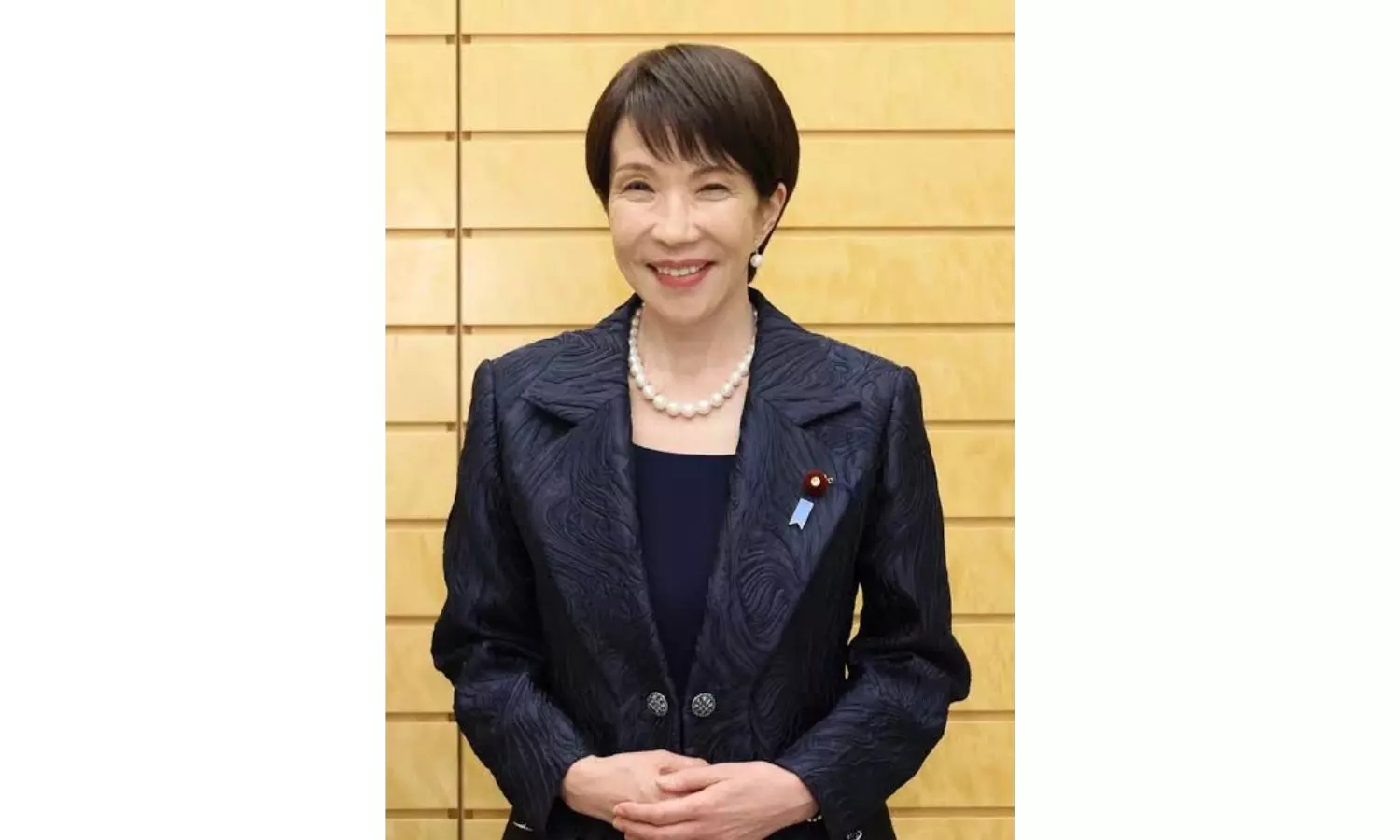
After taking over the leadership of LDP in October 2025, Prime Minister Sanae Takaichi has followed a more robust security policy similar to that of the late Prime Minister Shinzo Abe. Under her watch Japan’s security and defence policy is being revised moving away from strict post-World War-2 pacifism.
Japan’s defence minister Shinjiro Koizumi has argued that the country can no longer avoid discussing nuclear deterrence in the rapidly deteriorating global security environment. He has pointed out that in Europe Finland has moved from its long held status of neutrality towards Nato membership. He has advocated the Three Non-nuclear Principles be revised to accept allied nuclear deployments in Japanese territory.
In the context of an elected President of a permanent member of the UN Security Council threatening to take over Greenland from an ally, Denmark, and the ongoing economic strangulation of Cuba, a sovereign independent country, the fundamental question for the present leadership of Japan and ROK is whether they can afford to let their future generations be vulnerable to nuclear blackmail by China or North Korea.