Sanjeev Ahluwalia | Trouble At Bombay House? Tata Titans Locked In Tussle

The twist is the ownership structure of the holding company: Tata Sons. Two Tata Trusts control two-thirds of its equity. The Shapoorji Pallonji group — a legacy construction company and close associates of the Tata family — has held another 19 per cent since 1930
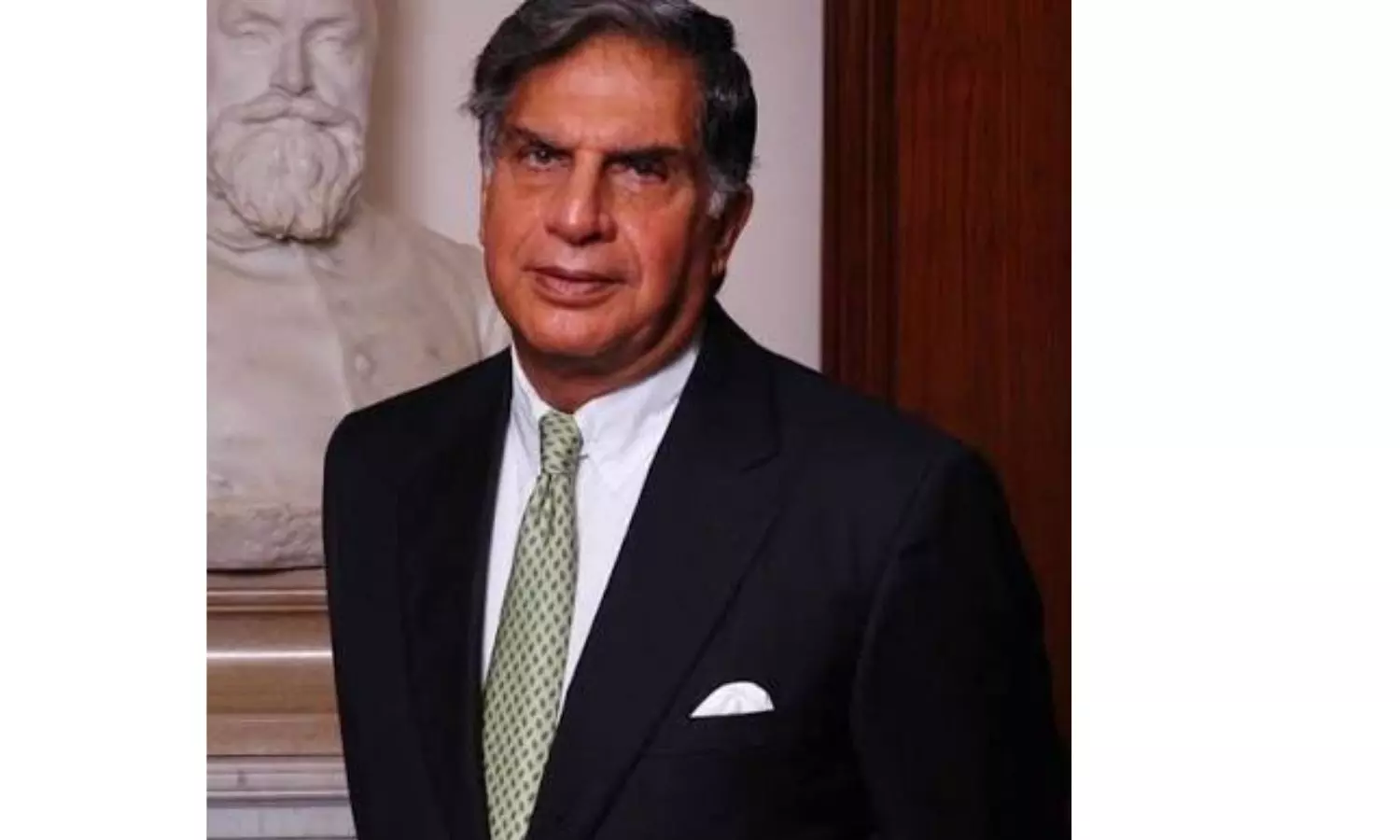
A face-off between two sets of storied owners of an unlisted, private holding company, Tata Sons, established in 1896, which controls twenty-six listed Tata companies with a combined market valuation of about $328 billion, or seven per cent of the market cap of Sensex (2025), annual aggregate revenues of $180 billion and about a million employees, is big and unsettling news. The group’s operations span a hundred countries and six continents.
The twist is the ownership structure of the holding company: Tata Sons. Two Tata Trusts control two-thirds of its equity. The Shapoorji Pallonji group — a legacy construction company and close associates of the Tata family — has held another 19 per cent since 1930. Together, these three trusts are the majority owners of Tata Sons. The Tata companies are well governed. Each operates independently under the guidance and supervision of its own board of directors. The problem is backseat driving by the trusts owning Tata Sons often muddies top-down signals.
The most recent such incident is the lack of unanimity about extending the term of Natarajan Chandrasekaran, chairman of Tata Sons, beyond February 2027 when it ends. Noel Tata — Ratan Tata’s half-brother, who now controls the Tata Trusts after the demise of Ratan Tata in October 2024 — is opposed to Mr Chandrasekaran’s extension. The clash might be personal. Ratan ushered in Mr Chandrasekaran, a technologist with the Tata group for three decades, as a trusted chairman to replace chairman Cyrius Mistry, who was removed by a board resolution in 2017. In doing so, Ratan Tata overlooked Noel Tata then and again in 2022, whilst anointing Mr Chandrasekaran for a second term. This must have hurt.
There are also substantive disagreements around Tata strategy going forward. Ratan Tata had a flair for the big game. Not all his bets paid off. Investments in JLR, Corus Steel in Europe, Air India and Tata motors have not been multi-baggers. Legacy investments in steel and chemicals remain slow on growth. But investments in TCS have paid off. It contributes 17 per cent of Tata group revenue but 59 per cent of group profits. The Midas touch explains the bond between Ratan and Mr Chandrasekaran, who was earlier Chairman TCS and the first non-Parsi to be chairman of Tata Sons.
Noel groupies however point out that more recently, between 2017 and 2025, TCS market value increased by 126 per cent — slower than the market cap of Sensex which increased by 176 per cent. They apprehend that the proposed entry into a full-stack AI model for investments is more than what the Tata group can chew.
Investment is heavy as is obsolescence (three years) and the returns increasingly uncertain. AI still flounders for a viable use case. It is, however, also true that Noel’s professional experience is mostly in investment light, quick return retail, where he excelled in making Trent, a fashion retailer, and Titan, a jewellery brand, highly profitable. His approach is pragmatic.
Mr Chandrasekaran shares Ratan’s visionary approach like founder Jamshedji Tata and J.R.D. Tata, the nationalist entrepreneur who mothered Air India.
Dissonance between the Tata Sons owners has been rife since Ratan, at age 75, chose Cyrus Mistry, scion of the Shapoorji Pallonji group, co-owners of Tata Sons, to succeed him. Earlier the redoubtable J.R.D. Tata, also without any direct heirs, had chosen Ratan in 1991 as the successor. After a one-year transition period as deputy chairman starting November 2011, Cyrus Mistry replaced Ratan Tata as Tata Sons chairman in December 2012 at age 43 — the youngest-ever chair and only the second person outside the Tata family in that position.
Ratan Tata became chairman emeritus of Tata Sons and started overtly distancing himself from day-to-day management. But this was not to be. Either Cyrus Mistry was imprudently impatient in forcing the sedate pace of change in Bombay House or Ratan Tata had not quite delinked from his industrial “babies” as cleanly as he wished to.
The titans then fell out. A no-holds-barred corporate war ensued. It ended badly for Cyrus Mistry. He was voted out as chairman in October 2016, just short of four years since he took over. Subsequent litigation in the NCLT between the SP group, contesting the abrupt removal of Mr Mistry, and Tata companies supporting it, unearthed slanderous allegations on both sides. Most remain unsubstantiated. Mr Mistry got no NCLT relief. However, his subsequent appeal to the NCALT was a triumph, securing a dismissal of the board resolution ending his chairmanship. But it proved a pyrrhic victory. In the Supreme Court on appeal by the Tata Group, Mr Mistry’s plea for a stay on the order removing him was not allowed. In May 2021 the Tata group’s appeal finally prevailed and the NCLAT order favouring the SP group was overturned without any relief.
CJI Bobde and Justices Bopanna and Ramasubramanian offered practical advice to the litigants. They astutely pointed out that it took the SP group four years of litigation to finally propose the most appropriate alternative relief of initiating a separation of ownership interests of the SP Group in Tata Sons by reducing the capital and paying out fair compensation to them — an option the parties could still explore in the NCLT.
They quipped: “... A divorce without acrimony is what is encouraged both in England and in India under the statutory regime. …Article 75 of the Articles of Association is nothing but a provision for an exit option (though one may think of it as an expulsion option)”.
Sadly, about a year later, in September 2022, driving back from Ahmedabad to Mumbai, Cyrus Mistry died in a car crash. His wife and children were not with him and remain engaged in their own pursuits. Noel Tata at age 69 has three children. All are associated with Tata Group companies. A reversion of management control over Tata Sons to the Tata family in February 2027 is possible when Mr Chandrasekaran retires. To be fair, it is a legacy they were born to.
India remains strongly committed to becoming an AI full-stack economy and India’s tech bros can contribute. N.R. Narayana Murthy served as president of the National Payments Council of India to roll out the UPI, India’s globally-recognised digital payments brand. Nandan Nilekani did the same for Aadhaar and the ONDC. N. Chandrasekaran’s talent is, similarly, unlikely to remain untapped in the public entrepreneurship domain.
The writer is Distinguished Fellow, Chintan Research Foundation, and was earlier with the IAS and the World Bank